
7 Reasons for Material Blowout in Filter Presses
Material blowout (filtrate/slurry ejected from the edges of the filter plates, the inlet, or the gaps in the filter cloth) in a filter press is usually not a single fault, but rather caused by an imbalance in one of the following: sealing, filter cloth, pressure, or material characteristics. Below are seven of the most common reasons for material blowout in filter presses.
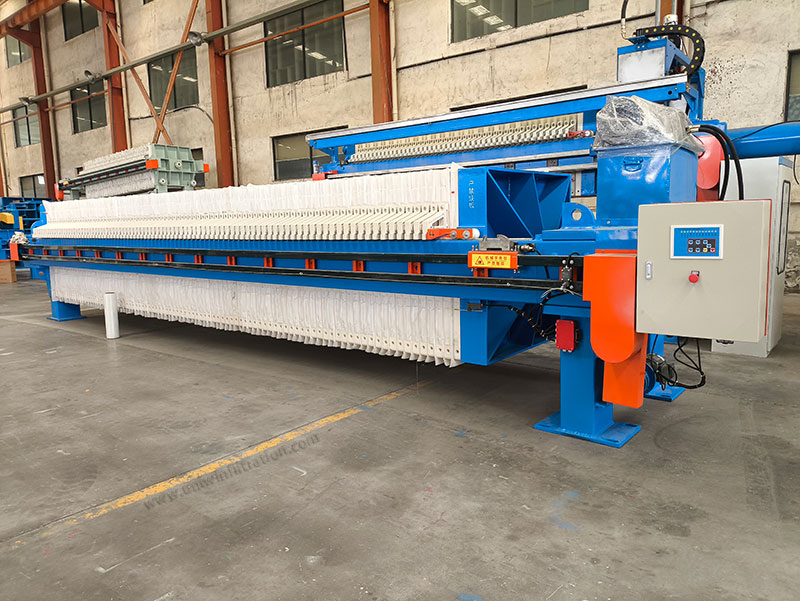
Filter Cloth Malfunction
Wrinkled filter cloth, cloth clamping, or incorrect filter cloth size
This is one of the most common causes: the filter cloth edges are not flattened, it gets caught in the sealing surface during reassembly, or the filter cloth is too small, causing the sealing line to be exposed, resulting in material spraying from weak points as soon as pressure is applied.
Typical symptoms: Spraying occurs immediately after pressurization, often at the edges/corners of the filter plate, and improvement is significant after replacing/adjusting the filter cloth.
Common contributing factors: Improper cloth loading, filter cloth misalignment, filter cloth shrinkage and deformation, and failure to flatten before pressing.
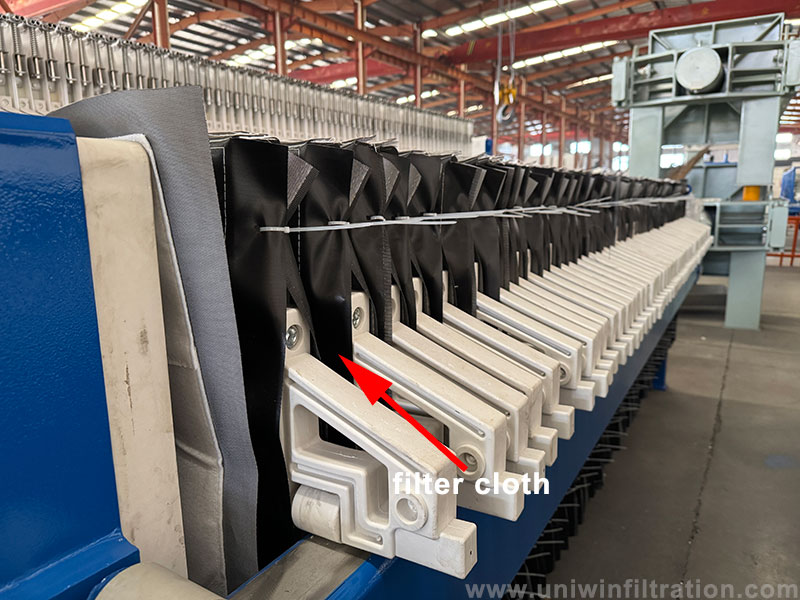
Sealing Failure
Damage or foreign objects on the sealing surface
Scratches, chipped edges, scale buildup, or sand particles on the filter plate sealing surface can create a “pressure relief channel,” causing direct material spraying.
Typical symptoms: spraying points are fixed at the same location on several filter plates; short-term improvement after cleaning the sealing surface.
Key inspection points: check for damage in the sealing groove, around the feed inlet, and near the corner holes.
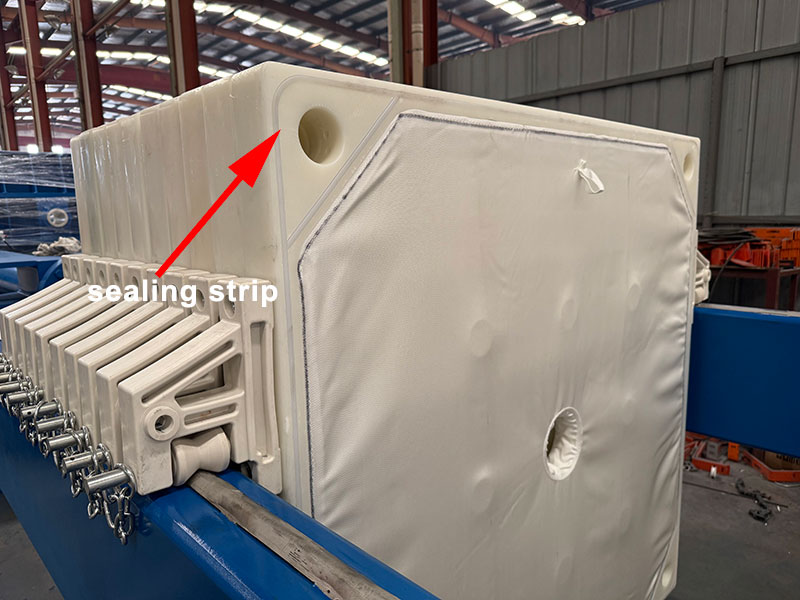
Filter Plate Failure
Filter plate deformation, cracks, or damage to the center inlet/corner holes.
Uneven stress, temperature differences, aging, or overpressure on the filter plates over a long period can lead to poor adhesion; more serious issues can result in cracks, causing direct external spraying after pressurization.
Typical symptoms: spraying points are concentrated near a specific filter plate, and the spraying becomes more pronounced with increasing pressure.
Experience-based judgment: uneven gaps can be observed when the plates are assembled under no-load conditions.
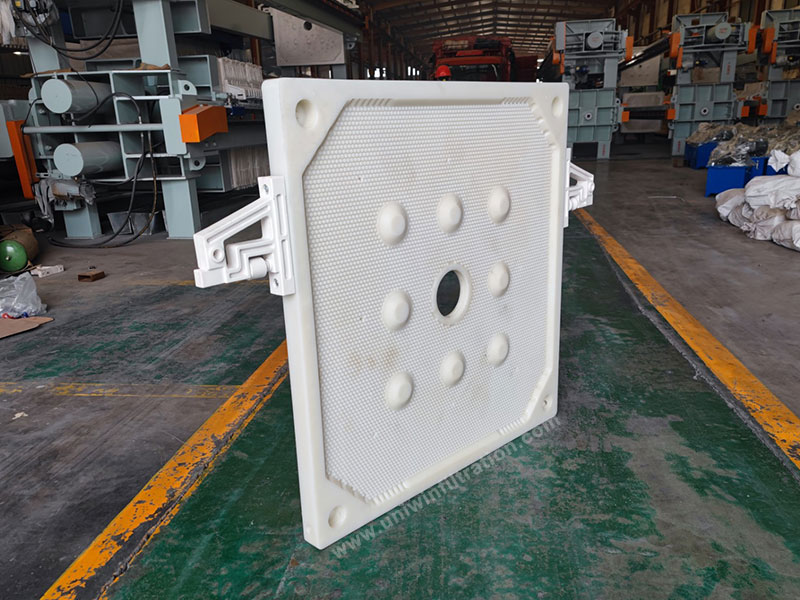
Insufficient Clamping Force
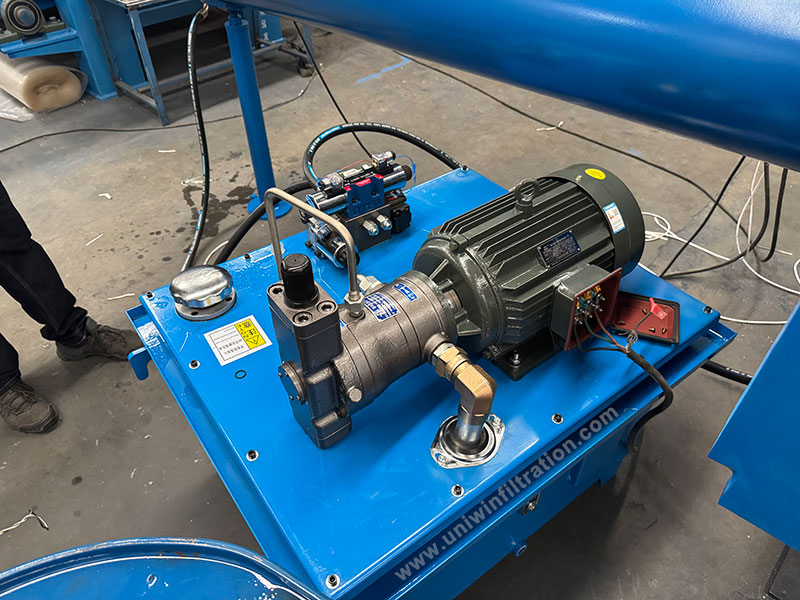
Insufficient clamping force prevents the sealing surfaces between filter plates from forming a sufficient specific pressure, causing the gaps to open when the feed pressure is high.
Typical symptoms: Works well at low pressure, but sprays out when the feed pressure is increased; multiple leaks/sprays throughout the machine.
Common causes: Low hydraulic station pressure setting, internal leakage in the cylinder, malfunction of the pressure holding valve/relief valve, or insufficient pressure due to limit switches/limit switches.
Excessive Feed Pressure (Pump Selection or Operating Conditions Mismatch)
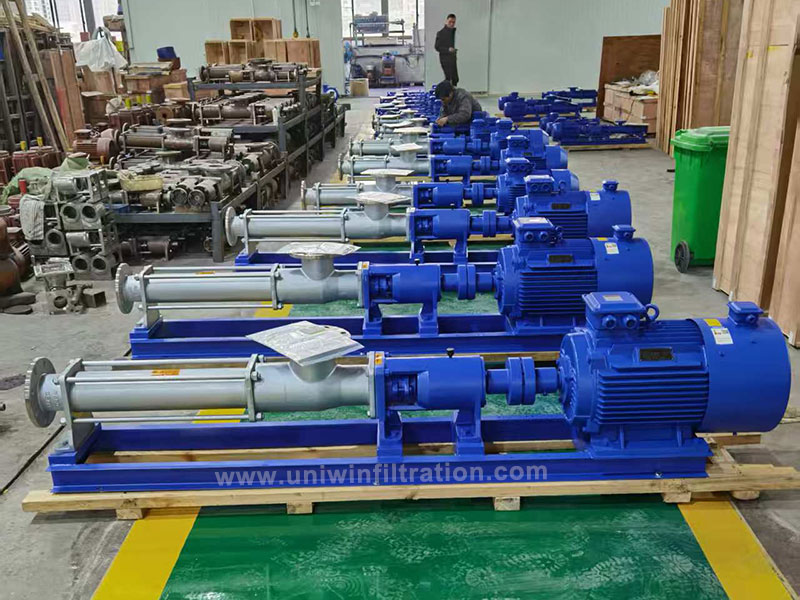
During the feeding stage, a sudden high-pressure, high-flow impact, especially before the filter cake has formed and the filter chamber has not yet established stable resistance, can easily breach weak points in the seal.
Typical manifestation: Material spraying occurs in the initial feeding stage; the pressure decreases after the filter cake forms.
Typical causes: Centrifugal pump not implemented with slow start/frequency conversion, lack of staged pressure increase, improper reflux/bypass control.
Material Properties Changes
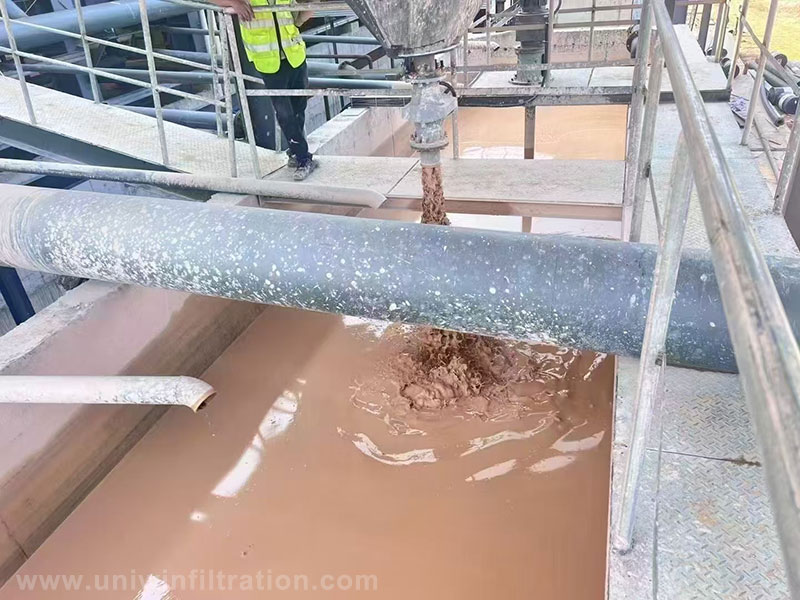
Material particles that are too fine, highly viscous, contain hard sand particles, or are subject to temperature changes. Any change in material will affect filtration resistance, compressibility, and seal wear.
- Fine/highly viscous: filter cake formation is slow, and the liquid phase carrying solids is more likely to escape from gaps.
- Hard sand particles: easily embed into the sealing surface, causing scratches and pinpoint spraying.
- High temperature/solvents: may accelerate the aging and deformation of filter plates/cloths, making it more difficult to adhere the sealing lines.
Aging of Inlet and Corner Hole Seals
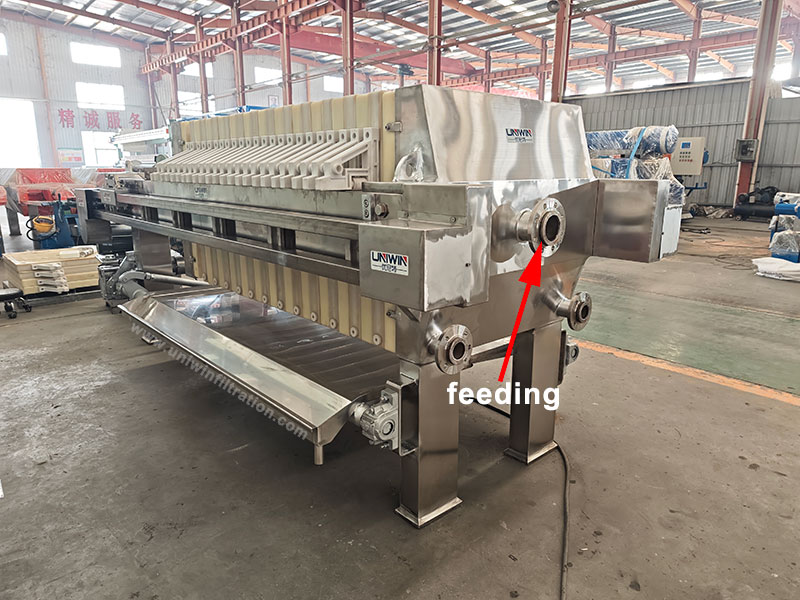
If the seals at the center inlet or corner holes are aged, chipped, installed backwards, or if there is misalignment in the plate assembly, a “nozzle effect” will occur at the hole opening.
Typical manifestation: Spraying points are concentrated around the inlet or a specific corner hole area; replacement of the seals significantly improves the situation.
Common causes: The seal material is not heat- or chemically resistant; particles are introduced during assembly; wear on the plate assembly guides causes eccentricity.
Conclusion
In summary, there are many reasons for material spraying in filter presses. The causes should be analyzed based on the actual situation, and relevant measures should be taken.