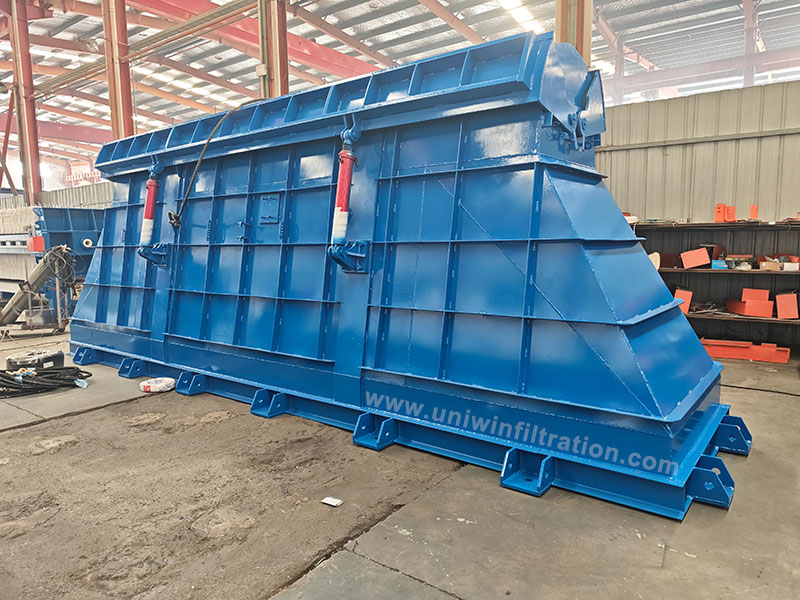
Filter Press Sludge Storage Hopper
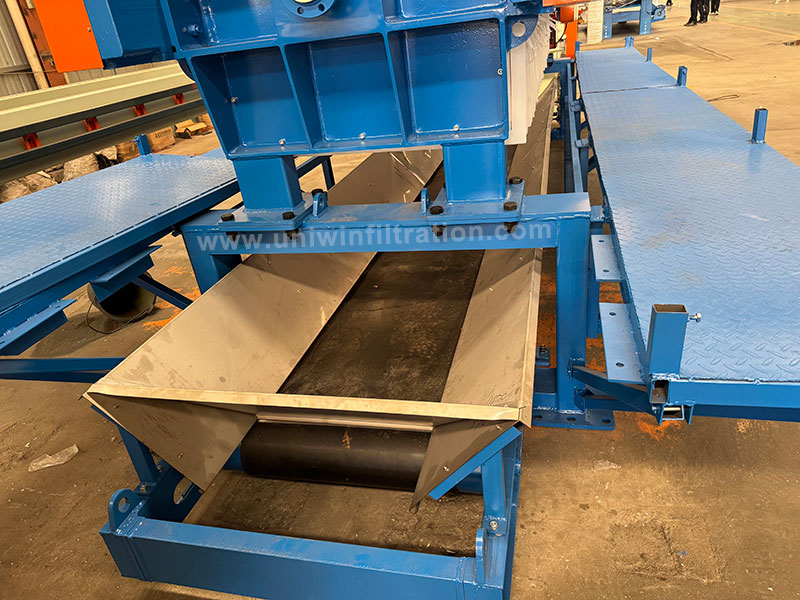
The filter press sludge storage hopper is a key auxiliary device in the filter press system. Its main function is to temporarily store and transport the sludge cake or slurry discharged from the filter press.
It plays a receiving, buffering, and transporting role in the entire sludge dewatering process, helping to improve the continuity and automation of the system.
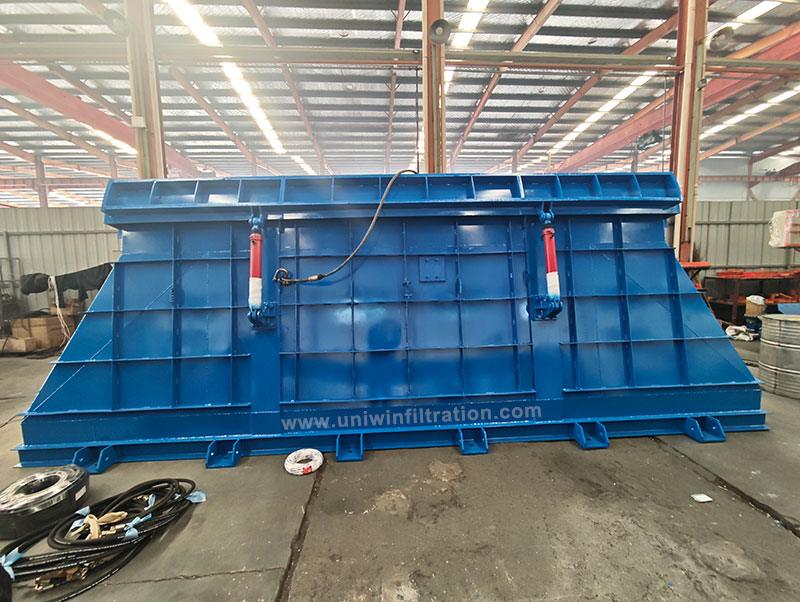
What is a Filter Press Sludge Hopper?
A sludge hopper, sometimes called a sludge hopper or sludge cake storage bin, is typically installed below the sludge outlet of a filter press. Its core functions include:
- Receiving the filtered sludge cake or slurry, preventing direct accumulation on the ground;
- Providing buffer storage to avoid material blockage caused by asynchrony between the filter press and downstream conveying equipment;
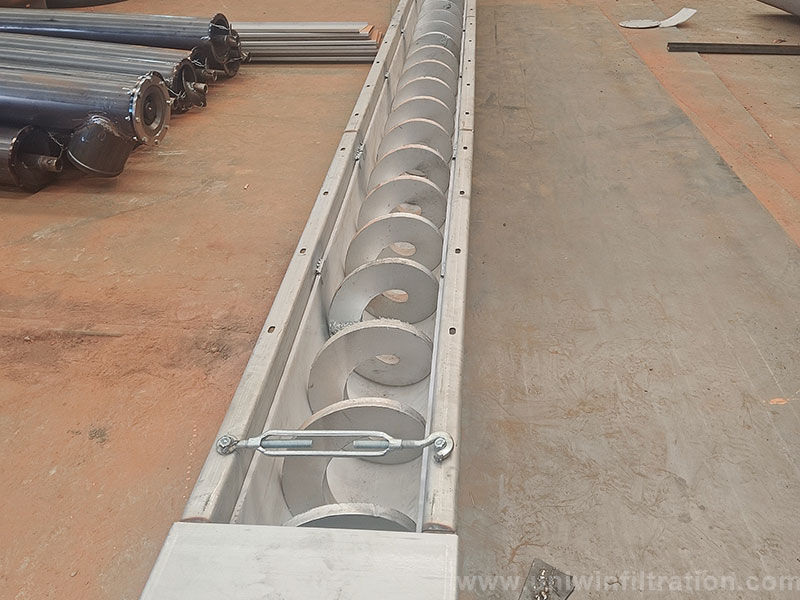
- Working in conjunction with conveying equipment for discharge, such as screw conveyors, belt conveyors, or hydraulic tippers;
- Enhancing automation levels, suitable for continuous operation.
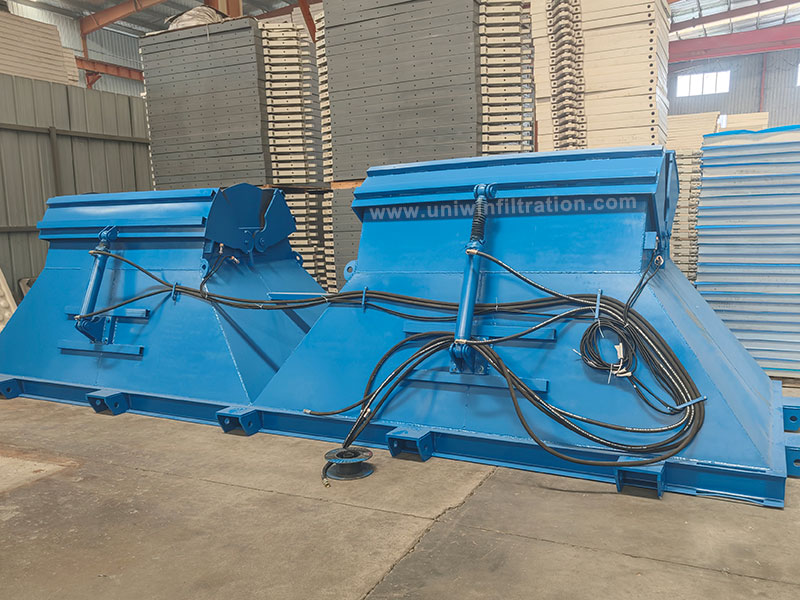
Working Principle of Filter Press Sludge Storage Hopper
Filter cake receiving
During filter press operation, the sludge cake is pressed out through the gaps between the filter plates and falls naturally. The sludge storage hopper is located below the filter press to receive these sludge cakes or slurry, preventing them from falling directly to the ground and causing on-site pollution.
Gravity storage and accumulation
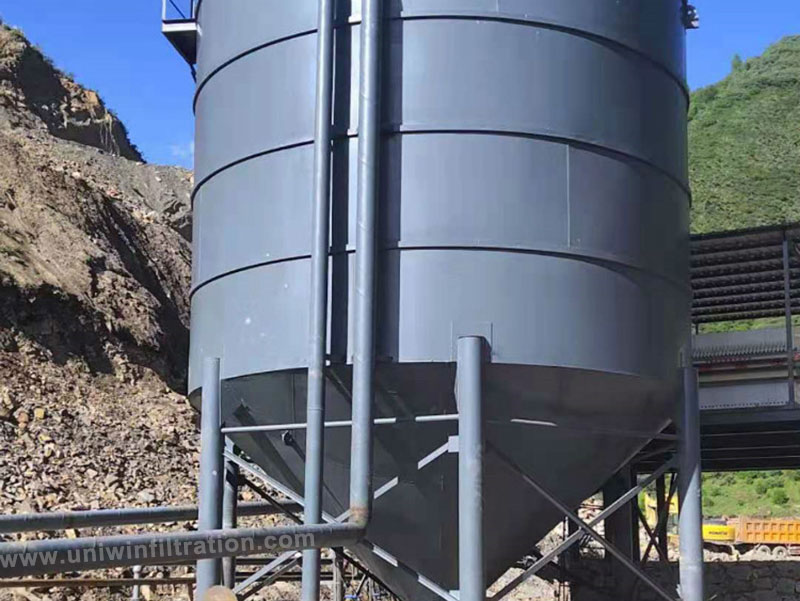
Utilizing the hopper structure (usually a sloping funnel type), the sludge cake naturally slides down and accumulates inside the hopper under gravity. The volume design of the sludge storage hopper is sufficient to meet the continuous sludge discharge requirements for a short period of time, acting as a buffer storage mechanism.
Automatic discharge
The bottom discharge port is equipped with an electric/pneumatic valve, screw conveyor, or hydraulic flap; when the sludge cake reaches the set capacity, or the receiving equipment is ready, the control system automatically activates the discharge device.
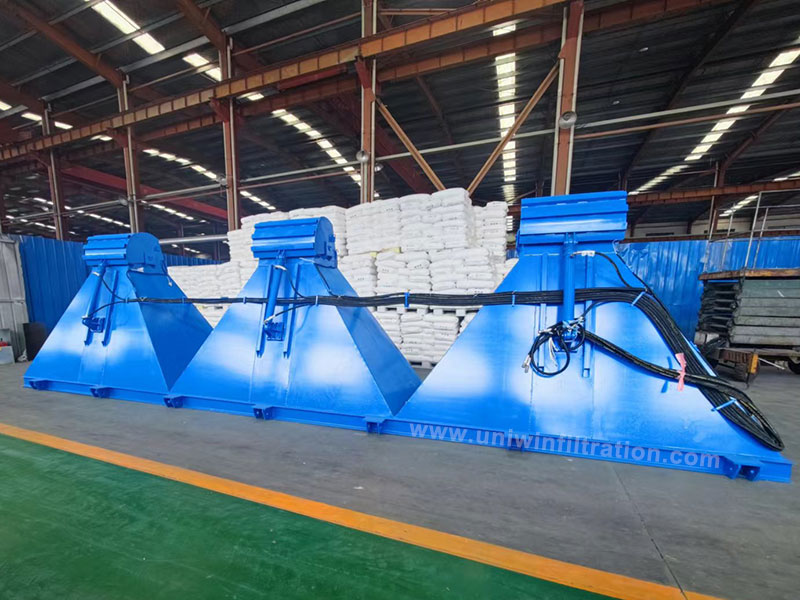
Advantages of Sludge Storage Hoppers
Improved system continuity
Prevents forced shutdown of the filter press due to temporary failures or interruptions in downstream equipment (such as conveyors); the sludge storage hopper acts as an intermediate buffer, making the system more flexible and fault-tolerant.
Achieve automated control
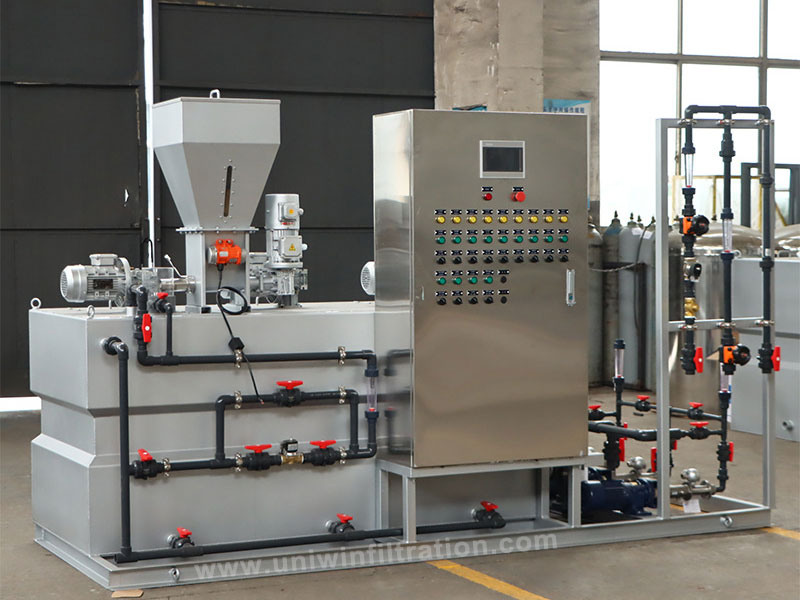
Through liquid level sensing and PLC linkage, the discharge process is automatically controlled, eliminating the need for manual operation. This facilitates fully automated operation of the filter press station, reducing labor costs.
Avoid on-site pollution
The filter cake does not fall directly to the ground; centralized collection prevents secondary pollution. The enclosed or semi-enclosed design reduces environmental problems such as odor and splashing.
Improve material conveying
The discharge port can be connected to a screw conveyor or belt conveyor for easy subsequent filter cake removal. Matching designs allow for quantitative and timed discharge, improving conveying efficiency and safety.
Save space and structural costs
Installed with a filter press, the structure is typically compact and occupies little space. The hopper’s height and angle can be customized to fit the plant layout.
Key Considerations for Selecting a Filter Press Sludge Storage Hopper
When selecting or designing a filter press sludge storage hopper, the following factors should be considered:
- Processing capacity: the hopper capacity should be determined based on the filter press’s sludge discharge rate, and a certain storage redundancy is generally provided.
- Cake properties: if the cake has poor flowability, an auger or hydraulic discharge structure should be selected.
- Installation location and height: ensure proper connection with the filter press and downstream equipment.
- Control system interconnection: achieve signal linkage with the filter press and conveying equipment to prevent overflow or idling.
- Material selection: for highly corrosive sludge, corrosion-resistant materials such as 304 stainless steel should be selected.