
How Often Should Filter Cloths Be Cleaned?
Cleaning the filter cloths is a crucial step in ensuring the efficient and stable operation of a filter press, directly affecting filtration performance, equipment lifespan, and operating costs. A filter press with a filter cloth washing system can improve the efficiency of cleaning filter cloths. The frequency of filter cloth washing depends on several factors, including usage frequency, the type of material being processed, the properties of the filter cake, and the equipment’s operating conditions.
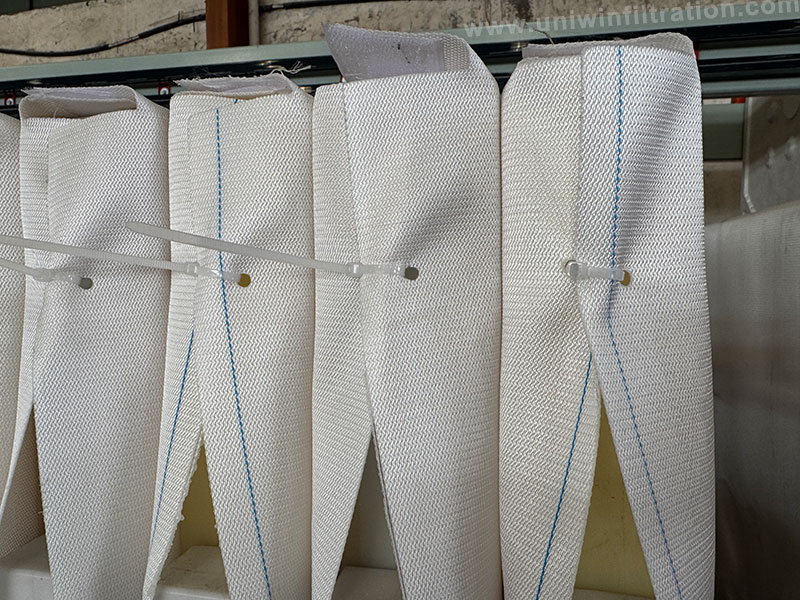
How to Determine If Filter Cloth Needs Cleaning?
- A significantly slower filtration speed indicates that the filter cloth pores are clogged.
- Filter cake is difficult to remove, and residue remains on the filter cloth surface, affecting cake removal.
- The filter press output is turbid, indicating incomplete filtration due to damaged or clogged filter cloth.
- A blackened, hardened filter cloth surface with a thick layer of residue is a sign that cleaning is needed.
General Cleaning Frequency
- Normal continuous use: Clean once every 1-2 weeks
- High viscosity or high oil content materials: Clean once per shift or daily
- Handling corrosive or highly scaling materials: Clean after each use
- Significant filter cloth clogging and decreased filtration efficiency: Clean immediately
Reasons for Washing Filter Cloth
To restore filtration efficiency
After prolonged use, the surface and pores of the filter cloth become clogged with filter cake residue, fine particles, or grease, leading to:
- Slower filtration speed
- Turned turbid filtrate
- Poor filter cake formation
Cleaning can unclog the pores of the filter cloth, restoring the filtration performance to near its factory condition.
Extending filter cloth lifespan
Long-term adhesion of residues such as crystals, grease, and heavy metal particles can cause wear or chemical corrosion to the filter cloth fibers. Timely cleaning can:
- Reduce fiber fatigue and aging rate
- Prevent localized damage caused by clogging
Delay the overall failure cycle of the filter cloth
Ensuring smooth filter cake removal
A rough filter cloth surface or excessive adhesion will lead to:
- The filter cake sticks to the cloth and is difficult to remove
- An extended filtration cycle and frequent manual cake cleaning
- Increased costs and labor burden
A clean filter cloth surface allows for the formation of a complete filter cake, improving cake removal efficiency.
Avoid cross-contamination
In industries such as food, pharmaceuticals, and chemicals, filter cloth residue can cause serious quality problems and even violate production standards. Cleaning can:
- Remove residue from the previous batch
- Prevent contamination between different batches
- Ensure product purity and safety
Improving overall machine stability
Filter cloth clogging is often accompanied by increased pressure in the filter press system, which may lead to:
- Water pump overload or frequent start-stop
- Filtrate backflow or leakage
- Uneven stress on filter plates, or even breakage
The regular washing of the filter cloth helps stabilize system pressure and ensures equipment safety.
Conclusion
Cleaning filter cloths is not only a maintenance operation, but also a crucial measure to ensure production continuity and stability. It is recommended to develop standardized cleaning procedures and cycles based on different application scenarios (such as wastewater treatment, slurry dewatering, and food processing), and to use filter cloth testing tools in conjunction with these procedures to form a complete filter cloth management system.