
6 Additional Functions of Filter Presses
Filter presses, commonly used for solid-liquid separation, can be equipped with various additional functions besides their basic filtration capabilities, depending on process requirements and application scenarios. These functions enhance working efficiency, automation levels, and operational safety. Below are some 6 common additional functions of filter presses.
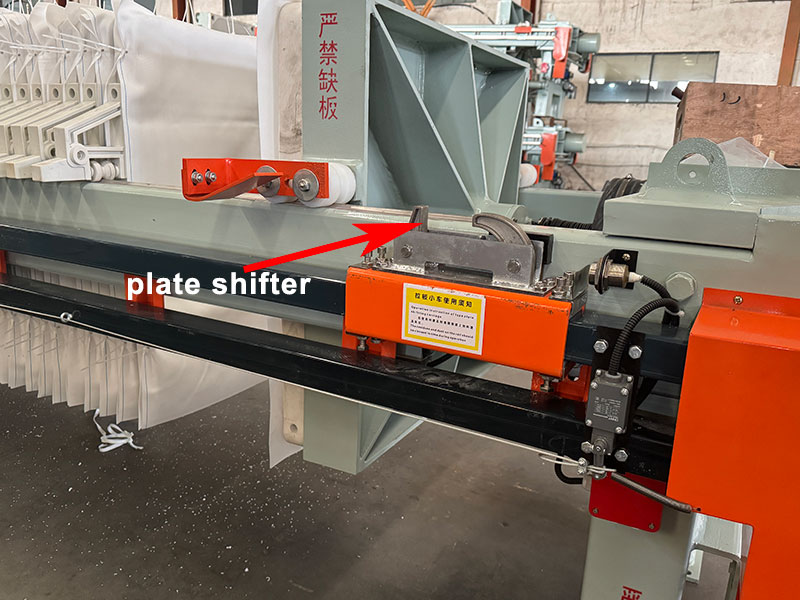
Automatic Plate Shifter
The automatic plate shifter uses a mechanical device to sequentially pull apart the filter plates (or multiple plates simultaneously), allowing the filter cake to fall off automatically, eliminating the tedious manual process of opening each plate individually.
Applicable scenarios: Medium to large-scale processing volumes, continuous operation projects
Advantages:
- Reduces manual labor intensity
- Improves cake discharge efficiency
- Can be integrated with a PLC system to automatically complete the plate pulling and cake discharge process
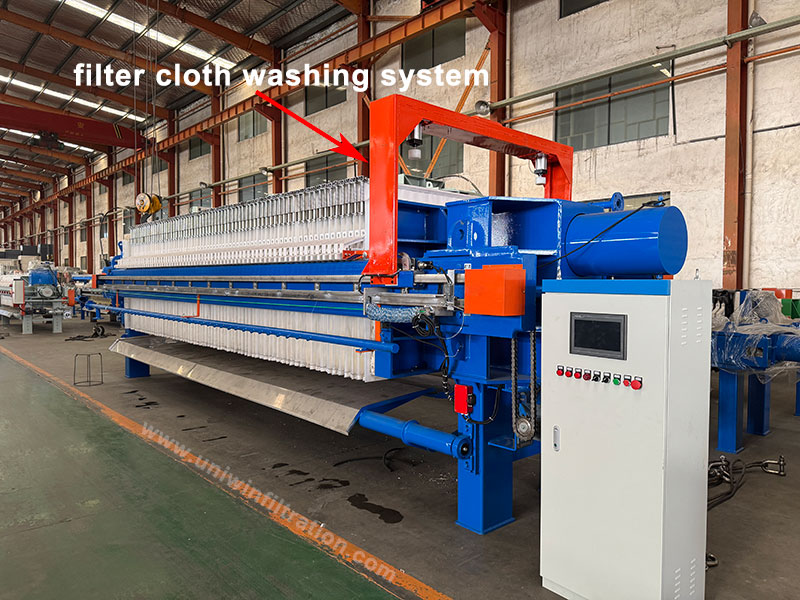
Automatic Filter Cloth Washing System
Utilizing high-pressure spray nozzles that move along a track, the system periodically cleans the filter cloth to prevent clogging and maintain optimal filtration performance.
Applicable scenarios: High-viscosity or materials prone to filter cloth clogging, such as ceramic slurry and coal slime.
Advantages:
- Extends the lifespan of the filter cloth lifespan
- Reduces manual cleaning time
- Maintains continuous equipment operation
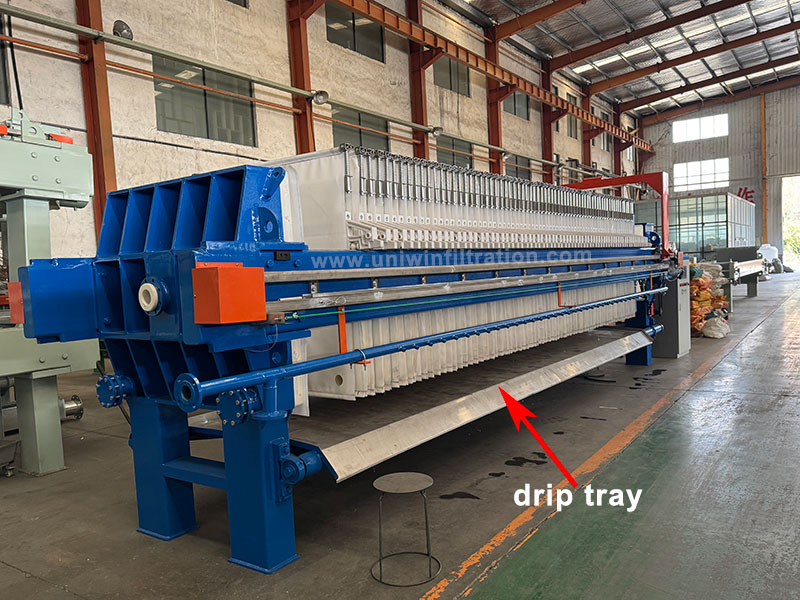
Drip Tray
The drip tray is installed below the filter press and is used to collect dripping liquid during the filtration process. When the filter press is operating, the drip tray is closed, and the dripping filtrate flows down along the flap. When the filter cake is discharged, the drip tray opens, allowing the filter cake to fall.
Applicable scenarios: Situations with high environmental requirements, corrosive liquids, or pollution risks.
Advantages:
- Maintains a clean workshop environment
- Prevents liquid accumulation on the floor, improving safety
- Prevents secondary contamination of the filter cake
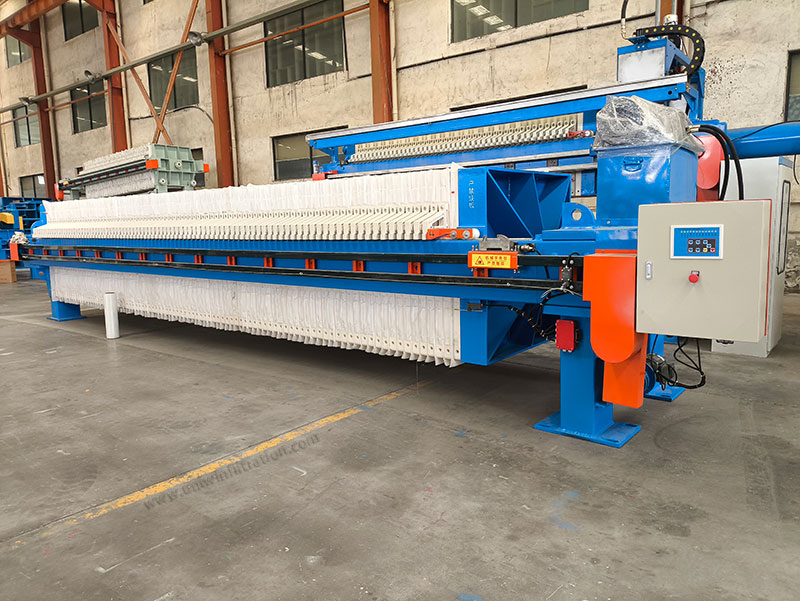
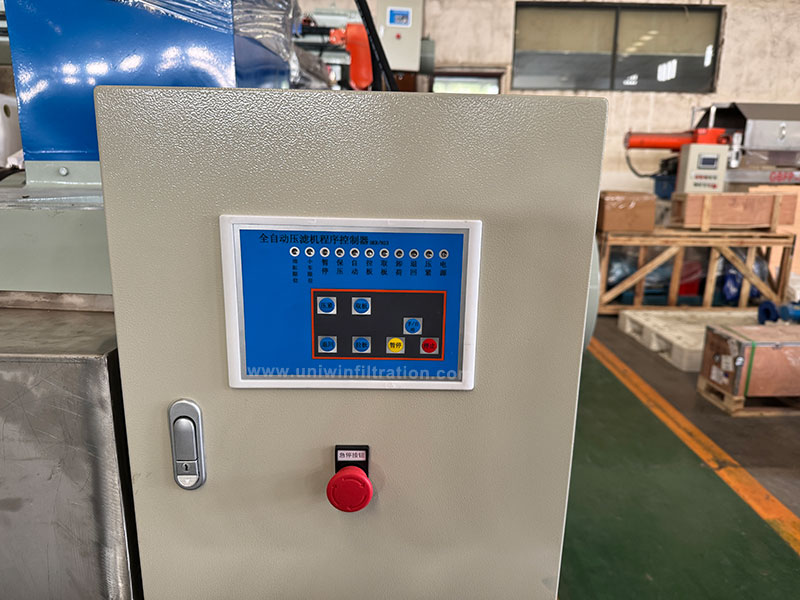
Intelligent Control System (PLC)
The PLC programmable control system, combined with a touchscreen interface, enables automated control and real-time monitoring of the entire filtration process.
Applicable scenarios: Automated factories, central control system integration
Advantages:
- Data logging and remote control
- Alarm and fault self-diagnosis
- Improved overall operational intelligence
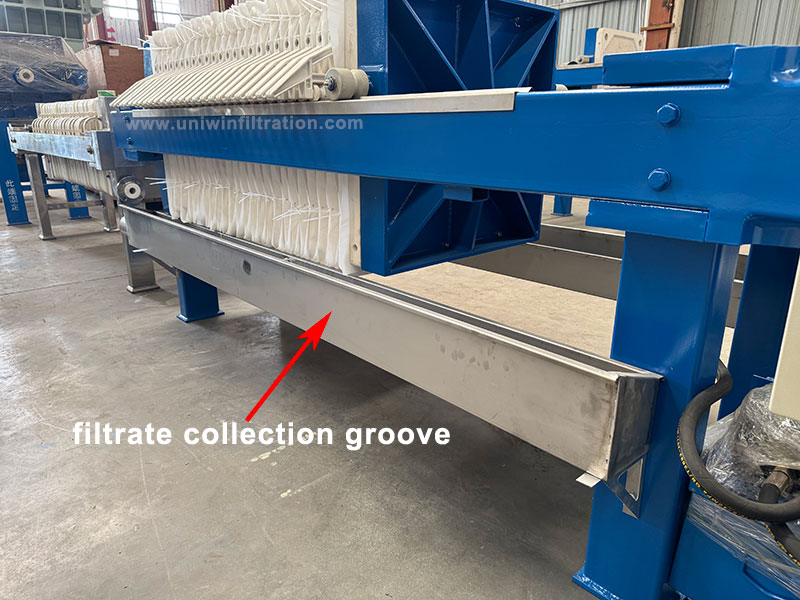
Filtrate Collection Groove
The filtrate collection groove is a liquid collection device installed on the side of the filter press, used to collect the filtered liquid and drain it to the discharge system.
Applicable scenarios: Processing corrosive, polluting, or reusable filtrates
Advantages:
- Prevents filtrate spillage and ground contamination
- Facilitates liquid classification and reuse
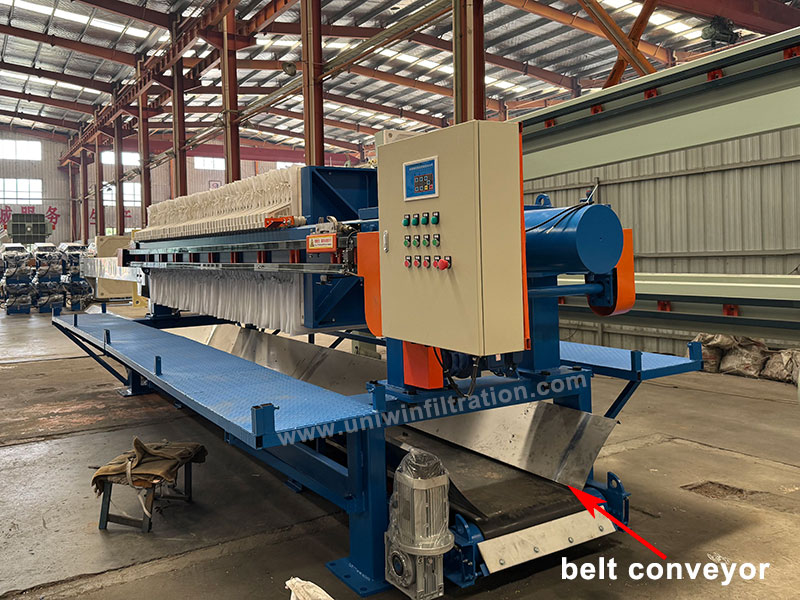
Belt Conveyor
The belt conveyor is used to automatically transport the filter cake to a designated location after it falls, such as a filter cake stacking area or the inlet of a screw conveyor.
Applicable scenarios: Projects with large quantities of filter cake requiring centralized collection.
Advantages:
- Reduces manual handling
- Improves the efficiency of subsequent filter cake processing
- It can be custom-designed according to the length of the filter press and the discharge location.
Conclusion
In summary, filter presses can be configured with various additional functions to meet different process requirements. These functions not only optimize the solid-liquid separation process but also satisfy environmental, safety, and energy-saving requirements, serving as an important guarantee for efficient production and intelligent management. Please contact us if you have these requirements.