
Applications of PLC in Filter Presses
In a filter press system, the PLC is of paramount importance, responsible for connecting the hydraulic, feeding, washing, pressing, and unloading processes into a stable and repeatable automatic cycle. When used effectively, it not only saves labor but, more importantly, makes the filtration cycle more stable and the moisture content of the filter cake more controllable. The following are examples of PLC applications in filter presses.
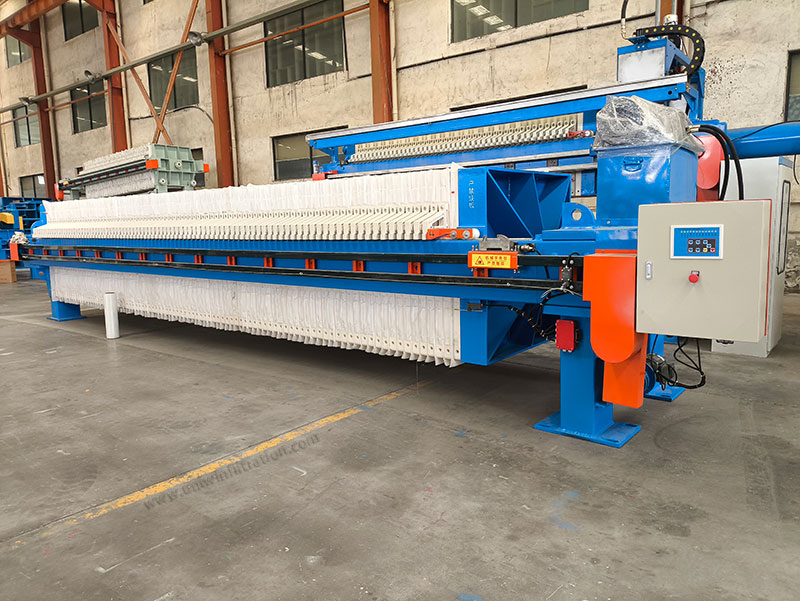
Compressing Filter Plate
The PLC sends a command to drive the hydraulic station, and the oil cylinder pushes the clamping plate forward.
The pressure sensor or displacement switch determines whether the set clamping force has been reached. If the pressure is not reached, the pressure is continuously increased. Once the set pressure is reached, the pressure holding phase begins.
Pressure Holding and Locking
The PLC maintains stable system pressure while monitoring for pressure drops.
If the pressure drops too quickly, it will trigger pressure replenishment or an alarm (common in cases of seal aging or check valve leakage).

Feed Filtration
The PLC starts the feed pump and determines the end of the filtration stage based on changes in time, pressure, or flow rate.
When the pressure reaches its upper limit (e.g., 0.6–1.0 MPa), the flow rate drops significantly.
Secondary Pressing/Drying (Optional)
PLC-controlled diaphragm pressing (air or water) further reduces the moisture content of the filter cake. Pressure interlock protection is typically included to prevent overpressure damage to the filter plates.
Unloading Preparation (Release)
PLC-controlled hydraulic system depressurizes, the cylinders return, and the filter plates are pulled apart.
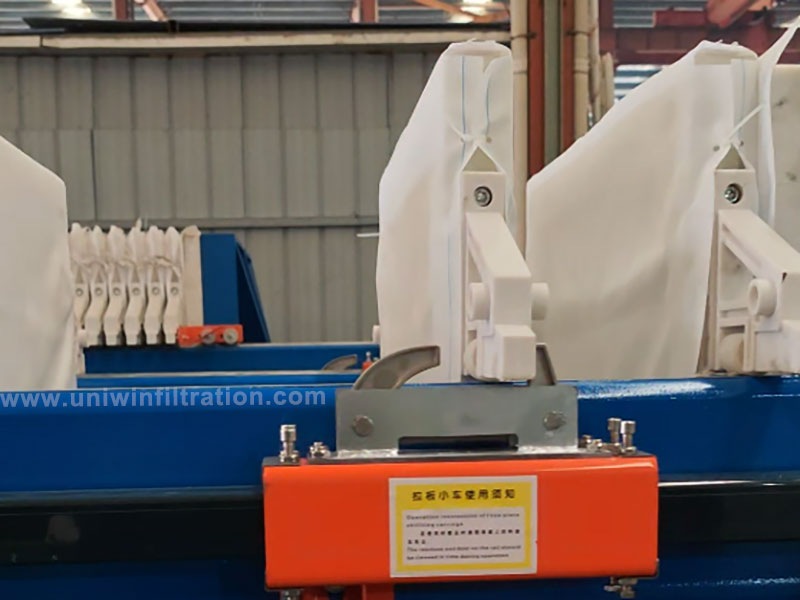
Plate Pulling and Unloading
PLC-controlled plate-by-plate unloading is achieved via limit switches and encoders/proximity switches. If the filter cake is detected not falling off, a “secondary shaking” logic can be set.
Cycle Restart
After all plates are reset, the next automatic cycle begins.
PLC Key Points and Signals
Input signals
- Pressure sensors (hydraulic system, feed pressure)
- Limit switches (clamping position, cylinder return)
- Filter plate position detection (plate pulling count)
- Liquid level/material level signals
- Motor operating status, fault feedback
Output control
- Hydraulic station motor start/stop
- Solenoid valves (pressure pressing, return, pressure holding)
- Feed pump/press pump (with variable frequency drive available)
- Plate puller motor/chain drive
- Alarms and indicator lights

Key Advantages of PLC
Stable process parameters
For example, pressing pressure, filtration time, and pressing pressure can all be precisely set, avoiding human error that directly affects the dryness of the filter cake and processing capacity.
Rapid Fault Location
The PLC can record alarm logic, such as:
- Pressure timeout → Hydraulic system problem
- Feed pressure not rising → Pump or filter cloth blockage
- Plate puller not in place → Mechanical jamming
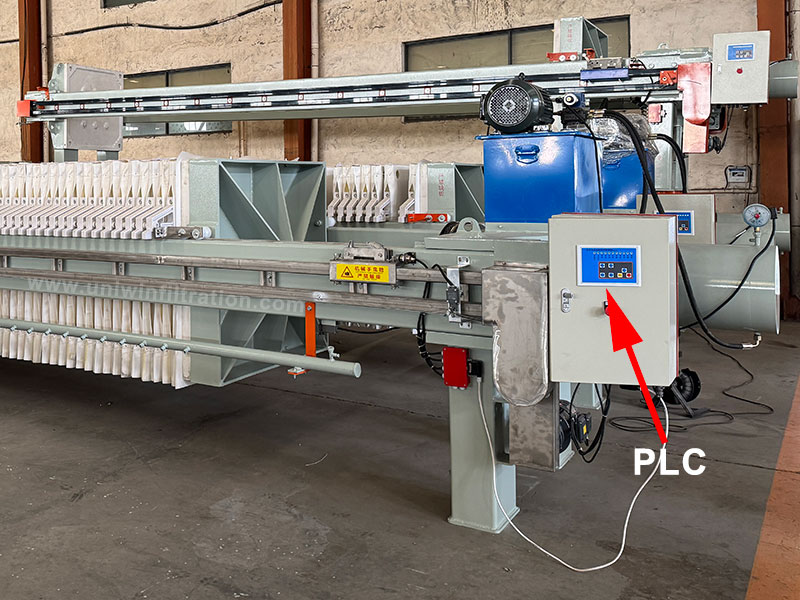
In conjunction with the touch screen, on-site personnel can quickly identify the problem area.
Energy saving and optimization
By controlling the feed pump with a variable frequency drive, the PLC can automatically adjust the flow rate according to the pressure, avoiding ineffective energy consumption during high-pressure stages, which is crucial in large-scale filter press systems.
Conclusion
PLC play an indispensable role in filter presses, significantly improving their efficiency. If you are currently working on a project or making a modification, please specify your filter press type (e.g., chamber, diaphragm, automatic plate-pulling) and control requirements. We can help you refine the PLC control flow into a ready-to-use logic framework.