
Filter Press Cloth Production Process
Filter press cloth is a key filtration medium in filter press equipment for achieving solid-liquid separation. Its performance directly affects filtration accuracy, permeability, filter cake peeling, abrasion resistance, and service life.
The production of filter press cloth is typically not a single-step process. It begins with polymer raw materials and involves multiple processes, including yarn preparation, warping, weaving, cutting, edge sealing, sewing, and inspection, ultimately producing a finished filter cloth ready for installation.
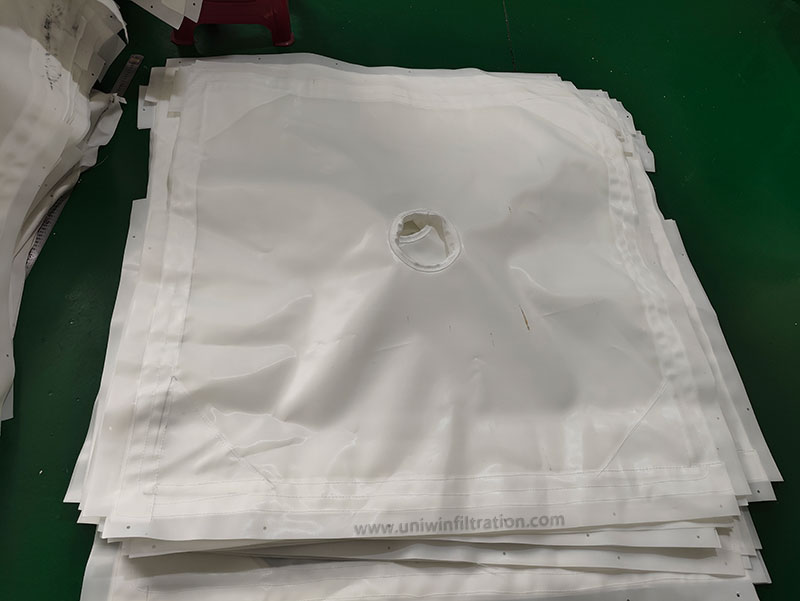
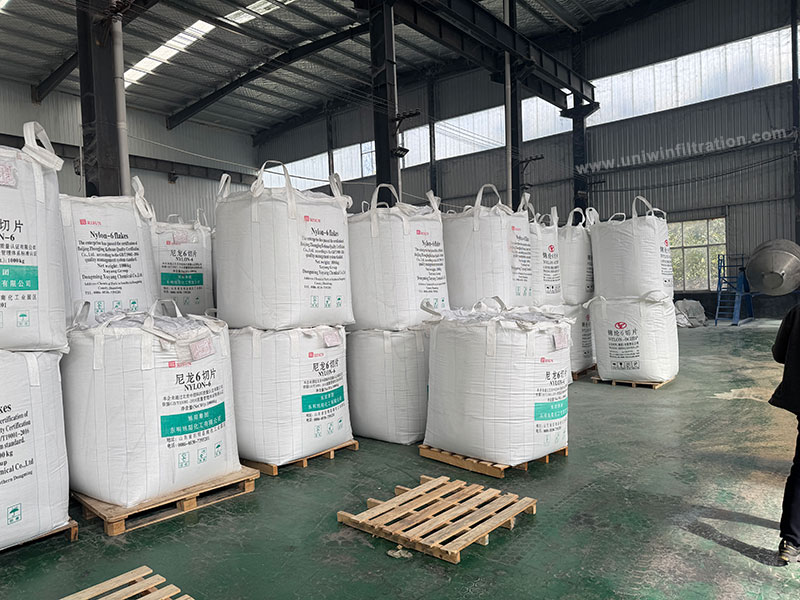
Raw Material Preparation
Common materials for filter cloth in filter presses include nylon, polyester, and polypropylene. Nylon, in particular, offers good abrasion resistance, strength, and flexibility, making it suitable for some filtration and dewatering applications.
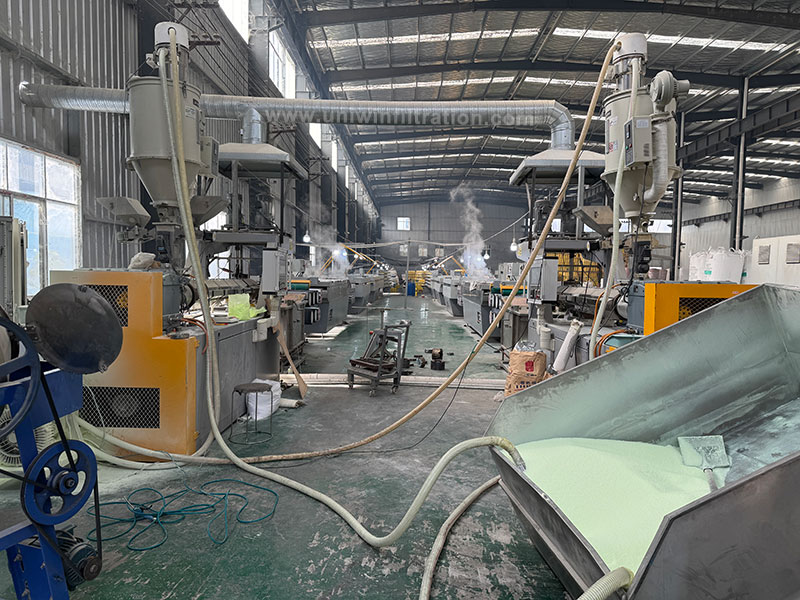
Melt Fabrication
Dried nylon chips are fed into an extrusion unit via an automated feeding system. Under heating and screw conveying, they are gradually melted and plasticized to form a uniform and stable polymer melt. The melt is then extruded through a die or spinneret to form continuous filaments.
After extrusion, the filaments undergo cooling and shaping to transition from a high-temperature molten state to a partially formed state. Cooling can be achieved through air or water cooling. The cooled filaments then enter a drawing system, where multiple guide rollers and a stretching mechanism improve molecular orientation, resulting in better tensile strength, abrasion resistance, and dimensional stability.
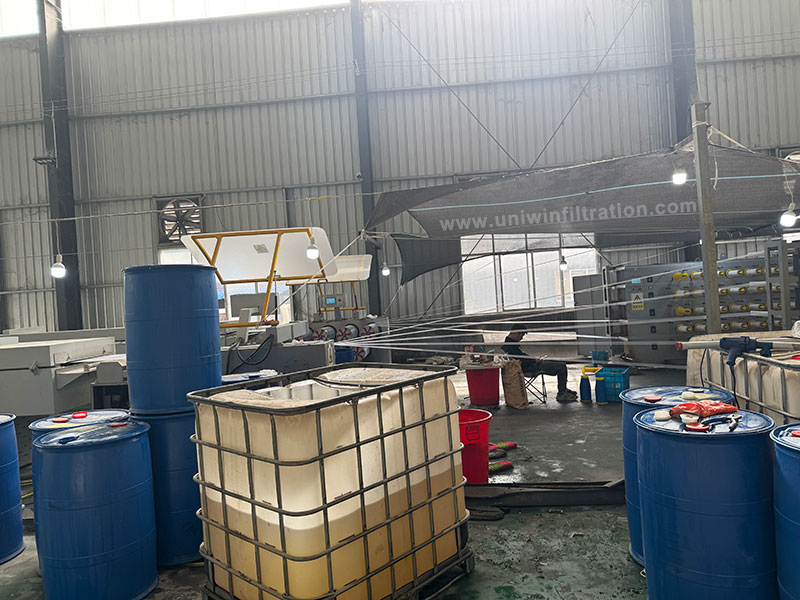
Drafting and Heat Setting
After initial shaping, nylon filaments typically undergo further drafting and heat setting. Drafting aims to further improve the physical properties of the filament, making it more uniform and stronger; heat setting stabilizes the filament dimensions, reducing shrinkage and deformation during subsequent weaving and use.
During this stage, the filaments often undergo oiling or surface treatment. After heat treatment and surface treatment, the filaments are wound into bobbins to serve as the base material for subsequent textile processes.
Warping
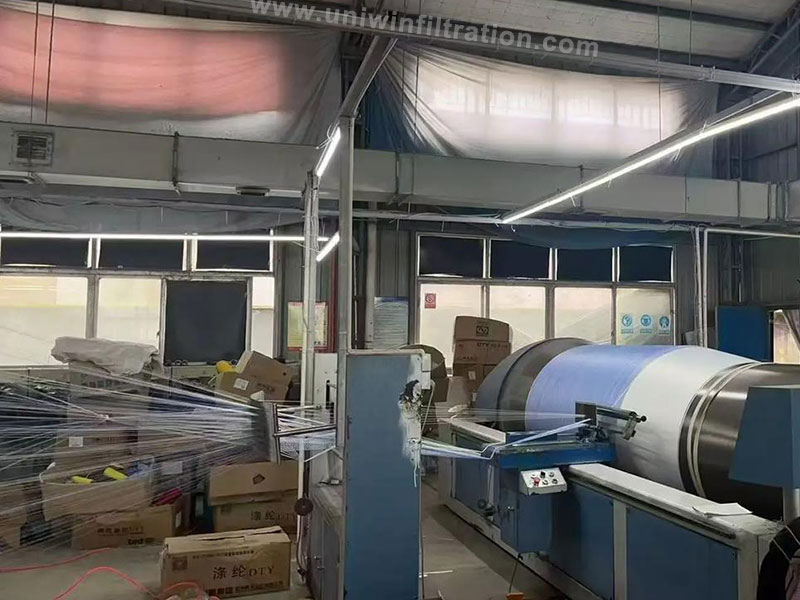
Warping is a crucial preparatory step before weaving. Its main task is to neatly wind the warp yarns from multiple bobbins onto the warp beam according to the specified number of yarns, width, arrangement order, and tension requirements, creating conditions for subsequent weaving.
The quality of warping directly affects the quality of the subsequent weaving. Uneven warping tension can easily lead to problems such as unstable fabric width, uneven mesh, fabric stripes, and inconsistent edge tension. Therefore, this step usually requires a high degree of process stability and operational experience.
Weaving the Fabric
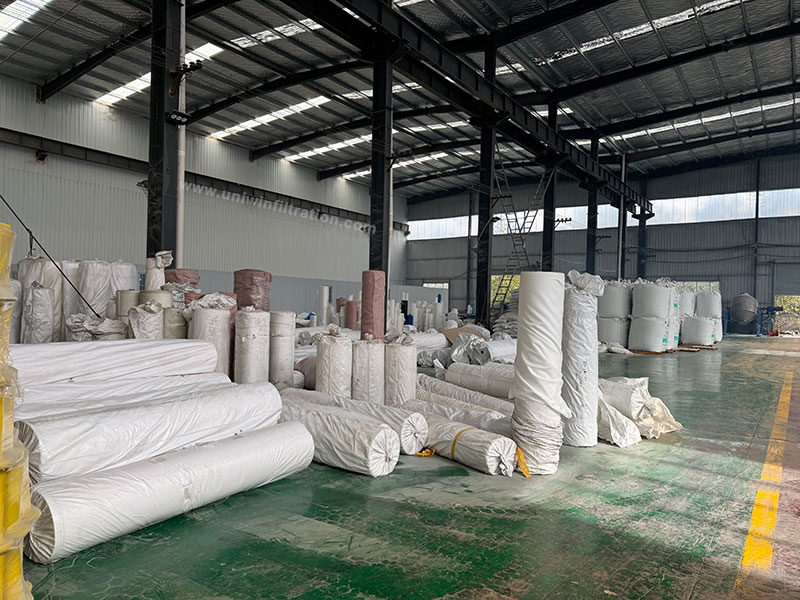
After warping, the warp beams are fed into the loom and woven with the weft yarns to form the filter cloth fabric. Filter press filter cloths are typically woven, and different products can be designed with different weave structures, such as plain weave, twill weave, or special mesh structures, depending on the filtration precision and operating environment. The woven fabric is then rolled up for the next step.
Edge Cutting and Sealing
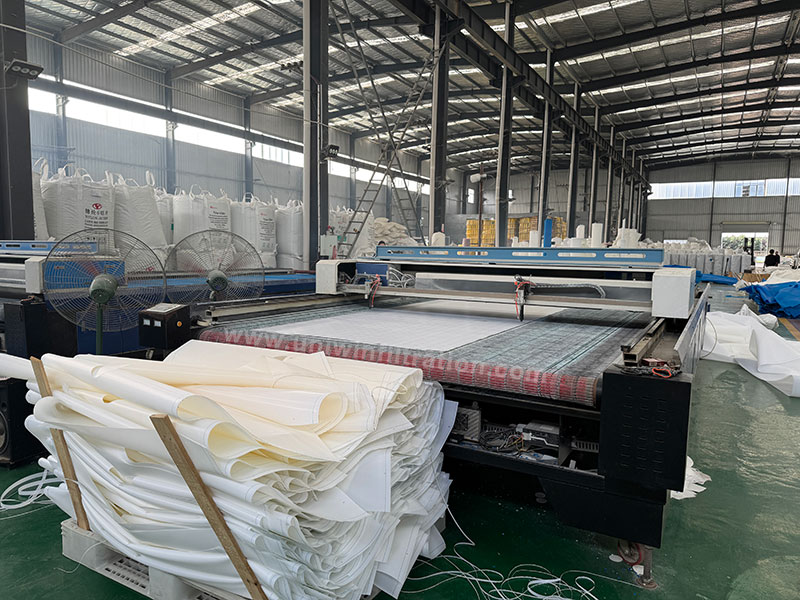
After finishing, the entire roll of filter cloth is cut and edge-sealed according to the customer’s required filter plate size, hole position requirements, and equipment model. Cutting can be done using an automatic cutting machine or hot cutting equipment.
- The main tasks at this stage are:
- Cutting pieces to the specified length and width
- Trimming edges
- Marking center lines, hole positions, or process lines
- Edge sealing
Manual Sewing
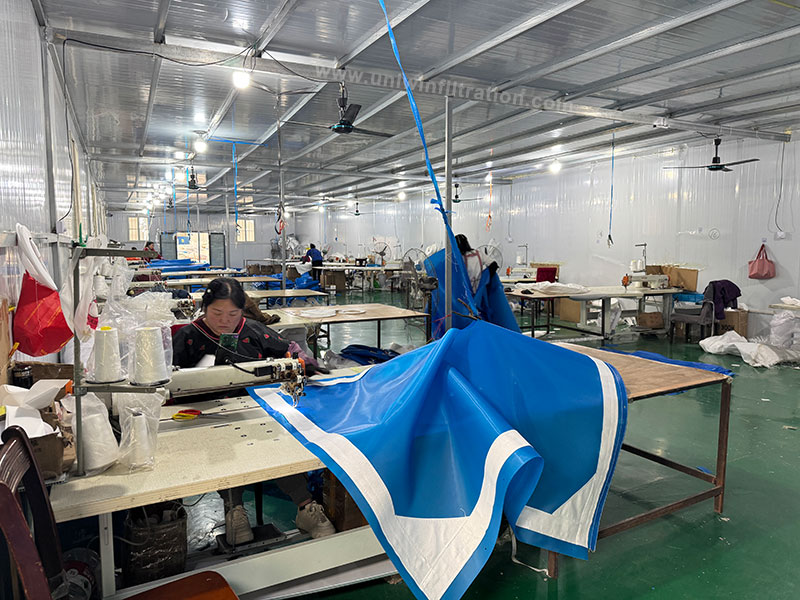
For filter cloths used in filter presses, simply cutting and sealing the edges is often insufficient; many products require a sewing process. Depending on the equipment model, the filter cloth may need to undergo:
- Filter cloth edging
- Orifice edging
- Hook sewing
- Double-piece splicing
- Positioning and reinforcement fabric sewing
Conclusion
The weaving process of filter cloth has a significant impact on the filtration efficiency of filter presses. Each step of the process requires strict control to ensure quality. Please feel free to contact us if you have any needs.