
How to Extend the Service Life of a Filter Press?
The core principles for extending the service life of a filter press are: even stress distribution, avoiding overload, minimizing corrosion, wear, and operational errors. Most damage to filter presses is caused by long-term deviations from optimal operating conditions (pressure, temperature, chemical media, particle hardness) combined with inadequate maintenance. This article will detail how to extend the service life of a filter press.
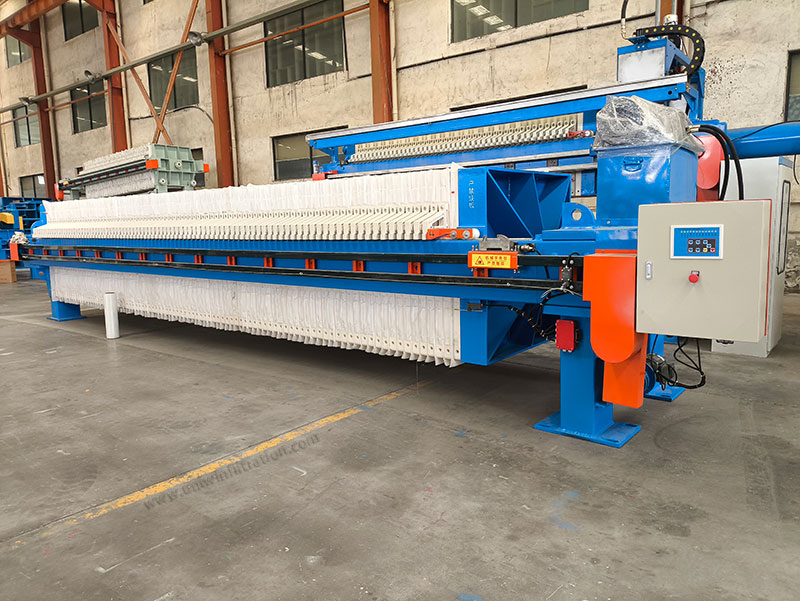
Controlling Operating Conditions
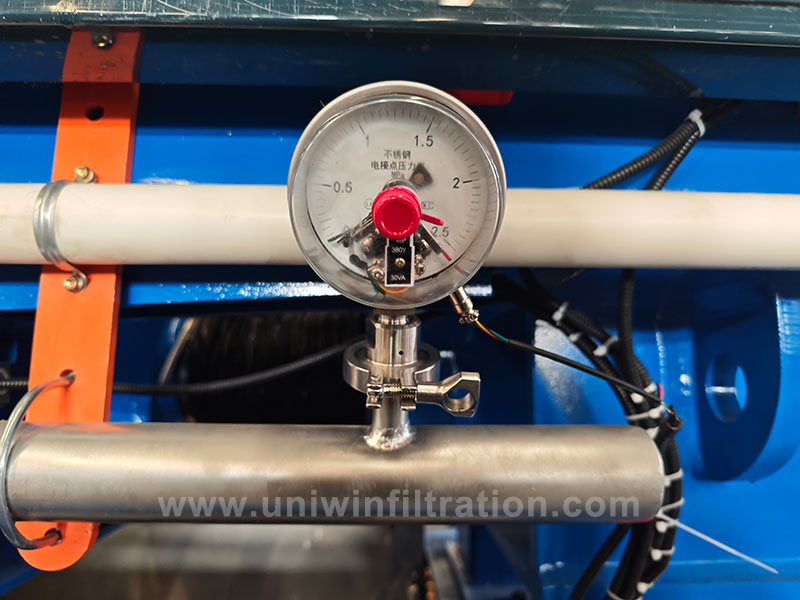
Compressing pressure/filtration pressure does not overload
- Avoid overloading the compressing presure /filtration pressure. The hydraulic station pressure should be set according to the equipment nameplate and the number of filter plates to avoid excessive pressure application.
- Do not keep the filtration pressure at the upper limit for extended periods. High pressure combined with hard particles is most likely to damage the filter plates and wear through the filter cloth.
Stable solids content in feed
When the solids content fluctuates greatly, it is easy to cause flow deviation, local erosion, and uneven filling of the filter chamber, resulting in uneven stress and deformation of the filter plate.
Temperature and chemical compatibility
- Excessively high media temperatures will accelerate the aging of filter plates (especially PP).
- Acids and alkalis must be confirmed to be compatible with the filter plate and filter cloth materials.
Proper Operation of the Filter Press
Feeding and filtration stages
- Feed at low pressure first, then increase pressure for filtration. Avoid direct scouring of the filter cloth/plate feed inlet area by high-speed slurry.
- Avoid frequent pump surges/cavitation, as pressure pulsations subject pipelines and filter plates to prolonged impact loads.
- Observe for flow deviations. If clear liquid exits from one side first/material exits from certain plates first, it often indicates filter cloth wrinkles, filter chamber blockage, or plate sealing problems. The machine should be stopped immediately for repair.
Cake removal and cleaning stage
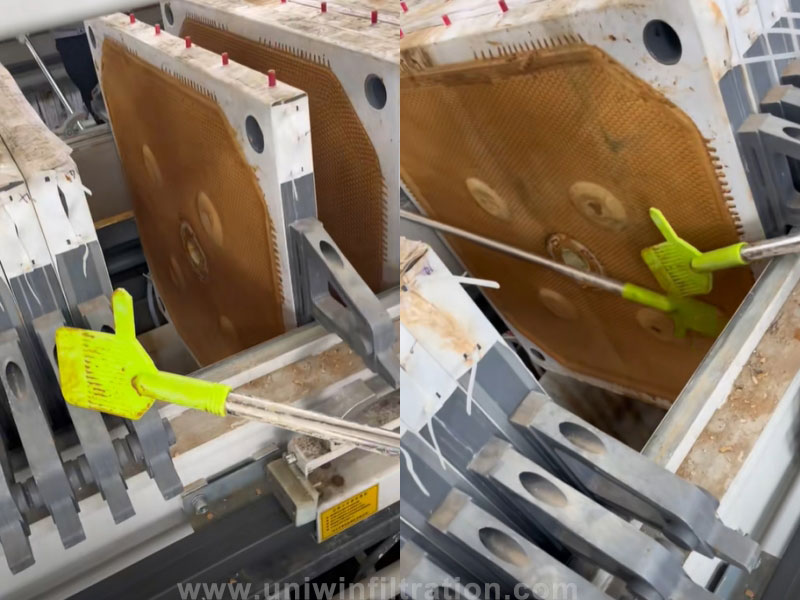
- Do not pry the filter cake with hard objects; use a special unloading shovel.
- If the filter plate is not discharging cake smoothly, do not force it. First, check the filter cloth for cake adhesion and moisture content, then decide whether to adjust the peeling method.
Maintain the Filter Plates, Filter Cloth, and Seals Properly
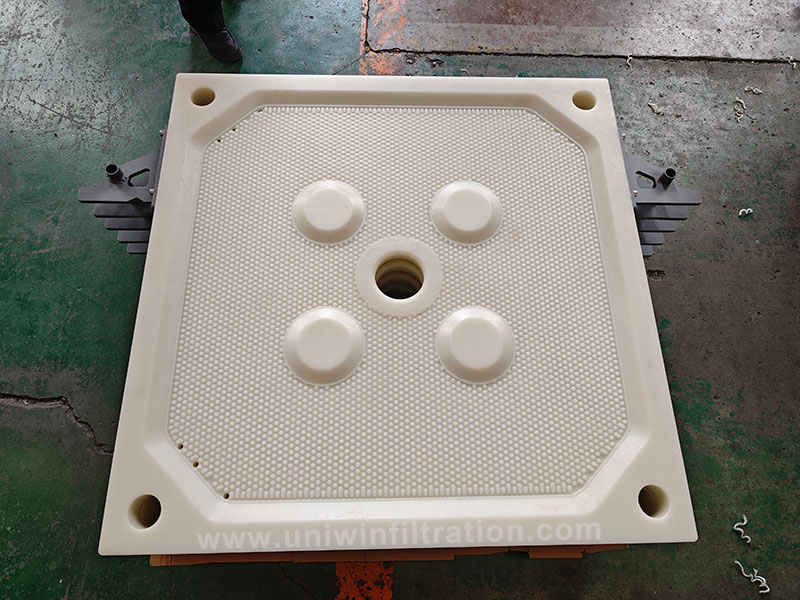
Filter plates
- Regularly inspect the sealing surfaces and around the feed inlet for cracks and damage.
- Keep the plate surface clean and flat. Residue on the plate surface can cause localized pressure points, leading to deformation and leakage over time.
- Align the filter plates with the plate-pulling trolley: Misalignment will cause long-term uneven load and wear on the guide rails and handles.
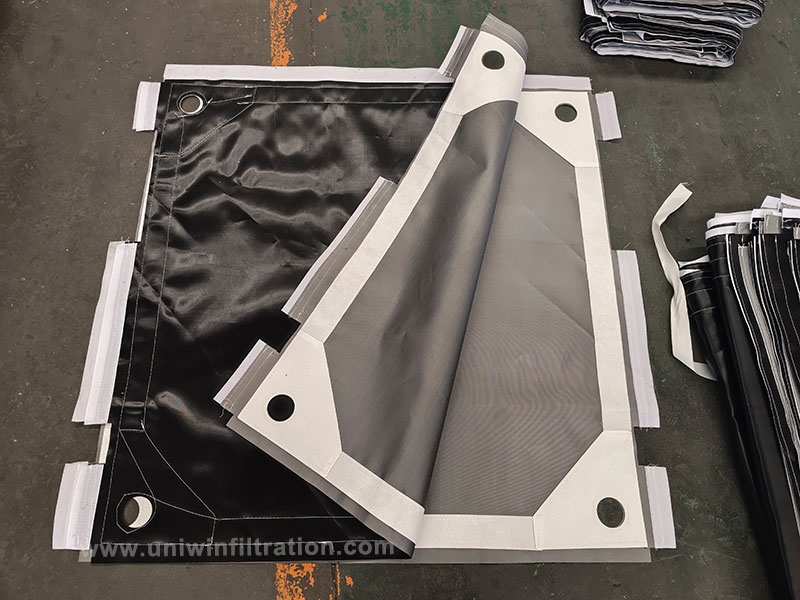
Filter cloth
- Clean it promptly; clogging will increase pressure differential and prolong filtration time.
- The cloth should be laid flat and without wrinkles, as wrinkles can easily create bypass leakage and erosion points.
- Choose the right material and basis weight; for hard particles/high-pressure applications, a more wear-resistant configuration is recommended.
Sealing and piping
- O-rings and gaskets should be replaced periodically.
- Feed pipes, valves, etc., should be replaced promptly if their inner walls become thinned due to erosion to prevent pipe bursts and secondary accidents.
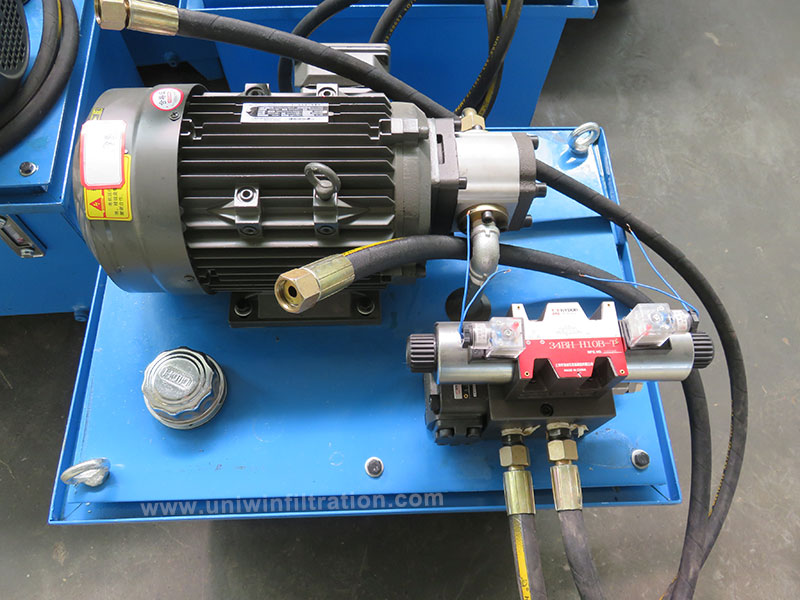
Maintain a Healthy Hydraulic System
- Replace hydraulic oil and filters regularly; address oil emulsification, blackening, and unusual odors immediately.
- Prolonged high oil temperature can harden seals and cause valves to stick.
- Check for leaks in cylinders and pipe joints; small leaks, if left unchecked, can lead to insufficient pressure, loose sealing, frequent pressure adjustments, and further accelerated wear.
- Calibrate pressure gauges/sensors to prevent incorrect readings.
- Perform regular lubrication and cleaning.
Conclusion
The lifespan of a filter press is closely related to its various components. Proper daily maintenance of each part and standardized operation can extend the filter press’s lifespan. Please feel free to contact us if you have any questions.