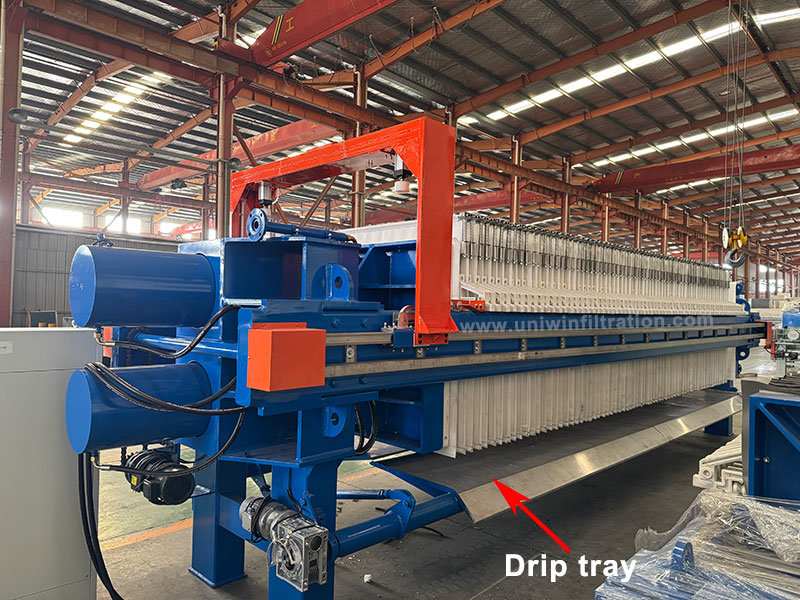
Filter Press Drip Tray
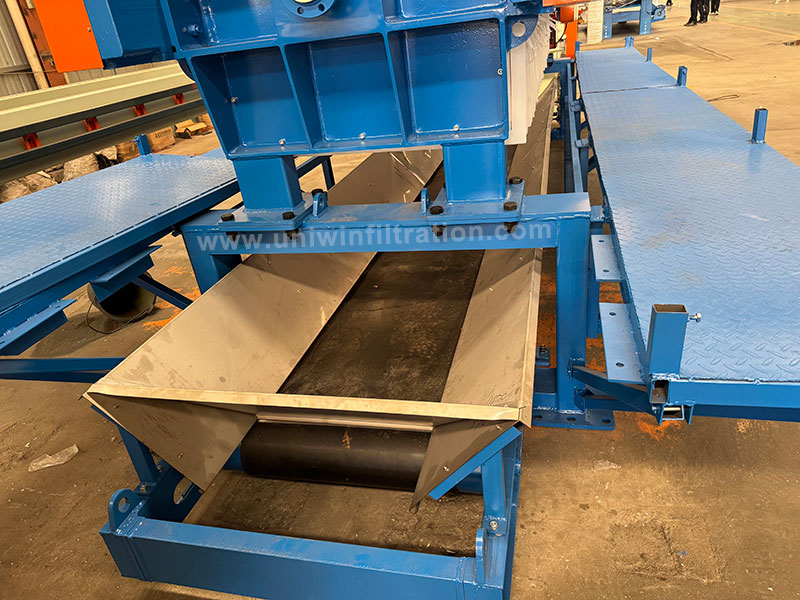
The filter press drip tray is installed below the filter press, directly beneath the filter plate discharge opening. It is a crucial auxiliary device in the filter press discharge system, serving to guide the flow of liquid and prevent secondary contamination of the filter cake.
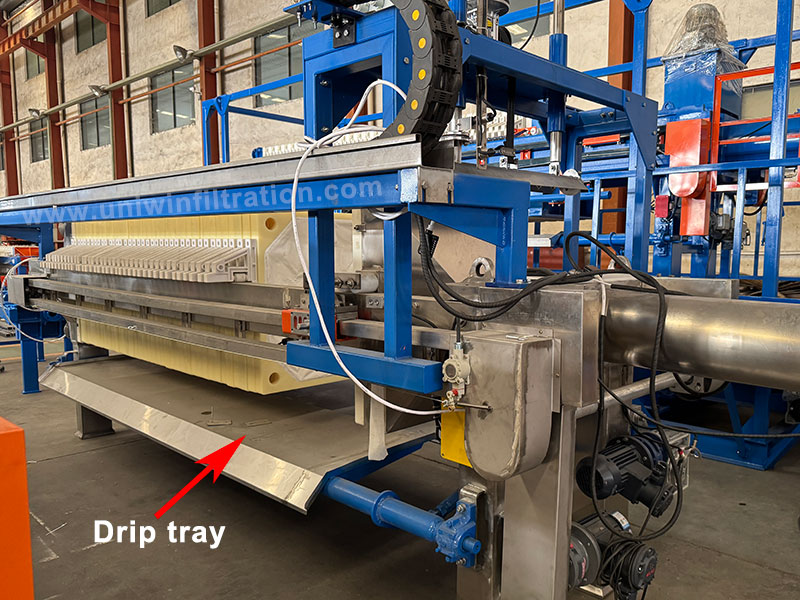
Working Principle of Filter Press Drip Tray
The drip tray, as an important auxiliary device of the filter press, performs different functions during the filtration and discharge stages.
Filtration stage: The drip tray is in a closed state, positioned against the bottom of the filter plate. At this time, there may be a small amount of leakage from the filtrate; the drip tray acts to collect and guide this leakage, preventing the filtrate from dripping directly onto the filter cake receiving area below, thus avoiding contamination of the filter cake and ensuring product purity and subsequent processing efficiency.
Discharge Phase: Once filtration is complete, the system enters the discharge process. Upon receiving a control signal, the drip tray automatically flips to the open position. Subsequently, the filter plates are pulled apart sequentially by the plate pulling device, and the filter cake naturally falls off due to gravity or vibration, dropping directly into the hopper, conveyor belt, or collection bin below the drip tray, achieving efficient and centralized discharge.
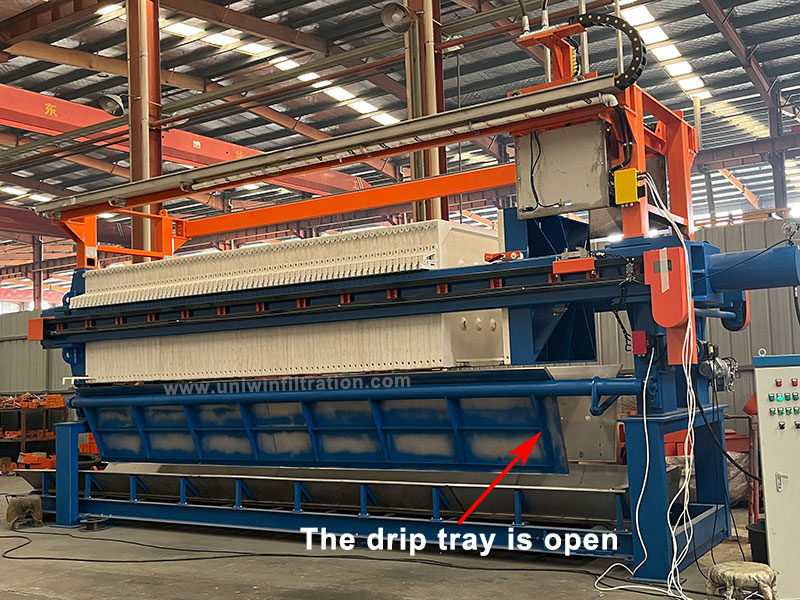
Advantages of the Filter Press Drip Tray
- Prevents secondary pollution. When the filtrate leaks, the drip tray closes, preventing filtrate from dripping and contaminating the filter cake below or the workshop floor.
- The hinged plate features an efficient drainage function, with a sloped design that effectively directs the filtrate to the collection tank, maintaining a clean working environment.
- Automatic flipping linkage,it can be linked with an automatic plate pulling system to achieve continuous unloading under unattended operation, improving work efficiency.
- The structure is simple and reliable, the flap mechanism is mature, maintenance is easy, and operation is stable, making it suitable for a variety of working conditions.
- It reduces manual intervention and the need for manual cleaning of drips and leaks, thereby lowering labor intensity and costs.
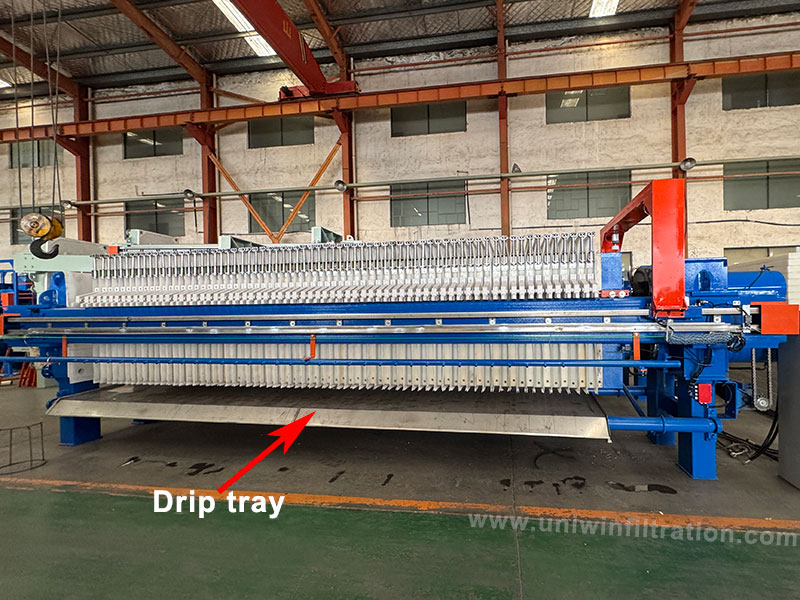
Usage Precautions
- Regularly check the drip tray’s operating status
Ensure the drip tray opens and closes smoothly without jamming, deformation, or air leaks, especially checking the sealing and response speed of pneumatic or electric control systems. - Clean residual materials from the drip tray surface
After prolonged operation, filtrate or small filter cakes may adhere to the drip tray surface. Regular cleaning is necessary to prevent blockage of the drainage channels or interference with the tray’s tilting mechanism. - Interlocking Control System Debugging and Matching
The drip tray and pull-out plate device, along with the control PLC program, must be properly matched to prevent the flip plate from resetting prematurely before the filter cake is completely detached. - Attention to Corrosion Prevention and Material Selection
Select appropriate drip tray materials based on the material characteristics, such as stainless steel, polypropylene, or coated anti-corrosion materials, to ensure long-term operation without corrosion or aging. - Precise Installation and Positioning
During installation, ensure that the drip tray and filter plate are precisely aligned and the tilting angle is appropriate to prevent uneven filter cake formation or interference with the equipment structure. - Regular Maintenance of the Drive Mechanism
Regularly lubricate and inspect the cylinders, motors, or connecting rod mechanisms to prevent malfunctions caused by wear and tear.