
Reasons for Frequent Breakage of Filter Plate Handles
Frequent breakage of filter plate handles is usually not due to the handle’s own quality alone, but rather the result of a combination of factors, including materials, structure, stress distribution, installation conditions, and operating habits. The following are some reasons for frequent filter plate breakage.
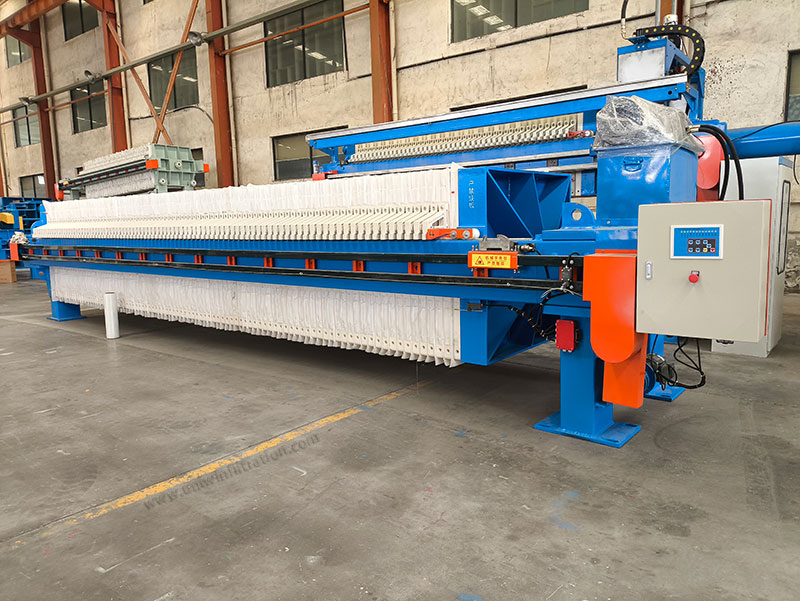
Material Issues
Insufficient material strength
The handle material itself lacks sufficient tensile and impact resistance. The material is brittle and prone to breakage under sudden impact.
Material aging
Prolonged exposure to acids, alkalis, solvents, or high-temperature media can cause plastics/composite materials to become brittle. Ultraviolet radiation and heat aging can also cause materials to lose their toughness.
Internal material defects
Injection-molded parts may have air bubbles and weld lines. Metal parts may have sand holes, cracks, or poor heat treatment.
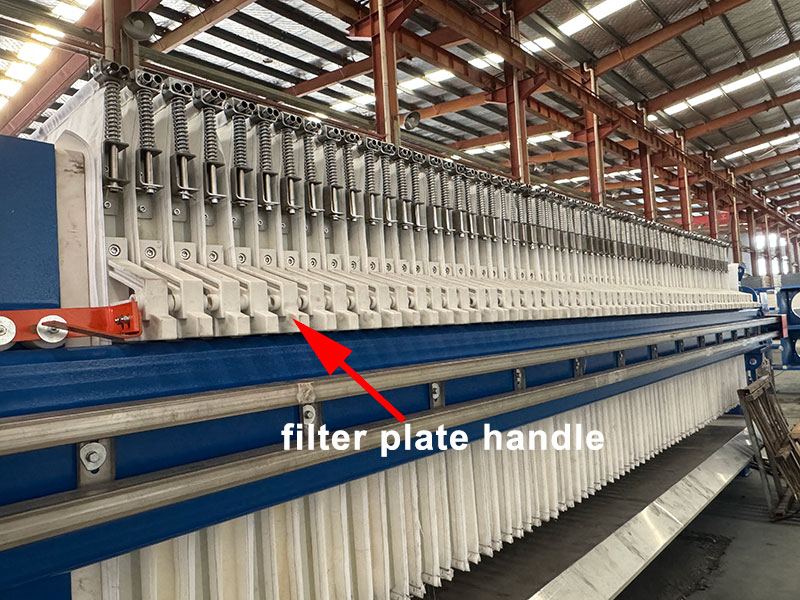
Inadequate Structural Design
Insufficient cross-section
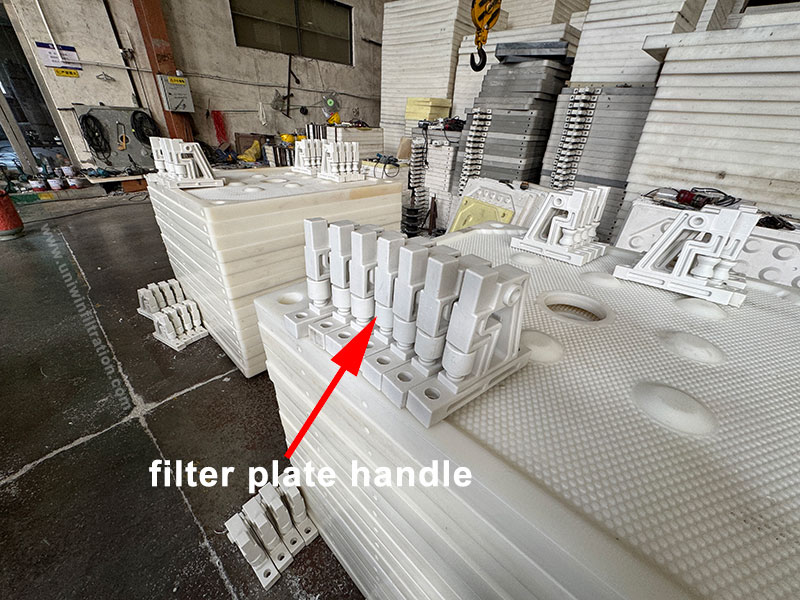
The handle base is too thin, resulting in weak load-bearing capacity. The base is particularly prone to becoming the fracture starting point.
Too small transition radius
Sharp corners at the handle-filter plate connection create significant stress concentration. Prolonged, repeated stress can easily lead to fatigue cracking.
Improper Operation
Pulling the filter plate by the handle
When the filter plate doesn’t move smoothly, operators often pull or yank it forcefully. In this case, the handle isn’t subjected to normal guiding force, but rather a large impact force.
Using the handle as a point of force to pry the plate
Using tools to pry the filter plate near the handle easily causes excessive local bending moments. Handle designs are generally unsuitable for this type of operation.
One-sided force
Pulling the filter plate by gripping only one side causes uneven loading and torsion. This results in combined tension and torsion stress at the base of the handle.
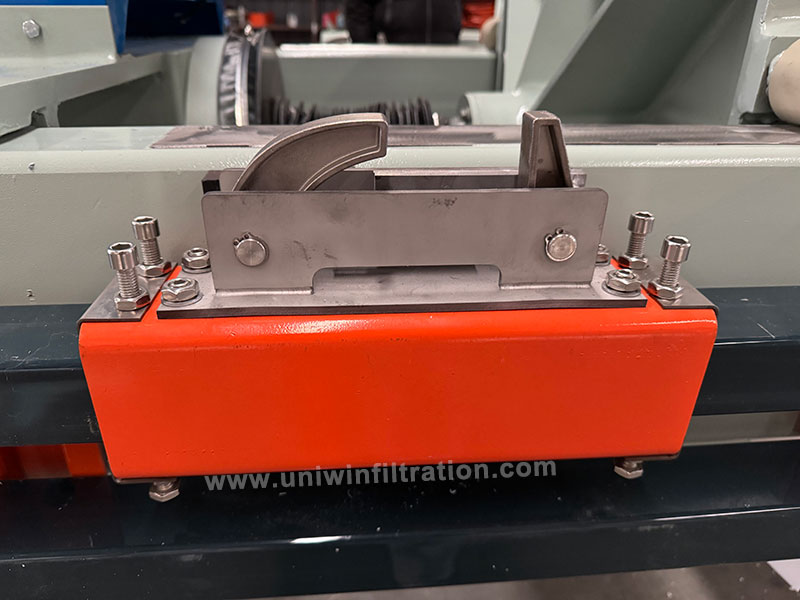
Excessive Filter Plate Running Resistance
Wear, deformation, and material accumulation in guide rails
Uneven guide rails, filter cake on the surface, and rust increase movement resistance. Increased resistance leads operators to subconsciously increase pulling force.
Improper filter plate alignment
Tilted or misaligned plates and frames, or uneven release after compression, can cause jamming during plate movement. The more severe the jamming, the more easily the handle is forced.
Incomplete unloading
Severe filter cake adhesion makes it difficult to separate filter plates when opening them. Operators often resort to force to separate the plates.
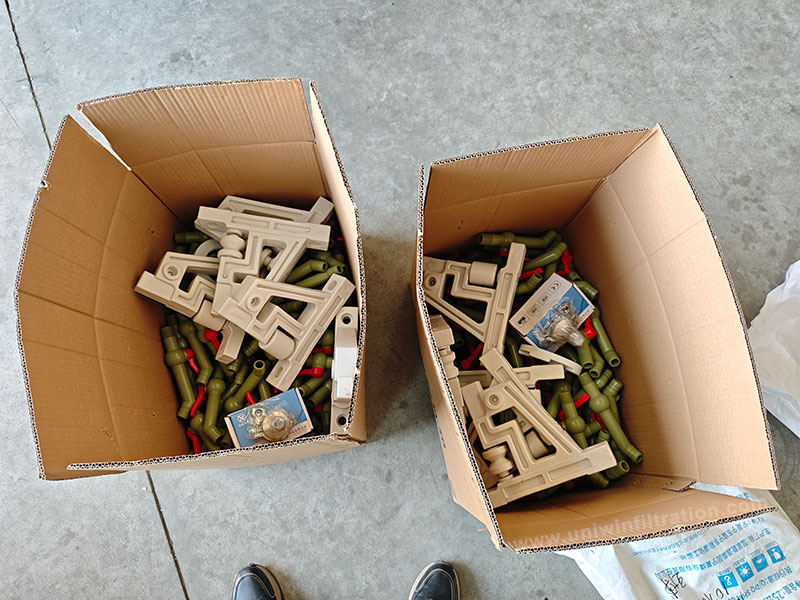
Abnormalities In Equipment Components
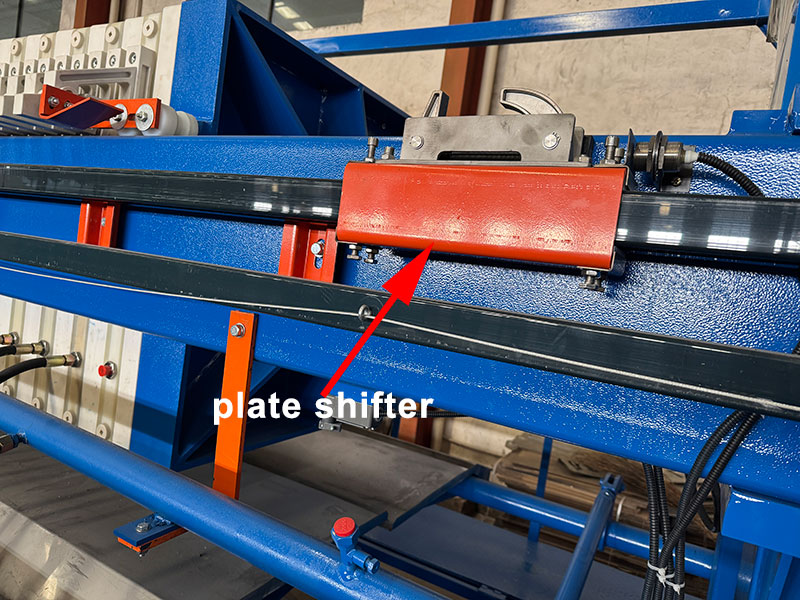
Inaccurate travel or position of the plate shifter
An incorrect gripping point causes eccentric force on the handle. Repeated pulling can lead to fatigue cracks.
Excessive plate pulling speed
Excessive start-stop impact will cause breakage over time.
Poor synchronization
Inconsistent left and right movements cause the filter plate to be twisted. The handle is subjected to torque, which is far more dangerous than pure pulling force.
Corresponding Improvement Measures
Reduce stress on the handles
- Clean and repair the guide rails to reduce jamming.
- Adjust the parallelism and concentricity of the filter plates.
- Optimize the unloading process to reduce plate sticking.
- Correct the gripping position, speed, and synchronization of the plate pulling machine.
- Do not pry, smash, or pull violently with the handles.
Improve the reliability of the handle body
- Replace with a material that is more resilient, corrosion-resistant, and fatigue-resistant.
- Thicken the cross-section at the base of the handle.
- Increase the radius of the base to reduce stress concentration.
Improve management and maintenance
- Establish a regular inspection system for handles and guide rails.
- Replace parts immediately upon discovering whitening, fine cracks, or loosening.
- Provide standardized training to operators.
- Statistically analyze the time, location, shift, and operating conditions of breakage to identify patterns rather than simply replacing parts.
Conclusion
The frequent breakage of filter plate handles is usually caused by a combination of factors. When troubleshooting, don’t just focus on the handle itself; pay close attention to issues such as guide rail jamming, filter plate misalignment, the pull-plate mechanism, the handle’s root structure, and material compatibility. This approach often leads to a quicker identification and resolution of the root cause.