
4 Main Factors Affecting the Processing Capacity of a Filter Press
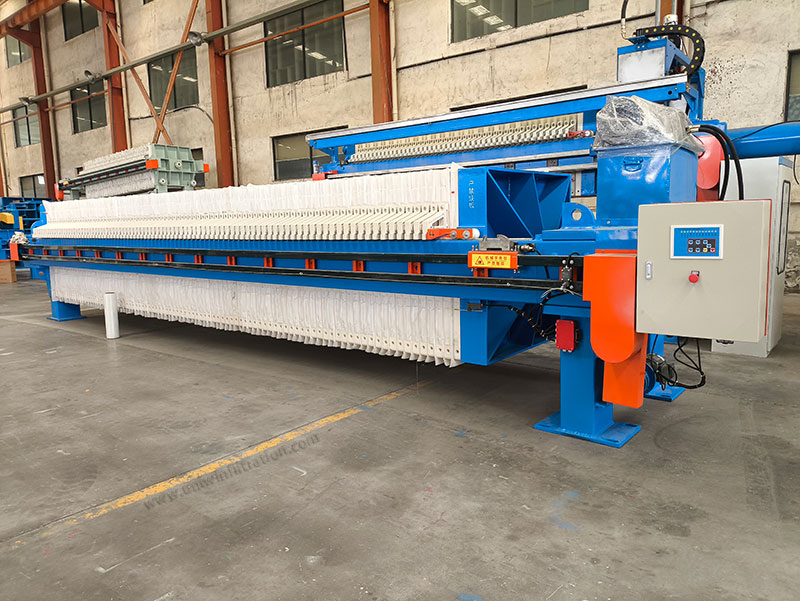
The factors affecting the processing capacity of a filter press can be primarily divided into material properties, equipment configuration, process parameters, and operational and maintenance factors.
Material Properties
Solids content
A higher solids content leads to faster filter cake formation; however, excessively high content also increases feed resistance.
Too low a solids content results in less solids entering the filter per unit time, potentially lengthening the filtration cycle.
Particle size
Coarser particles form a more permeable filter cake, resulting in faster filtration.
Fine particles, with higher colloid content and greater suspended solids viscosity, easily clog the filter cloth, significantly reducing filtration speed.
Material viscosity
Higher viscosity increases resistance as the liquid passes through the filter cloth and filter cake, leading to lower processing capacity.
For example, oily sludge, chemical slurries, and polymeric flocculants are generally more difficult to filter than ordinary sludge.
Material temperature
As temperature increases, the viscosity of some materials decreases, potentially increasing filtration speed.
However, excessively high temperatures necessitate consideration of the temperature resistance of filter plates, filter cloths, seals, and the hydraulic system.
pH and corrosivity
Strong acids, strong alkalis, or corrosive materials can negatively impact the lifespan of filter cloths, filter plates, and piping.
Inappropriate equipment materials can lead to frequent maintenance, indirectly reducing production capacity.
Equipment Configuration
Filtration area
The larger the filtration area, the higher the theoretical processing capacity.
For example, 10㎡, 50㎡, and 100㎡ filter presses essentially increase the batch throughput by increasing the number of filter plates and filter chambers.
Filter chamber volume
The larger the filter chamber, the more filter cake it can hold in a single pass.
However, if the filter chamber is too thick, the resistance will increase in the later stages of filtration, and the cycle time may not be proportionally shortened.
Filter plate types
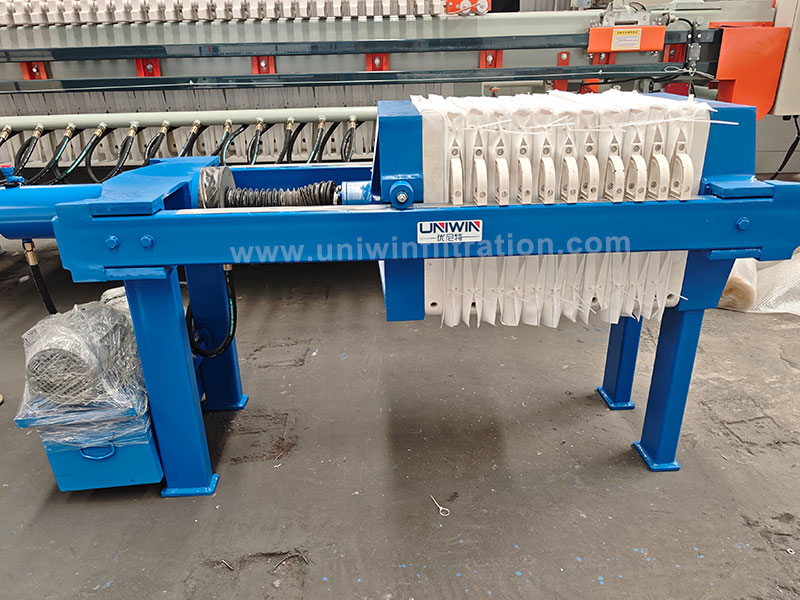
- Chamber Filter Plates: Simple structure, suitable for conventional filtration.
- Diaphragm Filter Plates: Allow for secondary pressing, reducing moisture content and improving sludge discharge efficiency.
- Plate and Frame Filter Plates: Suitable for some fine filtration or special working conditions.
- Stainless Steel Filter Plates: Suitable for acids, alkalis, and chemical materials, reducing downtime due to malfunctions.
Filter cloth selection
The mesh size, air permeability, material, and weaving method of the filter cloth all affect the filtration speed.
If the filter cloth is too dense, the filtrate will be clear, but the filtration speed will be slow; if the filter cloth is too sparse, the filtration speed will be fast, but material leakage may occur.
Feed pump configuration
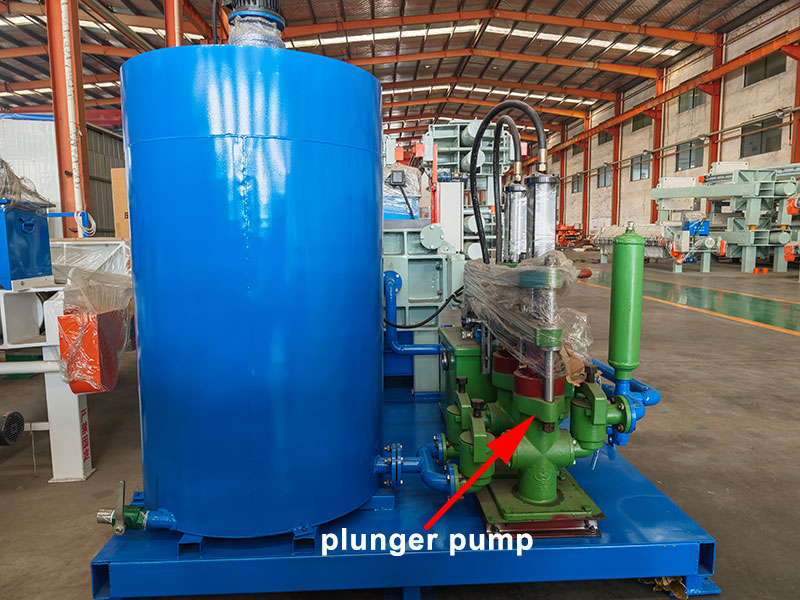
The pressure, flow rate, head, and abrasion resistance of the feed pump all affect the production capacity.
If the pump is too small, the feed will be slow; if the pump is too large, it may impact the filter cloth or cause material leakage.
Process Parameters
Feed pressure
Higher feed pressure results in a stronger filtration driving force.
However, higher pressure is not always better. Excessive pressure can lead to filter cloth clogging, filter plate deformation, material leakage, or material spraying.
Feed time
Feed time determines whether the filter chamber is fully filled.
Too short a time results in an incomplete filter cake and low batch output; too long a time leads to low efficiency in later stages and wasted cycle time.
Holding time
Appropriate holding time can further drain water.
However, excessive holding time limits dehydration improvement and actually reduces overall processing capacity.
Pressing pressure
For diaphragm filter presses, the diaphragm pressing pressure directly affects the filter cake moisture content and unloading efficiency.
Proper pressing results in a drier filter cake, leading to lower subsequent transportation and processing costs.
Air blowing time
Some materials can have their moisture content further reduced by compressed air blowing.
However, excessive blowing time will also lengthen the entire filtration cycle.
Operation and Maintenance
Filter cloth clogging level
A clogged filter cloth significantly reduces filtration speed.
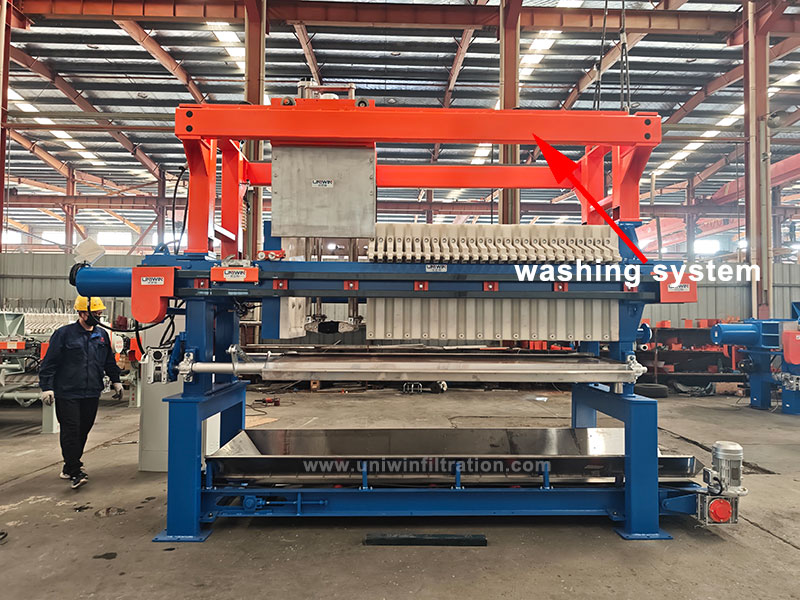
Therefore, the frequency and method of filter cloth cleaning, as well as the filter cloth’s lifespan, all affect long-term processing capacity.
Cake unloading efficiency
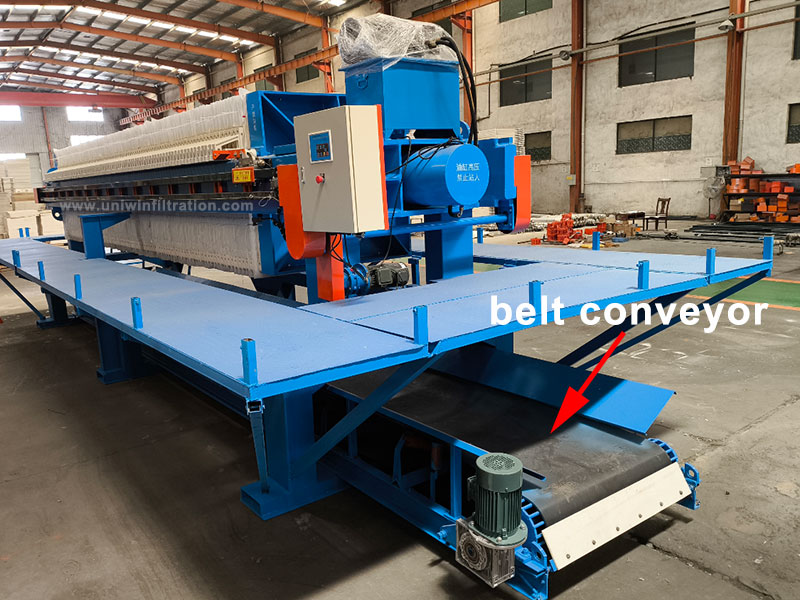
Automatic plate pulling, drip tray, belt conveyor, and filter cake trolleys can affect non-filtration time.
High filtration speed but slow cake unloading limits overall production capacity.
Automation level
PLC control, automatic pressure holding, automatic plate pulling, and automatic filter cloth cleaning can reduce manual waiting time and improve continuous production efficiency.
Operator experience
Feed pressure, flocculant dosage, and filter cloth cleaning frequency all need to be adjusted according to site conditions.
Insufficient experience can easily lead to excessively long filtration cycles, high filter cake moisture content, or frequent filter cloth clogging.
Conclusion
The processing capacity of a filter press is affected by many factors. For the same filter press, the actual processing capacity can vary greatly depending on the materials. Therefore, before selecting a filter press, you should provide the material properties, processing capacity requirements, target moisture content, and on-site operating conditions. We will provide you with the optimal solution based on actual filtration tests or experience data.