
Causes and Solutions for Filter Press Leakage
A small amount of dripping liquid during filter press operation is normal and does not necessarily indicate equipment malfunction. However, if the leakage is significant, continuous, or a large amount of filtrate flows out from between the filter plates, immediate inspection is necessary.
Filter press leakage not only affects filtration efficiency but can also cause on-site pollution, high moisture content in the filter cake, damage to the filter cloth, and even affect the long-term stable operation of the equipment. The following analysis addresses common causes and solutions.
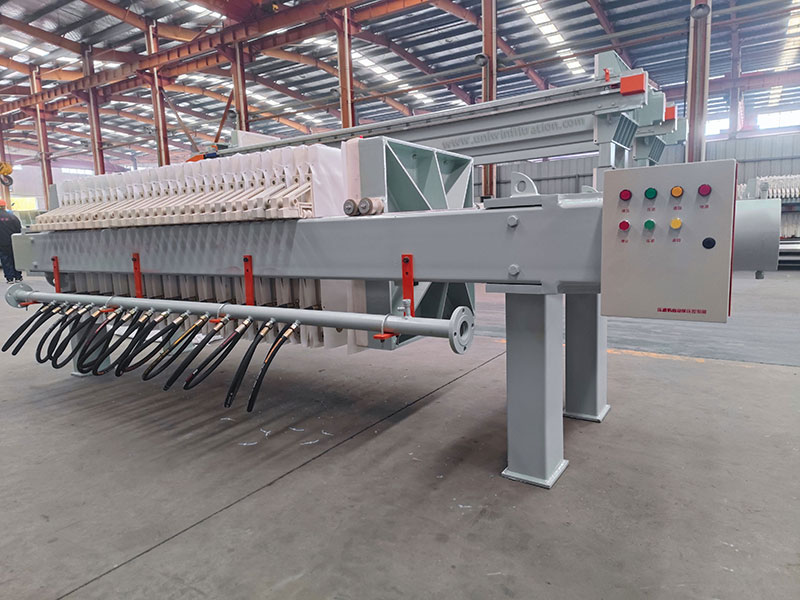
Uneven or Wrinkled Filter Cloth Installation
Filter cloth is a crucial component for filtration and sealing in a filter press. If the filter cloth is not laid flat, or if its edges are folded or wrinkled, the sealing surface cannot fully adhere after the filter plates are closed, easily leading to leakage between plates.
Solutions:
After shutting down the machine, open the filter plates and check if the filter cloth is flat and adhered to the filter plate surface. Re-align the filter cloth, ensuring there are no wrinkles, cloth trapping, or misalignment at the edges, pores, and sealing areas.
If the filter cloth hardens, deforms, or becomes severely clogged after prolonged use, it should be cleaned or replaced promptly.
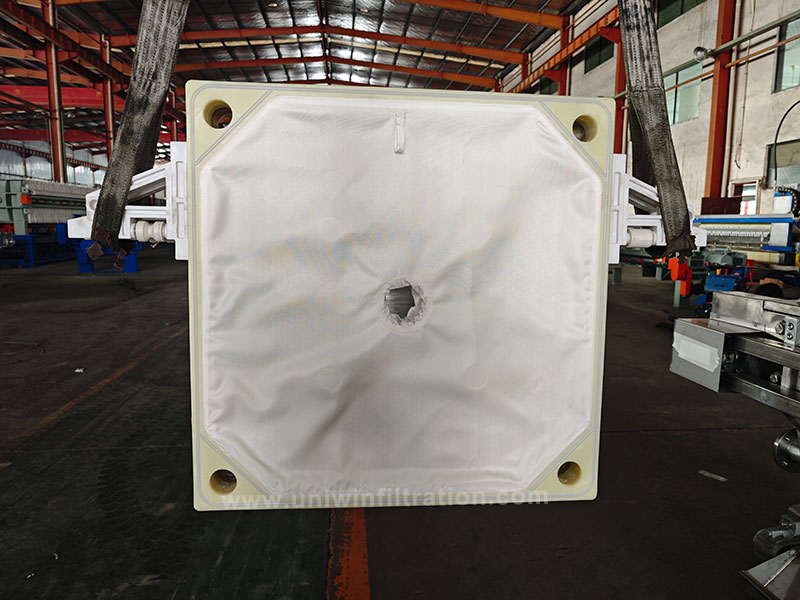
Damaged or Misaligned Filter Cloth
Damaged filter cloth allows solid particles from the material to enter the sealing surface or filtrate channel, causing leakage, material runoff, or even blockage of the outlet. Misalignment of the filter cloth’s inlet and outlet holes can also lead to abnormal local pressure and leakage.
Solutions:
Inspect the filter cloth for holes, wear, seams, deformation, etc. Severely damaged filter cloth should be replaced immediately.
When installing a new filter cloth, ensure the inlet and outlet holes perfectly align with the filter plate holes to avoid misalignment.
Debris on the Filter Plate Sealing Surface
The seal between filter plates relies primarily on the fit between the filter plate frame and the filter cloth. If filter cake, particles, crystals, or other impurities remain on the sealing surface, gaps will form after the filter plates close, leading to leakage between the plates.
Solution:
After each cake removal, check the cleanliness of the filter plate sealing surfaces. Pay particular attention to cleaning the filter plate edges when handling viscous materials, materials containing crystals, or materials with high solids content.
If there are hard particles on the sealing surface, remove them promptly to prevent damage to the filter plates during compaction.
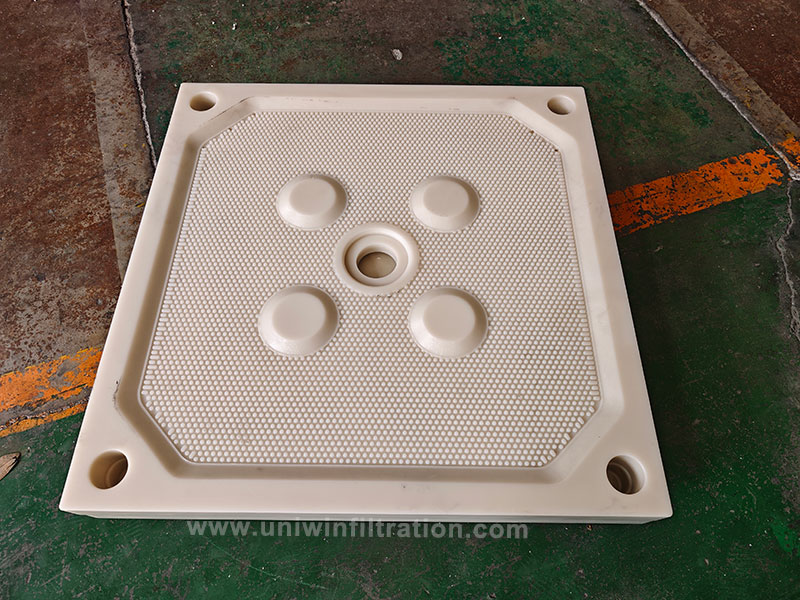
Insufficient Compaction Pressure
The filter plates must be compacted before feeding them into the filter press. If the hydraulic system pressure is insufficient, a sufficient seal will not be formed between the filter plates, leading to leakage after feeding.
Solutions:
Check if the hydraulic station pressure reaches the set value, and confirm that the cylinders, hydraulic lines, oil pump, and solenoid valves are functioning properly.
If the hydraulic system’s pressure holding capacity decreases, check for problems such as hydraulic oil leakage, worn seals, and internal leakage in the cylinders.
Improperly Arranged Filter Plates
Incorrectly arranged filter plates, or those that are tilted or misaligned, can lead to uneven stress after pressing, resulting in leakage.
Solutions:
Check if the filter plates are arranged in sequence and if there are any misalignments, tilts, or jamming.
For automatic plate filter presses, also check if the plate-pulling mechanism operates smoothly and if the filter plates can return to their correct positions easily.
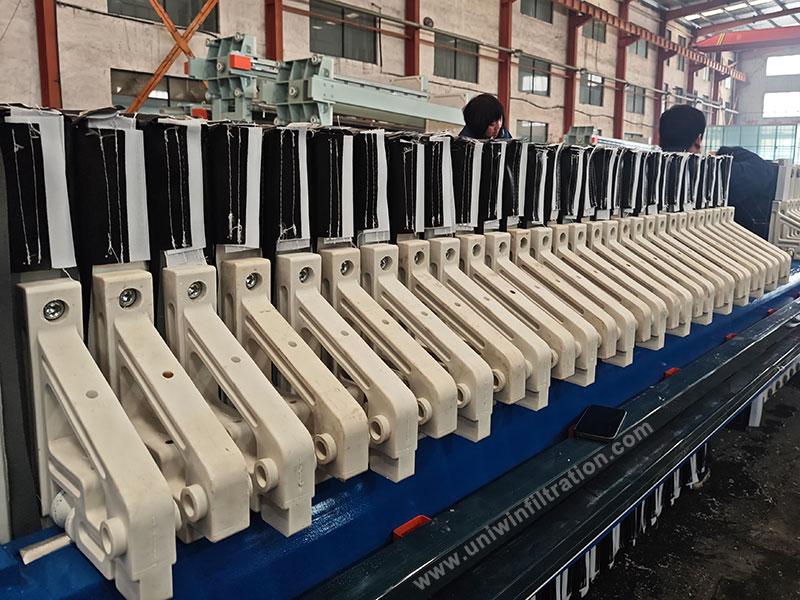
Issues with Sealing Gaskets or Hidden Flow Channels
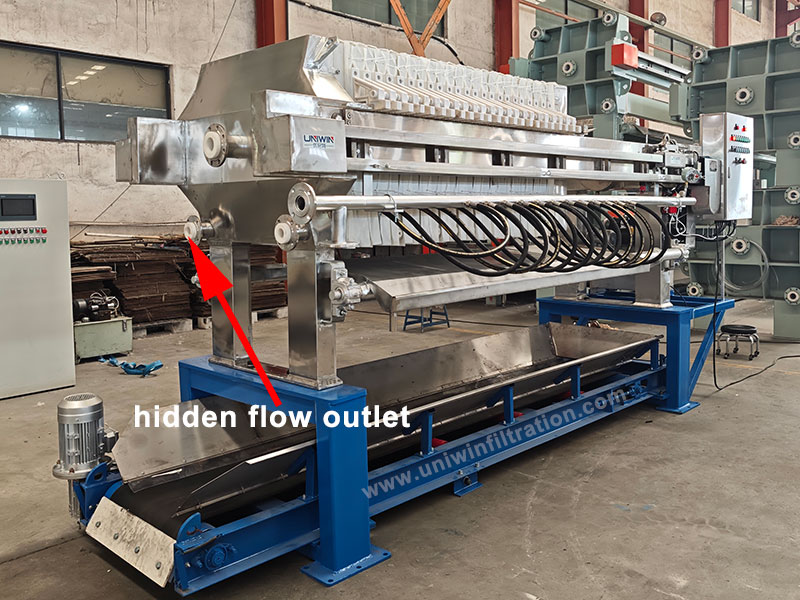
For hydraulic filters with hidden flow outlets, blockages, misalignments, or aging of the outlet, sealing rings, or internal flow channels can prevent the filtrate from draining properly, leading to localized leaks or abnormal pressure.
Solutions:
Check that the hidden flow outlet is clear, the filter plate holes are aligned, and the sealing rings are intact.
If filtrate drainage is obstructed, clean the outlet channel promptly to prevent abnormal filtrate buildup in the filter chamber.
Conclusion
There are many reasons for filter press leakage. In practical use, simple problems should be checked first. If leakage persists, further investigation is necessary. Correct installation, reasonable feed pressure, and regular maintenance can effectively reduce filter press leakage, improve filtration efficiency, and extend equipment lifespan.