
Causes of Filter Cloth Clogging in Filter Presses
The filter cloth is the core filtration medium that enables solid-liquid separation in a filter press. Under normal operating conditions, the cloth should allow the filtrate to pass through smoothly while retaining solid particles to form a filter cake. However, in actual operation, many users encounter issues such as filter cloth clogging, reduced filtration rates, and increased moisture content in the filter cake.
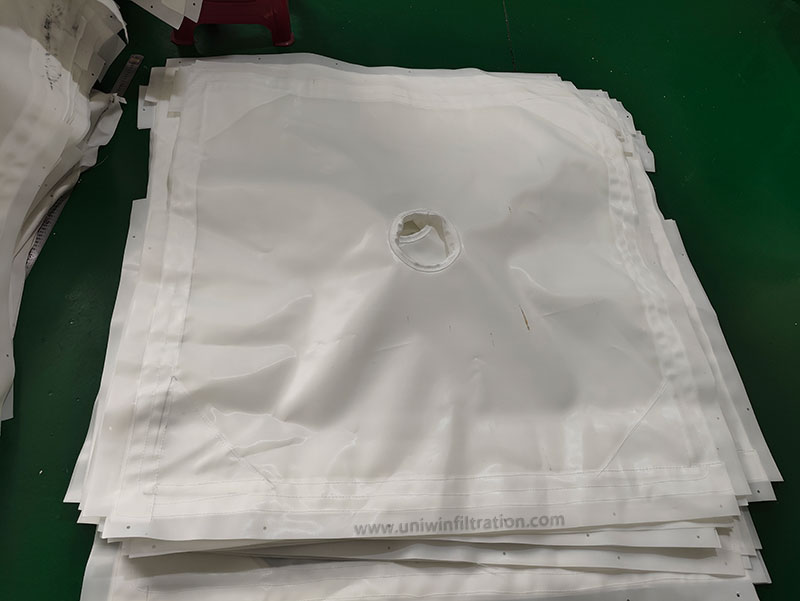
Excessively Fine Material Particles
If the solid particles in the slurry are too fine—particularly when containing a high proportion of micro-particles, colloidal particles, or viscous substances—they can easily penetrate the pores of the filter cloth and gradually clog the channels between the fibers.
This phenomenon is commonly encountered in applications such as mine tailings, sand-washing sludge, stone-processing sludge, chemical slurries, textile printing and dyeing wastewater, and starch-processing wastewater.
Poor Flocculation Performance
Many types of sludge or wastewater require chemical flocculation treatment before entering the filter press. If the flocculant type is unsuitable, the dosage is insufficient, or the mixing time is inappropriate, fine particles fail to form larger flocs and instead penetrate directly into the pores of the filter cloth.
Overdosing can also lead to new problems. An excess of PAM or other high-molecular-weight flocculants makes the material slimy and causes the formation of a gelatinous substance, which actually increases the likelihood of the filter cloth becoming blinded or clogged.
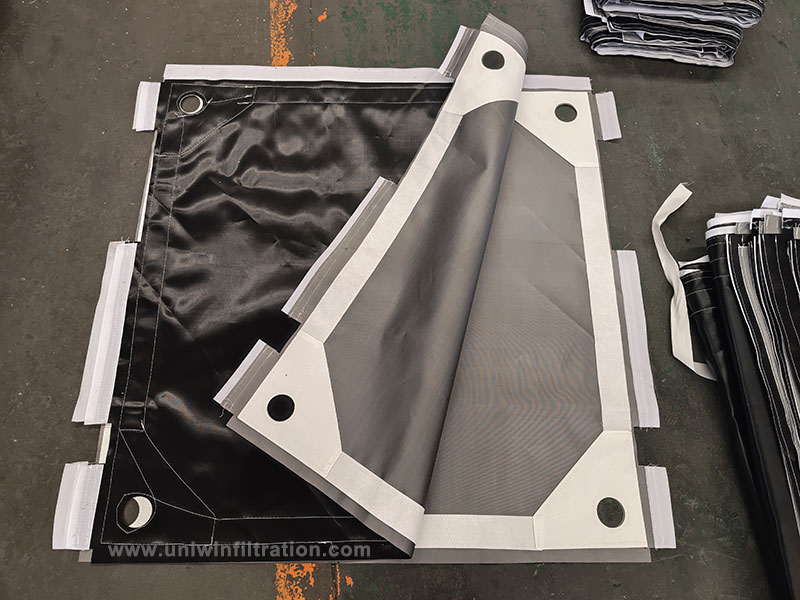
Low Feed Concentration
If the feed concentration is too low, solid particles cannot rapidly form a stable filter cake layer on the surface of the filter cloth, causing the cloth itself to bear the primary burden of filtration. If the cake layer forms too slowly, fine particles will continuously impinge directly upon the filter cloth, leading to clogging.
Improper Feed Pressure
For a filter press, higher pressure does not necessarily result in faster filtration. In fact, if high-pressure feeding is used from the start, fine particles are rapidly forced into the pores of the filter cloth, causing internal clogging.
This is particularly true when the material consists of fine, highly viscous particles or has undergone insufficient flocculation; in such cases, excessive initial pressure significantly accelerates cloth blinding.
Mismatched Filter Cloth Selection
A filter cloth is not necessarily better simply because it is denser or thicker. Factors such as material, mesh count, air permeability, and weave pattern all influence filtration performance.
If the pore size is too large, the filtrate may be turbid, and significant amounts of fine particles may pass through.
If the pore size is too small, retention is excellent, but the cloth is prone to clogging, resulting in slow filtration speeds.
If the filter cloth material is incompatible with the material’s temperature, pH level, or viscosity, the cloth’s service life will be reduced.
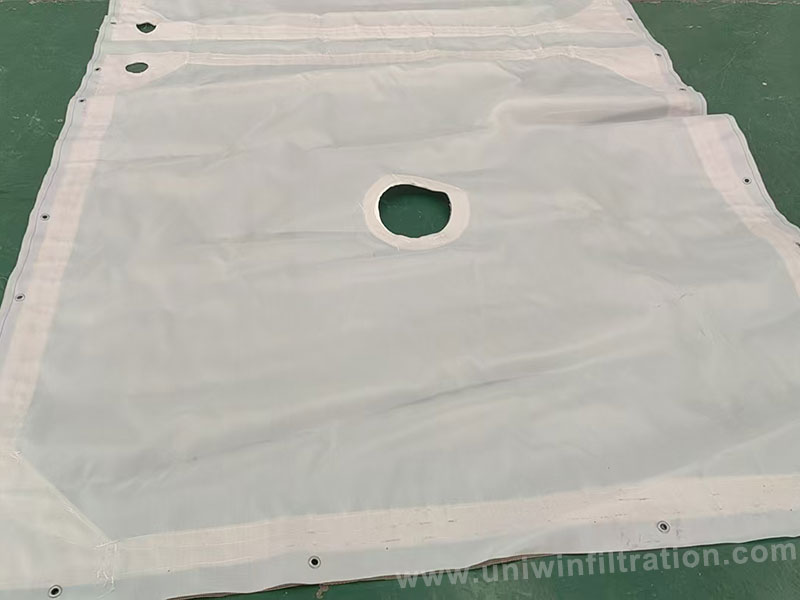
High Material Viscosity
Some materials are inherently highly viscous—such as certain types of organic sludge, textile dyeing sludge, food processing wastewater, and chemical slurries. These materials tend to adhere to the surface of the filter cloth, forming a dense, paste-like layer.
Even after filtration is complete, the filter cake does not easily detach on its own; residual material remaining on the cloth surface gradually clogs the filter cloth pores.
Failure to Clean Filter Cloths Promptly
In the early stages of filter cloth clogging, timely cleaning can usually restore effective filtration performance. However, if cleaning is neglected for an extended period, fine particles, oily residues, colloidal substances, and chemical residues gradually penetrate the interior of the cloth, making it difficult to fully restore performance later on.
For sticky, oily, or chemical materials, it may be necessary to select acid washing, alkaline washing, or specialized cleaning agents based on the specific composition of the clogging matter.
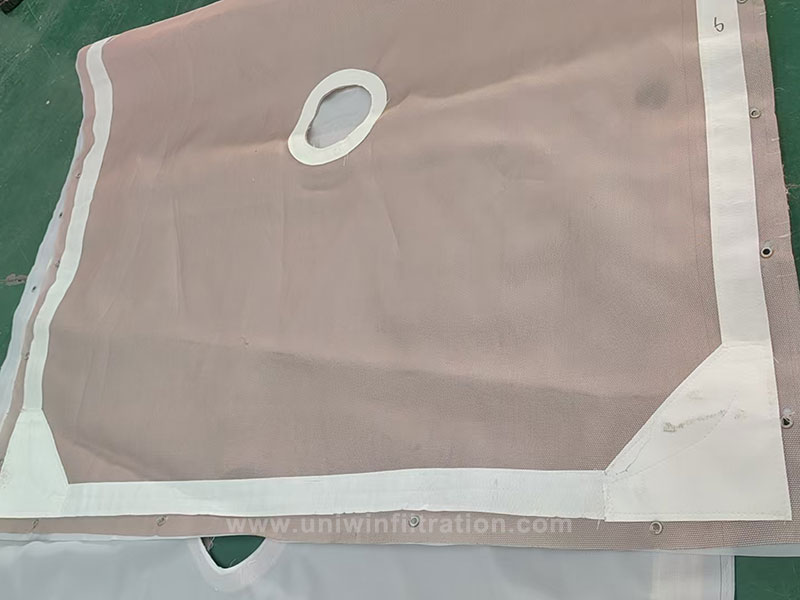
Improper Filter Cloth Installation
If the filter cloth is installed unevenly or suffers from wrinkles, misalignment, damage, or poor edge sealing, it can lead to uneven stress distribution. Certain areas may experience excessive filtration loads, making them prone to premature clogging.
This situation commonly occurs after replacing the filter cloth or when the cloth becomes deformed due to prolonged use.
Filter Cloth Aging
After prolonged use, filter cloth fibers undergo wear, hardening, and deformation, and the pore structure changes. Even if there is no visible surface damage, the actual water permeability may have declined significantly.
Filter cloth aging accelerates particularly under conditions involving high pressure, high temperature, strong acids or alkalis, or high abrasion.
Measures to Address Filter Cloth Clogging
- Optimize flocculation performance
- Increase feed concentration
- Adjust feed pressure
- Select a filter cloth type suited to the material
- Increase the frequency of filter cloth cleaning
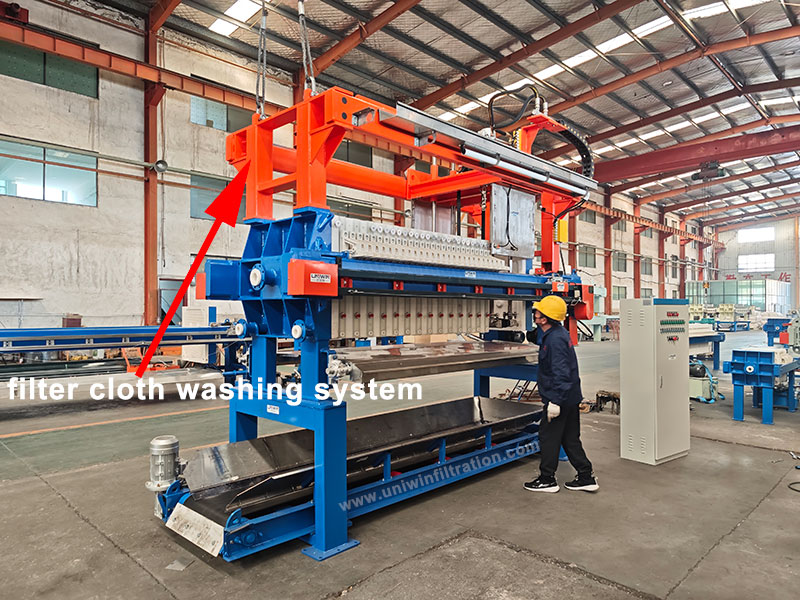
- Use an automatic filter cloth cleaning system
- Regularly inspect the filter cloth installation and the filter plate drainage ports
- Promptly replace aged or damaged filter cloths
Conclusion
The root cause of filter cloth clogging in filter presses is typically not merely a matter of cloth quality; rather, it stems from a combination of factors, including material characteristics, flocculation performance, feed concentration, and filter cloth choice.
Only by identifying the true cause can filtration efficiency be improved, the service life of the filter cloth be extended, and the operating costs of the filter press be reduced.