
Should You Choose a Larger Filter Press or Multiple Units in Parallel When Expanding Production?
Many customers encounter this question when expanding their filter press projects: should they install a single, larger filter press, or choose to operate multiple filter presses in parallel?
There is no absolute answer to this question. Filter press selection requires consideration not only of throughput but also of factors such as material properties, filtration cycle, solids content, and required filter cake moisture content.
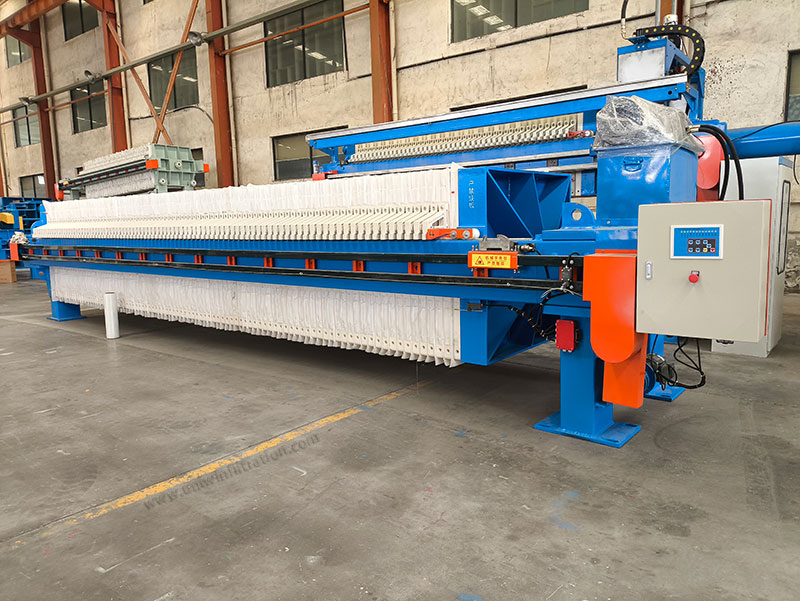
Advantages of a Large Filter Press
Relatively concentrated footprint
A large filter press features a more centralized layout, characterized by simpler piping, electrical control, and hydraulic systems. This is convenient for projects with limited factory space that require centralized equipment management.
Simpler operation and management
Compared to multiple machines, a large filter press only requires managing one main system. Operators only need to focus on the feeding, pressing, unloading, and cleaning processes of one machine, reducing management complexity.
Suitable for continuous and stable production
If the daily material volume is relatively stable and downtime for maintenance can be scheduled in advance, a large machine can meet most routine production needs.
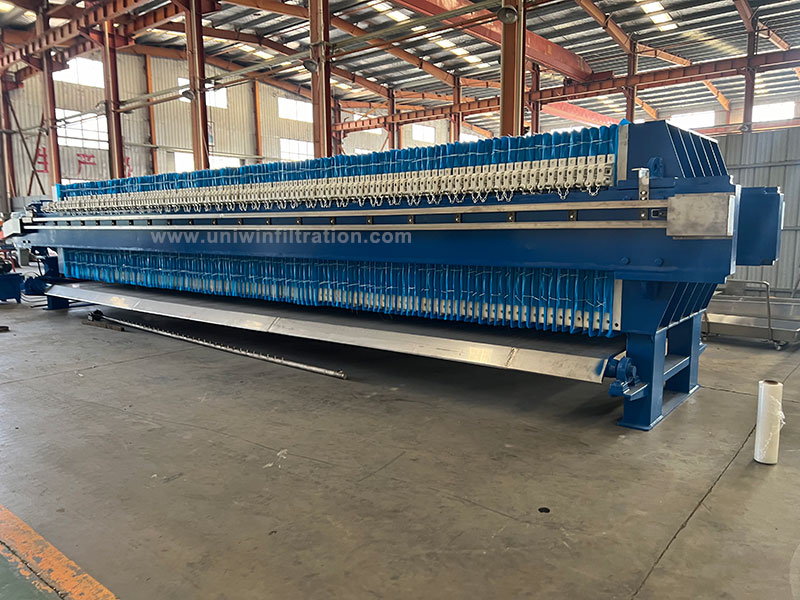
Disadvantages of a Single Large Filter Press
Concentrated downtime risk
If there is only one filter press, any downtime due to equipment maintenance, filter cloth replacement, hydraulic system repair, or other malfunctions may directly halt the entire filtration process. This is particularly critical for projects that cannot tolerate prolonged downtime.
Limited flexibility for future expansion
If a large piece of equipment is installed now, but future capacity increases, additional equipment may be necessary. In this case, the availability of space, piping, electrical control, and foundation layout becomes crucial.
Longer batch turnover time
Large filter presses have a large processing capacity, but the time for unloading, filter cloth cleaning, pressing, and auxiliary operations may also be longer.
Higher requirements for supporting systems
Large filter presses typically require higher flow or higher pressure feed pumps, larger storage tanks, more stable air compressor systems, and more efficient filtrate discharge systems.
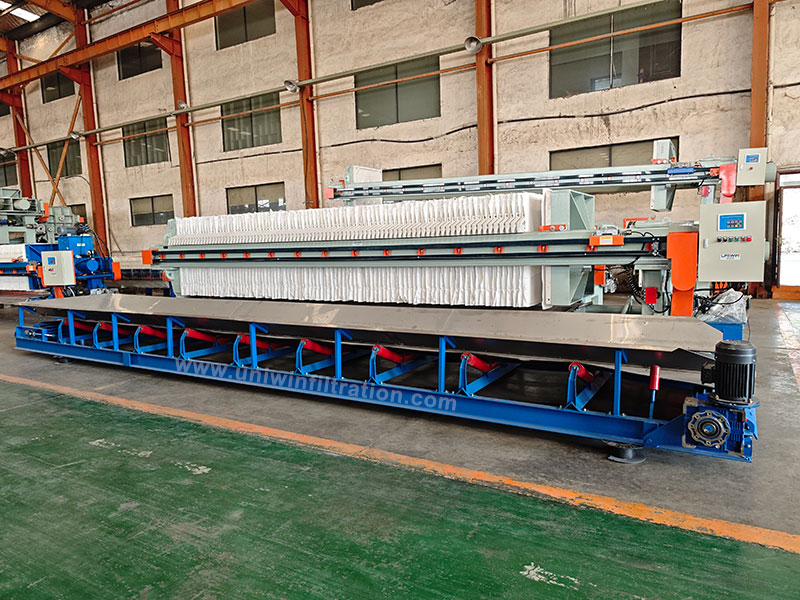
Advantages of Operating Multiple Filter Presses in Parallel
Higher production flexibility
Multiple machines can be started flexibly according to the daily output. For example, only one machine can be operated during low load, while multiple machines can run simultaneously during high load. This reduces unnecessary energy consumption and labor requirements.
Reduced downtime risk
If one machine requires maintenance, the others can continue to operate.
Convenient for phased capacity expansion
If a customer’s current production volume is not particularly large, but they plan to expand production in the future, they can first install one or two machines, and then add more of the same model later.
Easy to handle different materials
Some factories handle multiple types of materials. Multiple filter presses can process different materials on separate lines, avoiding the impact of mixing different materials on filtration efficiency.
Easier maintenance
When multiple devices are connected in parallel, filter cloth cleaning, filter plate inspection, and hydraulic system maintenance can be carried out in turn, which is less likely to affect the overall production rhythm.
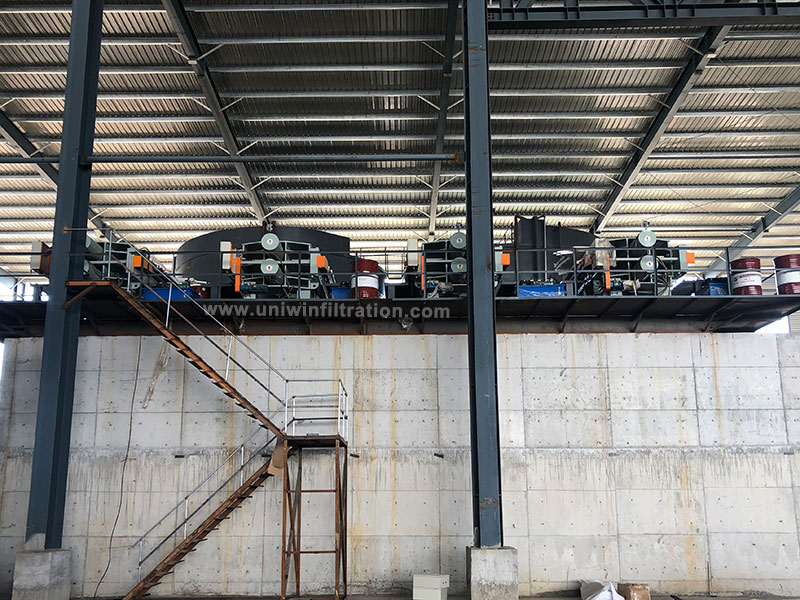
Disadvantages of Multiple Units in Parallel Operation
Larger footprint required
Multiple filter presses require space for equipment spacing, unloading area, maintenance access, piping, and electrical control. For projects with limited plant space, careful layout design is essential.
More complex piping and control systems
Multiple units in parallel require a well-designed system for feed lines, valves, filtrate discharge, air supply, cleaning water, and automatic control logic. Inadequate design can lead to uneven feeding, unstable pressure, and operational chaos.
Higher demands on manual management
When multiple devices are running simultaneously, operators need to monitor the operating status, filtration cycle, and unloading time of each device. The lower the level of automation, the greater the pressure on manual management.
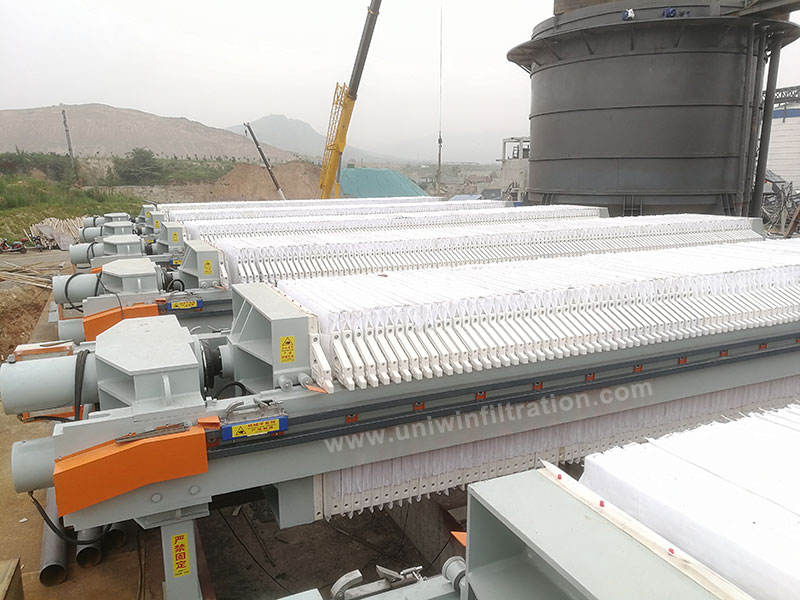
How to Determine Which Equipment to Choose?
Consider whether production can tolerate downtime.
- If the filtration process allows for periodic maintenance shutdowns, a single large unit is acceptable.
- If a shutdown would disrupt the entire production line, it’s recommended to prioritize multiple units operating in parallel.
Consider whether the output is stable
- If daily throughput is stable and material properties don’t change significantly, a single large filter press is easier to manage.
- If output fluctuates greatly or there are significant differences in throughput across different time periods, operating multiple units in parallel offers greater flexibility.
Consider future capacity expansion plans
- If there is significant room for future capacity growth, it is recommended to reserve space for parallel expansion in the initial design.
- If capacity is already relatively fixed, a single large unit may be more economical.
Consider site space availability
- If site space is ample, multiple units can be connected in parallel for easier future expansion.
- If site space is limited, the suitability of multiple units needs to be determined based on equipment length, unloading method, conveyor layout, and maintenance space.
Consider the type of material being processed
- For a single, stable material, a single large unit may suffice.
- For multiple materials or multiple production lines, it is recommended to consider separate lines to avoid mutual interference.
Conclusion
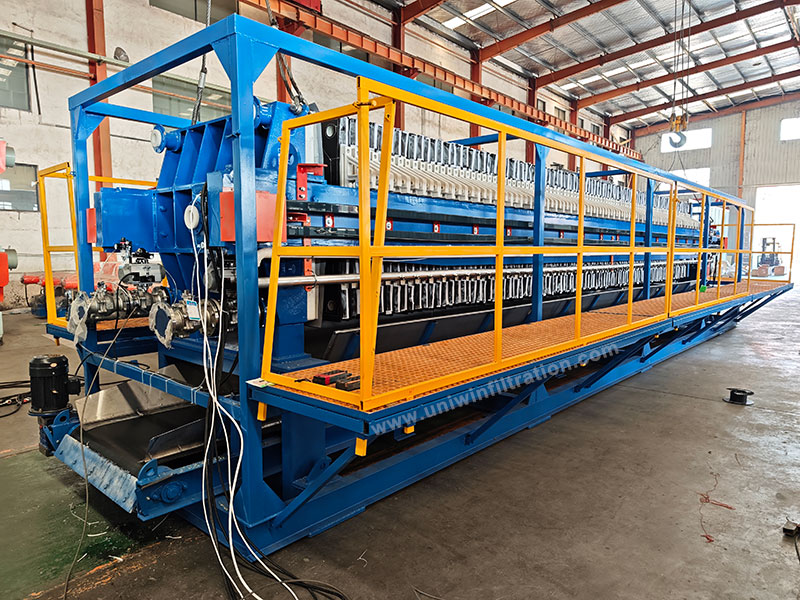
When expanding production capacity, whether to choose a single large filter press or multiple filter presses in parallel depends on the actual operating conditions. Before determining the filter press solution, it is recommended to provide the material type, throughput, solids content, on-site operating time, and required filter cake moisture content. Based on the actual operating conditions, we can help determine whether to choose a single large filter press or a parallel configuration of multiple filter presses, and provide equipment configuration suggestions more suitable for the expansion needs.