
Filter Press For Electroplating Wastewater Treatment
Electroplating wastewater typically contains suspended solids, metal hydroxide sludge, and other pollutants generated during surface treatment. After pH adjustment, chemical reaction, and sedimentation, the wastewater produces a large amount of high-water-content sludge, requiring further solid-liquid separation and dewatering.
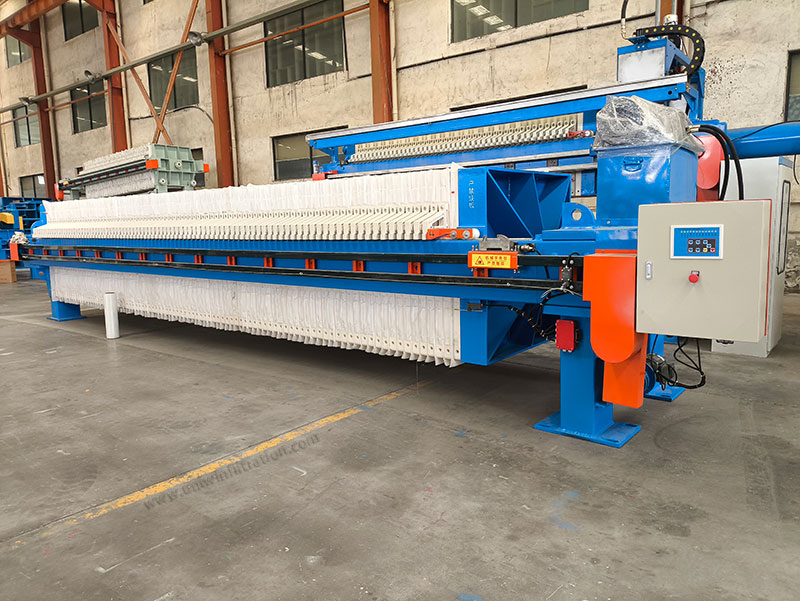
Filter presses can separate water from the sludge through pressure filtration, reducing the sludge volume and water content, facilitating subsequent transportation, disposal, and recycling. They are commonly used sludge dewatering equipment in electroplating wastewater treatment systems.
Why are Filter Presses Needed for Electroplating Wastewater?
In electroplating wastewater treatment, chemicals are typically added and pH adjusted to cause heavy metal ions in the wastewater to precipitate.
The sludge produced after sedimentation has a high water content. Direct transportation or disposal would not only result in a large volume but also increase treatment costs.
Filter presses trap solid particles through filter cloth, allowing the liquid to drain and gradually forming a filter cake within the filter chamber. Filtration effectively reduces the moisture content and volume of the sludge, while also making the filtrate clearer, facilitating subsequent treatment.
Advantages of Using Filter Presses for Treating Electroplating Wastewater
Improved dewatering efficiency of electroplating sludge
Reduced sludge moisture content and volume
Reduced sludge transportation and disposal costs
Clearer filtrate, facilitating subsequent treatment
Can be used in conjunction with dosing, sedimentation, and sludge storage systems
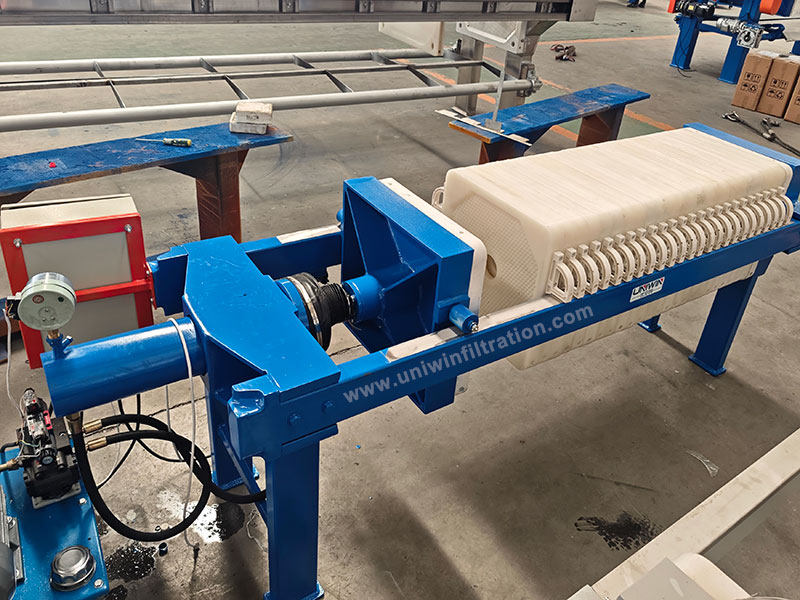
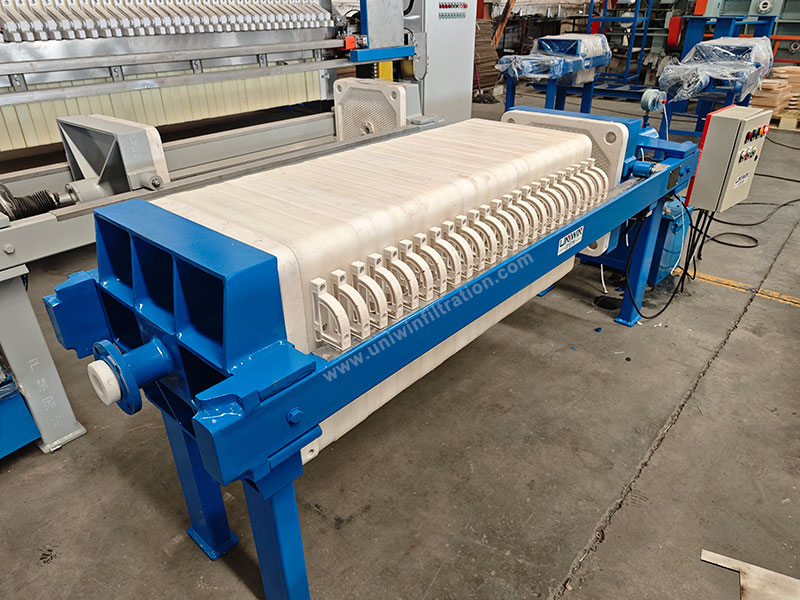
For small and medium-sized electroplating plants, small filter presses can meet daily sludge dewatering needs, and the equipment has a simple structure, making operation and maintenance relatively convenient.
Indonesian Electroplating Wastewater Treatment Project
An Indonesian client needed to treat the wastewater and sludge generated during their electroplating production process. Based on the client’s treatment volume, sludge condition, and on-site requirements, we configured a 10 square meter filter press for them, along with related auxiliary equipment.
- Main configuration includes:
- Filtration area: 10 square meters
- Diaphragm pump: Responsible for stably supplying sludge to the filter press
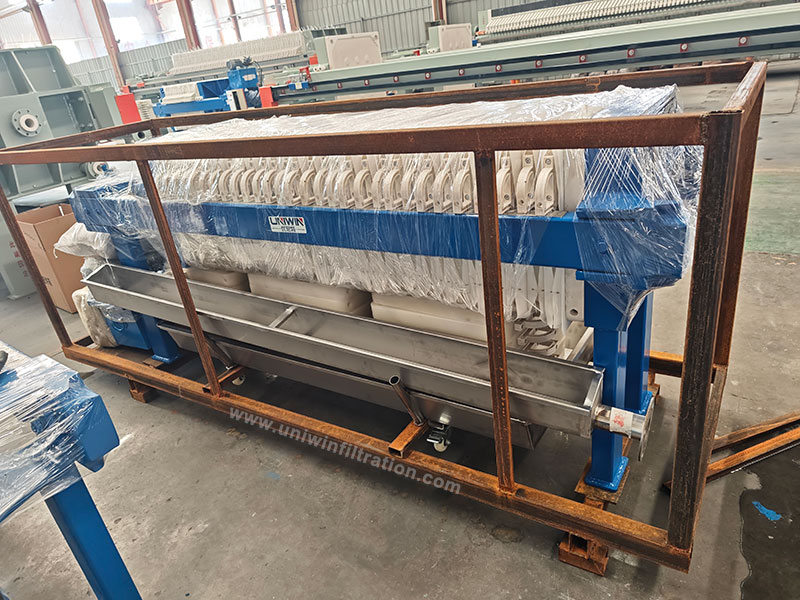
- Filtrate collection groove: Used to collect liquid generated during filtration and unloading
- Filter cake trolley: Used to collect the filter cake discharged after filtration.
The diaphragm pump reliably delivers sludge into the filter press, meeting the feeding requirements during the filtration process.
The filter press is equipped with a filtrate collection groove to collect residual liquid generated during operation, reducing wastewater spillage and keeping the site cleaner.
After filtration, the filter cake can be directly unloaded into a filter cake cart for convenient collection and transport by staff.
Conclusion
Electroplating wastewater treatment requires not only selecting a suitable filter press, but also configuring the feed pump, filtrate collection groove, filter cake collection device, and other auxiliary equipment according to the on-site process.
If you are looking for a filter press suitable for electroplating wastewater treatment, please provide your wastewater treatment capacity, sludge concentration, and daily operating time. We can help you recommend a suitable filter press model and configuration.