
Application of Vertical Leaf Filters in Sunflower Oil Filtration
Sunflower oil is one of the most common vegetable oils worldwide. During processing, crude sunflower oil typically contains varying amounts of oil residue, suspended particles, and other solid impurities. Failure to effectively remove these impurities can compromise subsequent refining processes and the quality of the finished oil.
The vertical leaf filter is a solid-liquid separation device widely used in the vegetable oil processing industry. With high filtration efficiency, enclosed operation, and a compact footprint, it suits filtering various vegetable oils, including sunflower, soybean, and rapeseed oils.
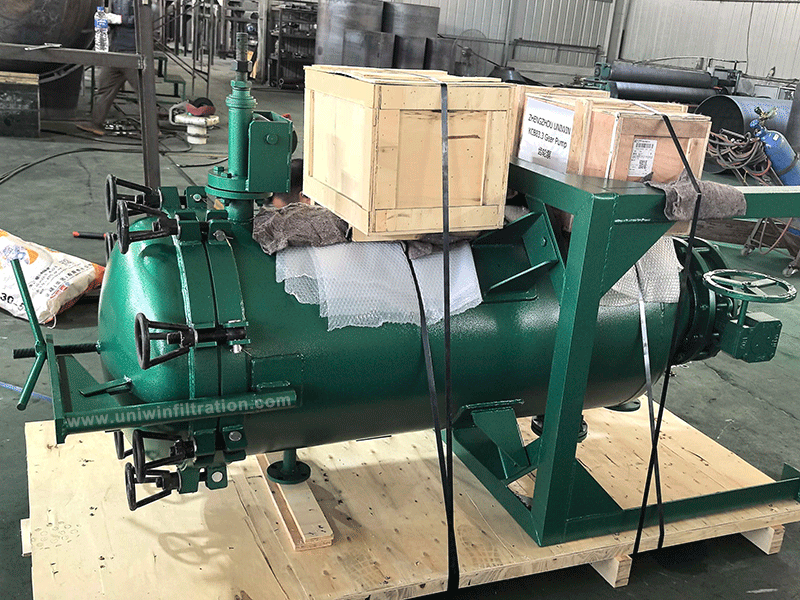
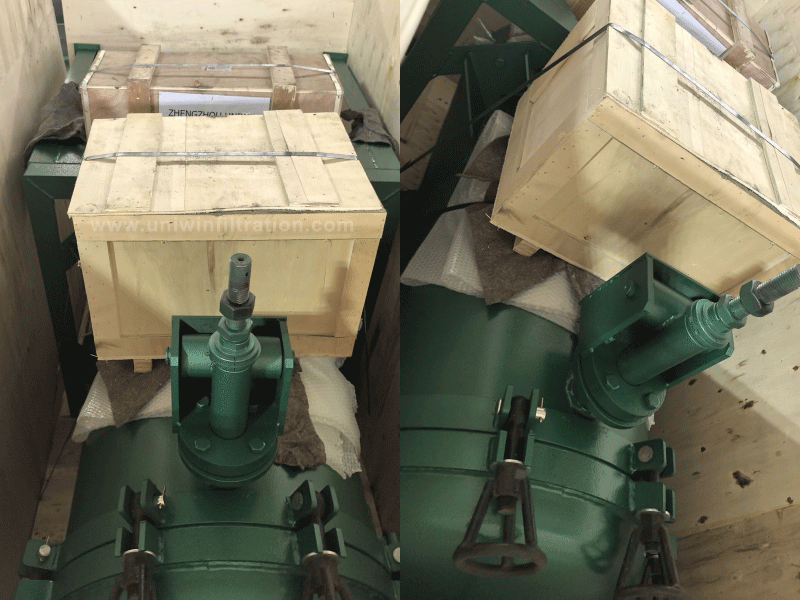
Recently, we supplied a client in Kazakhstan with an 8 m² carbon steel vertical leaf filter for their sunflower oil production process.
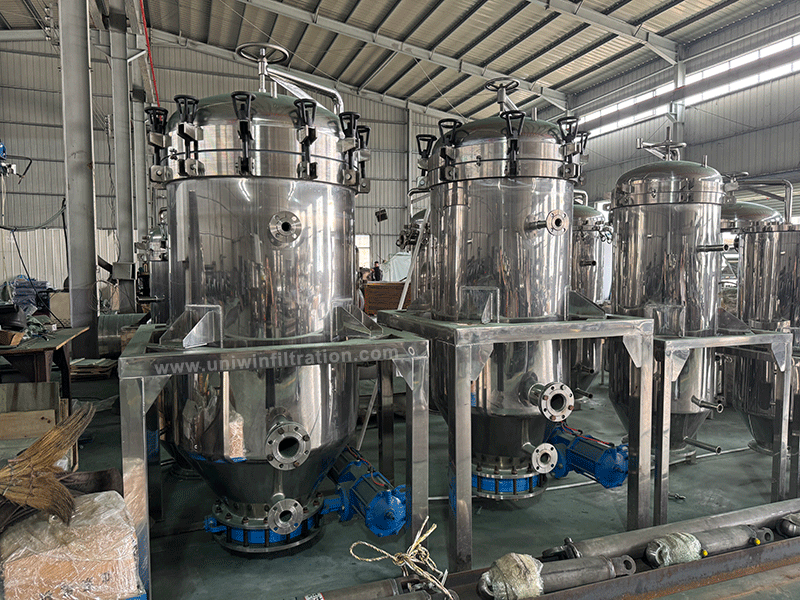
Project Overview
- Client country: Kazakhstan
- Equipment name: Vertical Leaf Filter
- Material to be filtered: Sunflower oil
- Filtration area: 8 m²
- Equipment material: Carbon steel
- Industry: Vegetable oil processing
- Primary application: Removal of suspended solids and particulate impurities from sunflower oil
Key Challenges in Sunflower Seed Oil Filtration
Presence of solid impurities in crude oil
During the pressing process, impurities such as fine kernel particles and oil cake residues easily mix into the sunflower seed oil. These particles can affect the oil’s appearance and subsequent processing steps.
Difficulty in fully separating fine particles
Some suspended particles are very small; relying solely on natural sedimentation is insufficient for complete separation, necessitating the use of appropriate filtration equipment and media.
Minimizing oil loss during filtration
Vegetable oil holds significant economic value; the filtration process must balance filtration effectiveness, equipment operating efficiency, and the amount of residual oil retained in the filter residue.
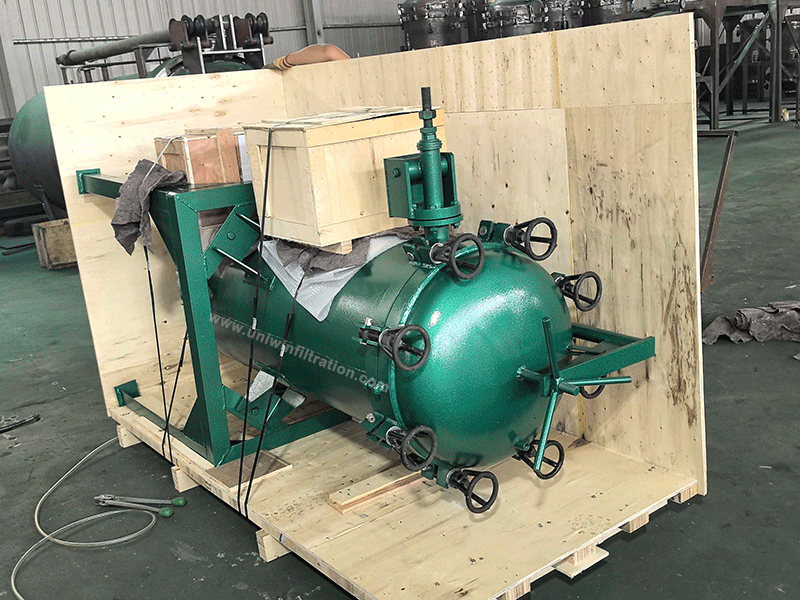
8 m² Vertical Leaf Filter Solution
To meet the client’s requirements for sunflower oil filtration, we provide a carbon steel vertical leaf filter with a filtration area of 8 m².
The unit features an internal assembly of vertically arranged filter leaves. During operation, the oil is forced through the filter media by pressure; solid impurities are retained and gradually form a filter cake, while the filtered oil exits through internal collection channels.
As filtration proceeds, the filter cake thickens. Upon completion of the filtration cycle, the feed is stopped, followed by liquid drainage, cake discharge, and preparations for the next cycle, in accordance with process requirements.
This filtration method is suitable for solid-liquid separation in sunflower oil processing; specific operating parameters are determined based on oil temperature, impurity content, and filtration precision requirements.
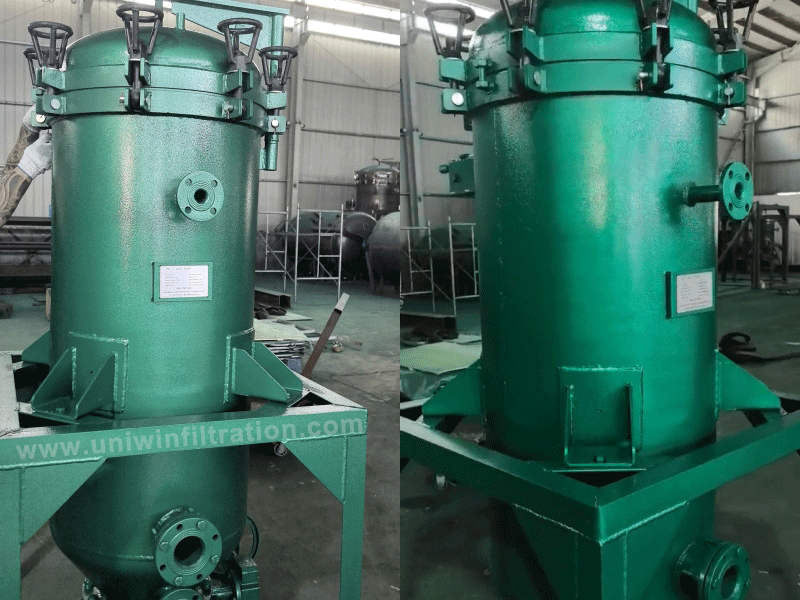
Advantages of Vertical Leaf Filters in Sunflower Oil Filtration
Effective removal of solid impurities
Utilizing filter leaves and compatible filtration media, the system captures suspended particles and solid residues from the oil, enhancing clarity and ensuring more stable feed material for downstream processing.
Enclosed filtration minimizes oil exposure
The vertical leaf filter features an enclosed design that limits contact between the oil and the external environment during filtration, helping to maintain a clean production area.
Compact footprint
The vertical arrangement of the filter leaves provides a large effective filtration area within a relatively compact equipment footprint.
Reduced manual cleaning workload
Depending on the configuration, the filter discharges the filter cake via methods such as vibration; it does not require frequent cleaning—monthly maintenance suffices—thereby reducing the need for manual disassembly of filter elements and improving operational convenience.
Equipment materials selectable based on specific process requirements
This project utilizes carbon steel. For vegetable oil filtration, the materials and surface treatments of wetted parts must be determined based on the oil’s intended use, the processing stage, and local regulations regarding food-contact materials.