
Application Cases of Filter Presses in Metallurgical Wastewater Treatment
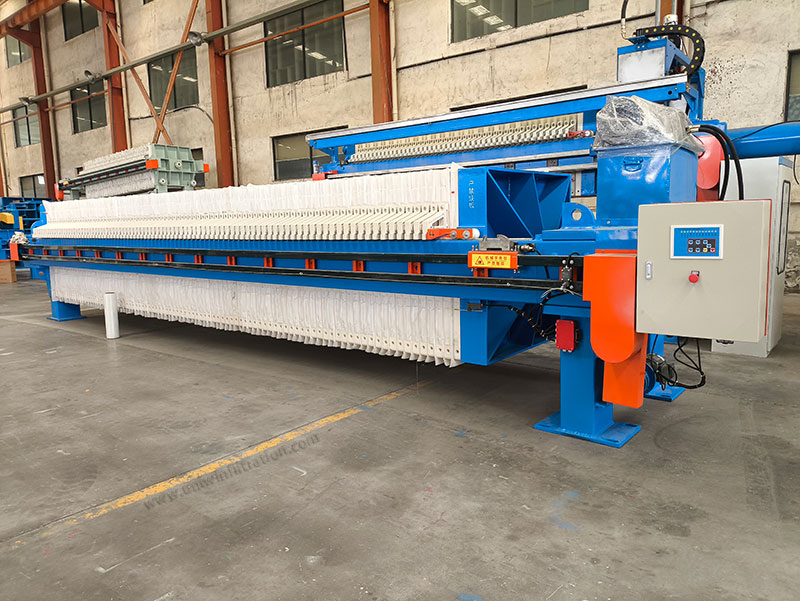
In the complete treatment chain of metallurgical wastewater, solid-liquid separation is a crucial link. As a highly efficient solid-liquid separation device, the filter press plays an irreplaceable role in the advanced treatment of metallurgical wastewater and sludge dewatering because of its advantages, including good dewatering performance, stable operation, and strong adaptability.
Challenges in Metallurgical Wastewater Treatment
The treatment of metallurgical wastewater faces multiple challenges: First, it contains a wide variety of heavy metals with fluctuating concentrations, making it difficult for single chemical precipitation methods to remove multiple metal ions simultaneously;
Second, the fine suspended solids in the wastewater have small particle sizes and poor settling properties, resulting in high turbidity in the effluent from conventional settling equipment;
Third, the sludge produced after treatment has high water content and large volume, leading to high subsequent disposal costs. These pain points precisely provide an opportunity for filter presses to leverage their technological advantages fully.
Dubai Metallurgical Wastewater Case Study
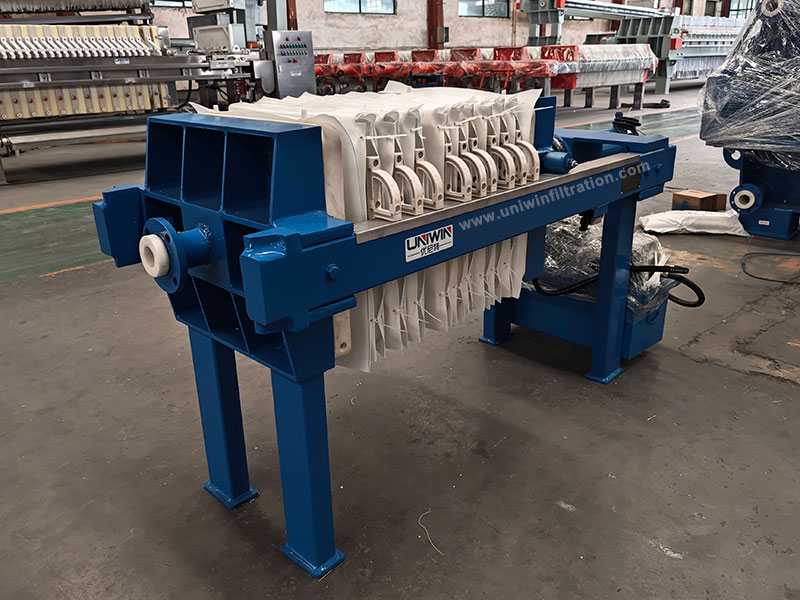
Recently, we provided a small-scale filter press system for metallurgical wastewater treatment to a client in Dubai.
The client primarily needed to treat metallurgical wastewater generated during production and desired solid-liquid separation through filter press.
The 4-square-meter filter press has a compact structure and small footprint, making it suitable for production lines with low throughput or small-scale wastewater treatment systems.
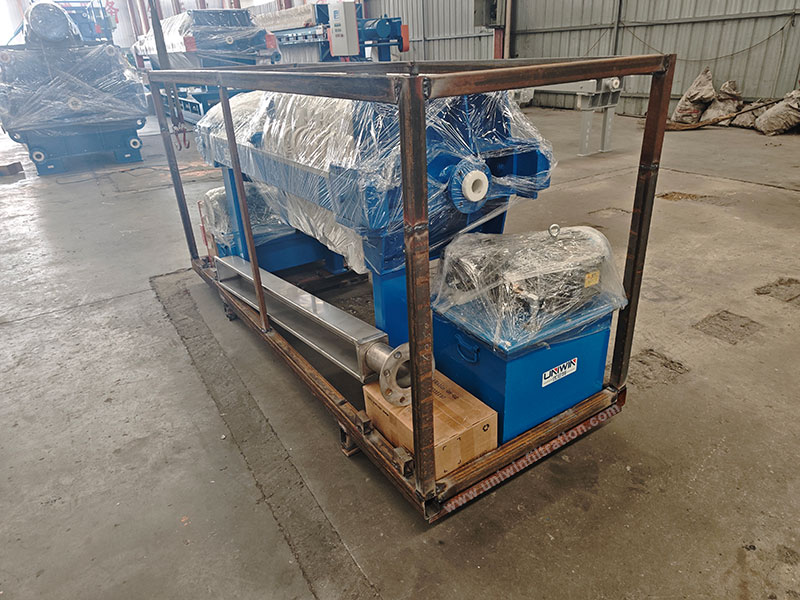
The system features a filtrate collection groove at the bottom to collect the filtrate, preventing it from dripping onto the ground and maintaining a cleaner workspace. It also facilitates centralized wastewater recycling and treatment.
Advantages of Filter Presses in Treating Metallurgical Wastewater
Compared to other dewatering equipment such as belt filters, centrifuges, and vacuum filters, filter presses offer the following significant advantages in treating metallurgical wastewater:
- Low filter cake moisture content: The moisture content of filter cake from ordinary filter presses can be reduced to 50%~70%, and can be further reduced to 30%~60% after diaphragm pressing, significantly reducing sludge volume and subsequent disposal costs.
- High filtrate clarity: Thanks to the precise retention effect of the filter cloth, the suspended solids content of the filtrate is significantly reduced, meeting the requirements for reuse or compliant discharge.
- Strong adaptability: Capable of handling high-concentration, fine-particle, and high-viscosity sludge that is difficult to dewater, and exhibits good adaptability to fluctuations in metallurgical sludge production.
- Reliable operation and easy maintenance: Compact structure with few moving parts and a low failure rate, suitable for the continuous, high-volume production needs of the metallurgical industry.
- High degree of automation: Modern filter presses can achieve automatic plate pulling, automatic unloading, and automatic cloth washing, significantly reducing manual labor intensity.
Conclusion
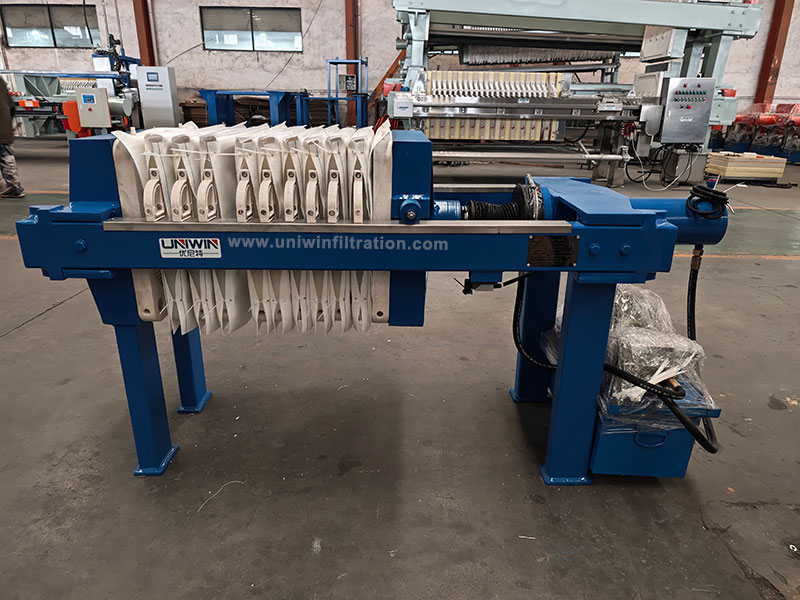
As a core solid-liquid separation device in metallurgical wastewater treatment systems, the filter press, with its excellent dewatering performance, reliable operation, and flexible adaptability, provides a solid technical guarantee for achieving standard discharge of wastewater and reducing sludge volume in the metallurgical industry.