
Application of Filter Presses in the Petroleum Industry
Processes such as oil extraction, drilling, storage, transportation, and downstream processing generate significant quantities of sludge and wastewater containing solid particles. These materials typically have complex compositions—often containing oil, fine suspended particles, and other impurities—placing high demands on the processing efficiency and operational stability of solid-liquid separation equipment.
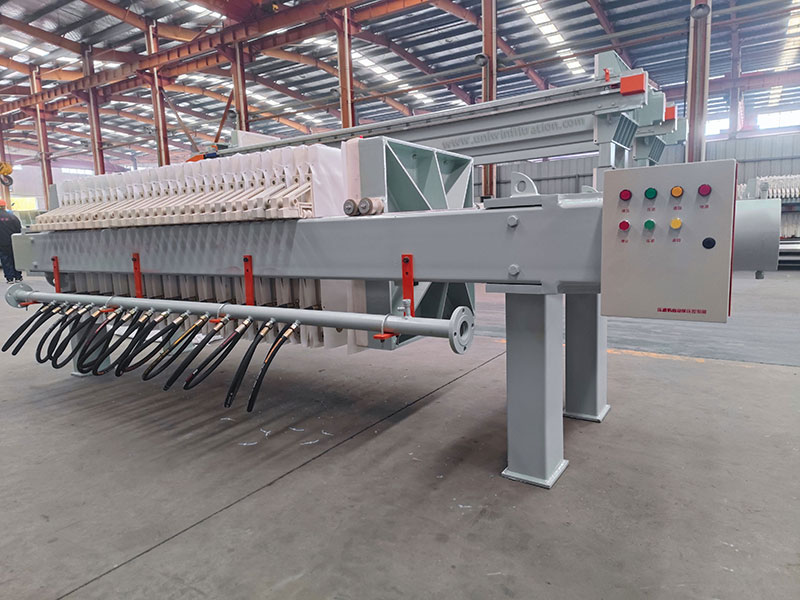
For this project, the US-based client required a sludge-treatment solution for the petroleum sector. Based on the client’s specific processing needs and site conditions, we supplied a 270 m² membrane filter press system. The setup features a high-level support frame and includes a slurry pump, a horizontal belt conveyor, and an inclined belt conveyor to handle the entire process: sludge feeding, pressure filtration and dewatering, cake discharge, and subsequent material transport.
Key Challenges in Sludge Treatment in the Petroleum Industry
Compared to general industrial sludge, sludge generated by the petroleum industry is typically more difficult to treat, primarily due to the following factors:
- High moisture content, requiring further reduction of water in the filter cake
- High concentration of fine particles, making solid-liquid separation difficult
- Presence of oil in some materials, which can impair filtration efficiency
- Large treatment volumes, demanding high operational stability from equipment
- Heavy filter cakes, necessitating auxiliary conveying equipment to minimize manual handling
270m² Membrane Filter Press Solution
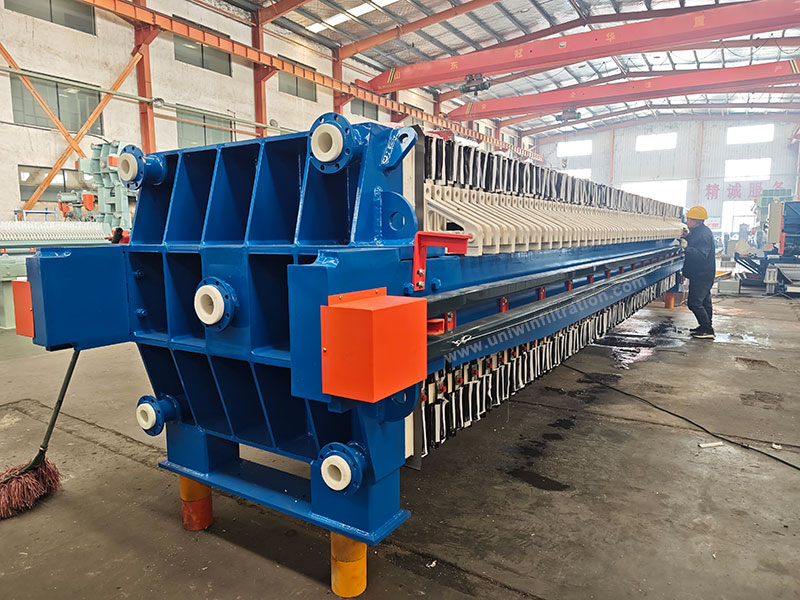
For this project, we supplied the client with a 270m² membrane filter press.
After the initial filtration cycle, the membrane filter press allows for secondary squeezing of the filter cake by inflating the membranes, thereby expelling additional residual liquid.
Compared to standard chamber filter presses, membrane filter presses typically offer distinct advantages when lower filter cake moisture content is required.
Equipped with a slurry pump for stable feeding
The system is equipped with a slurry pump to transport the sludge to be processed to the filter press. Sludge in the petroleum industry typically has a certain concentration and contains a significant amount of solid particles; therefore, the feed pump requires excellent wear resistance and stable pumping capabilities.
High-frame design facilitates automatic filter cake discharge
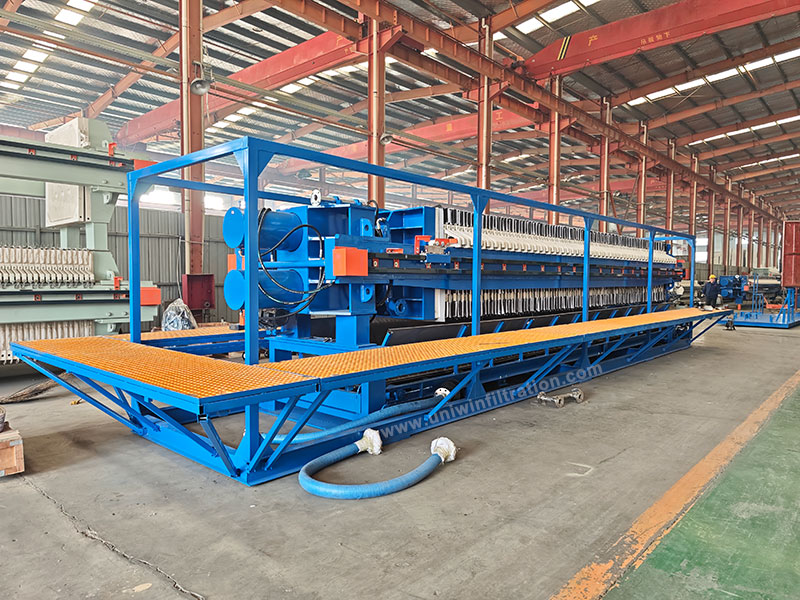
The filter press in this project utilizes a high-frame structural design. By elevating the entire unit, sufficient space is created underneath to accommodate a conveyor system. Once the filter plates are opened for discharge, the filter cakes drop directly onto the conveyor belt below, eliminating the need for frequent manual cleanup and material transfer. This configuration is particularly well-suited for industrial projects with high processing volumes, as it enhances the efficiency of filter cake discharge.
Horizontal and inclined belt conveyors for filter cake transport
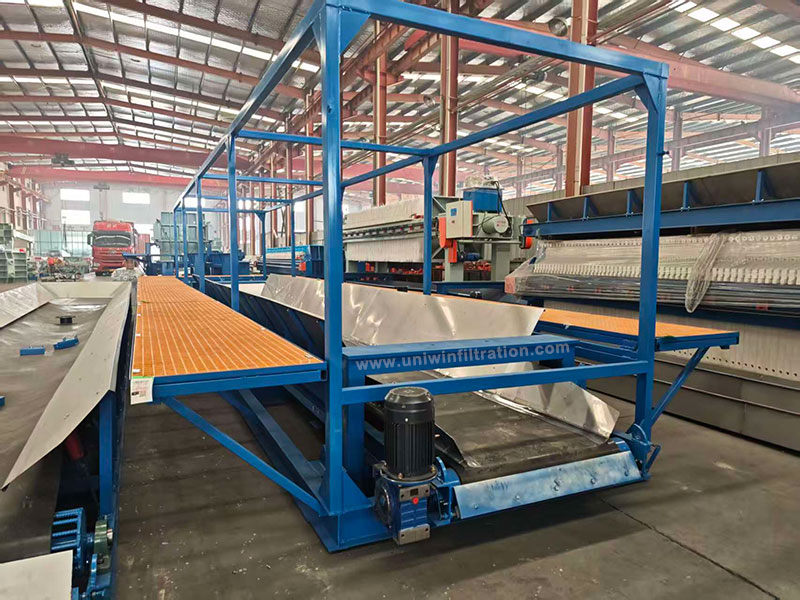
To facilitate the subsequent transport of filter cake, this project is equipped with horizontal and inclined belt conveyors.
Upon completion of the filtration process, the filter cake drops from beneath the filter press onto a horizontal belt conveyor and is then transported via an inclined belt conveyor to a designated height or collection point. For large-scale filter press projects, the conveyor system is a crucial component in enhancing the overall level of automation.
Conclusion
In the treatment of sludge from the petroleum industry, achieving stable solid-liquid separation and reducing the moisture content of the filter cake are critical steps for enhancing the efficiency of subsequent processing stages.
Filter press solutions can be further optimized by adjusting filtration area, feed methods, and auxiliary conveying systems to suit the specific material properties, processing volumes, and dewatering requirements of different types of petroleum sludge.