
Application of Diaphragm Filter Presses in Sludge Dewatering – A Case Study from a Vietnamese Client
Sludge treatment is widely used in industrial wastewater treatment, chemical processing, metallurgy, electroplating, and other production processes. Because sludge typically has high moisture content and a complex composition, and different materials vary widely in corrosiveness and filtration performance, achieving stable solid-liquid separation and reducing filter cake moisture are key goals in sludge treatment.
In these applications, diaphragm filter presses can improve sludge dewatering by combining filtration with secondary pressing, and reduce the burden of subsequent filter cake transportation and processing.
Key Challenges in Sludge Treatment
High moisture content in sludge
Ordinary sludge still contains a large amount of moisture after initial settling. Insufficient dewatering not only increases the volume of the filter cake but also raises subsequent transportation and disposal costs.
Different types of sludge have significantly different properties
The solid content, particle size, viscosity, and chemical composition of sludge all affect filtration efficiency. For the same throughput, the requirements for filtration area, feed pressure, and filtration time may differ depending on the material and conditions.
Acidic sludge presents corrosion problems
For acidic sludge, in addition to filtration efficiency, you must carefully consider the corrosion resistance of equipment components in contact with the material. When selecting a filter press, appropriate filter plates, filter cloths, and related liquid-contacting components must be chosen based on the acid concentration, temperature, and actual operating conditions.
Filter cake discharge and conveying efficiency
For filter presses with a large filtration area, a certain amount of filter cake is generated with each filtration cycle. Relying entirely on manual cleaning and transfer would increase operational intensity and affect continuous production efficiency.
Vietnam Sludge Treatment Project
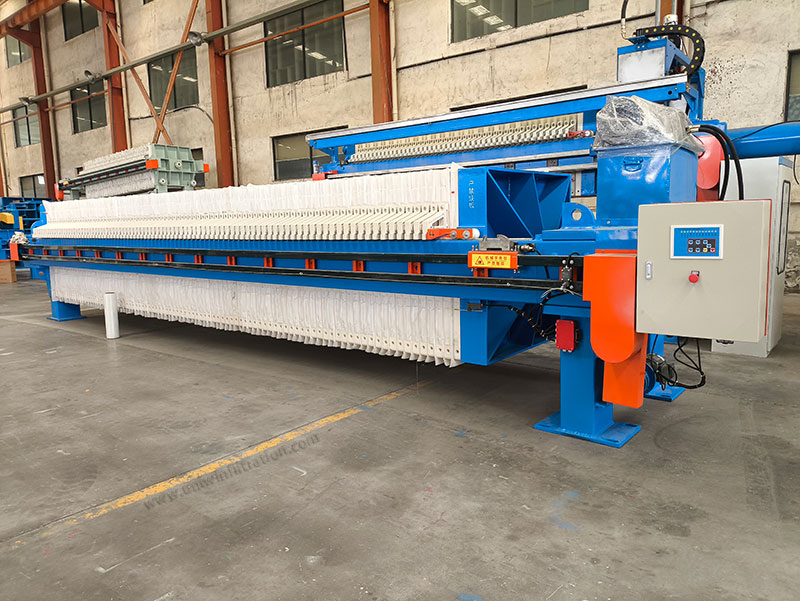
Our Vietnamese client plans to use two filter presses to treat two different types of sludge. The final configuration consists of two 100㎡ diaphragm filter presses, each with a designed processing capacity of approximately 2 tons/hour.
The first filter press will primarily handle general sludge. Diaphragm pressing further reduces the moisture content of the filter cake after conventional filtration, while the drip tray and belt conveyor reduce manual cleaning and improve filter cake discharge efficiency.
The second piece of equipment primarily processes sludge containing approximately 10% nitric acid. Due to the corrosive nature of the material, this type of project requires not only confirming the processing capacity but also carefully considering the acidity, temperature, and corrosion resistance requirements of the components in contact with the equipment.
Therefore, in the actual selection process, we determine the most suitable equipment configuration based on the material information provided by the customer.
The role of the drip tray and belt conveyor
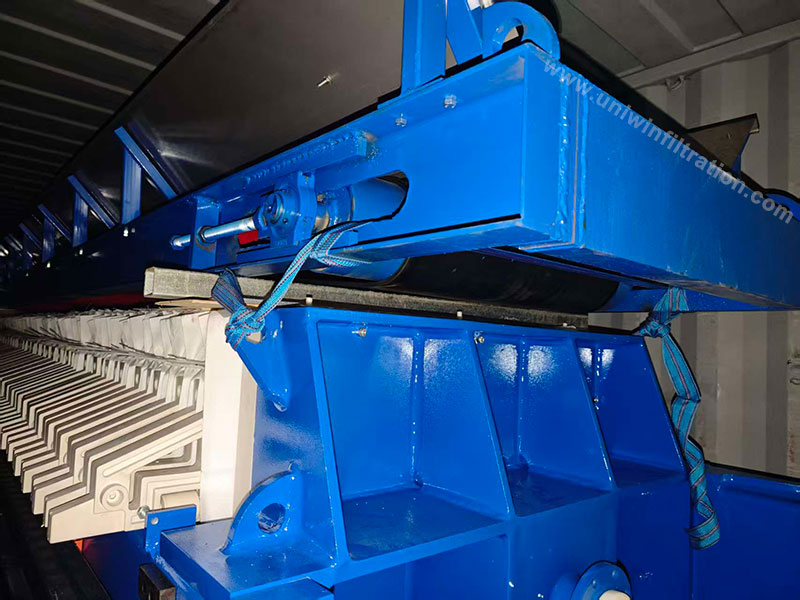
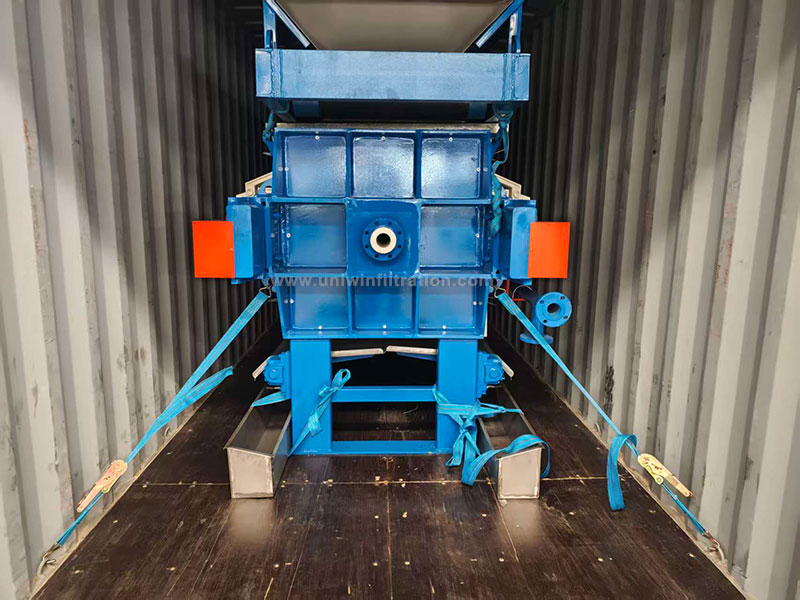
Both units are equipped with a drip tray and a belt conveyor. During the filtration stage, the drip tray helps collect the filtrate produced by the equipment, reducing the amount of filtrate falling directly onto the bottom of the machine.
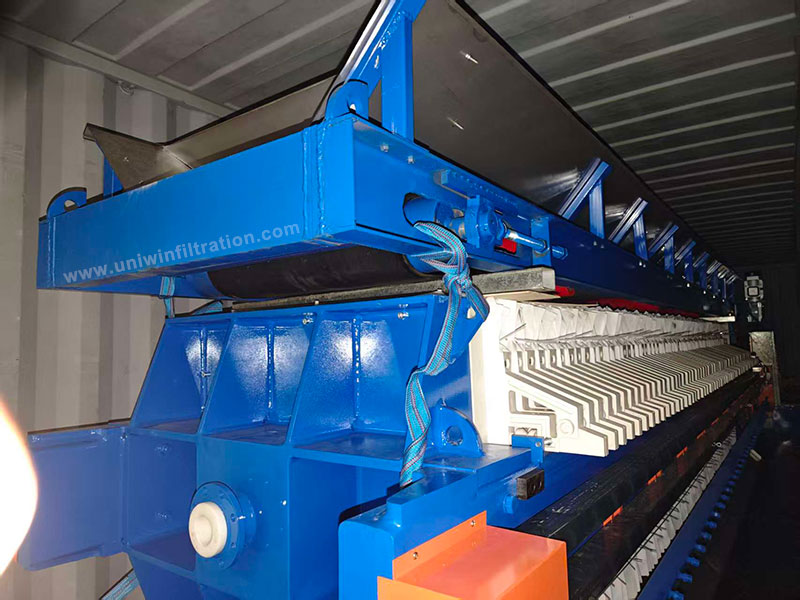
When the filter press begins to discharge cake, the drip tray opens, and the filter cake falls directly onto the belt conveyor below, where it is then transported to the designated location.
This configuration is particularly suitable for filter presses with a filtration area of 100㎡ or larger, reducing manual handling and improving the continuous operation capability of the sludge treatment system.
Conclusion
For applications involving industrial sludge, chemical sludge, and acidic sludge, the appropriate selection of filter press structure and materials for components in contact with the material is crucial. If you require sludge dewatering, please provide us with the material type, throughput, solids content, pH value, and target filter cake moisture content. We can then recommend a suitable filter press solution based on your specific operating conditions.