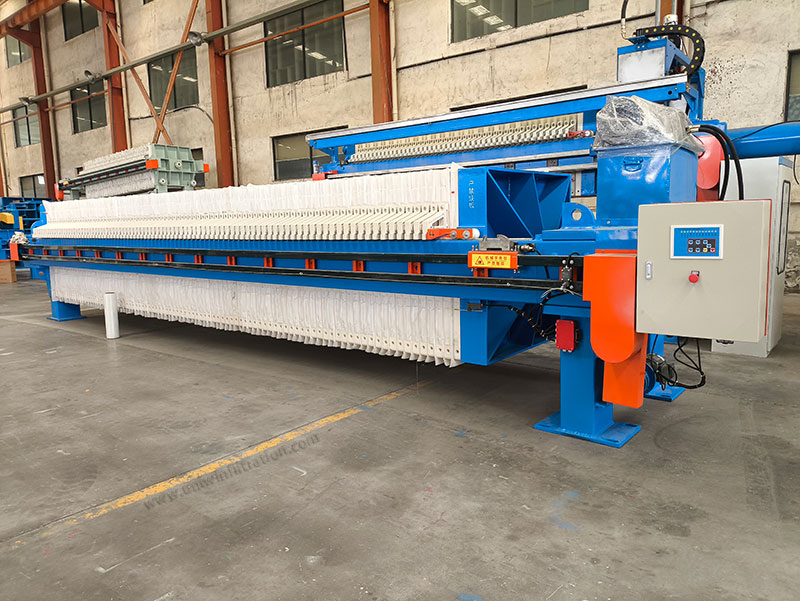
Horizontal Leaf Filter
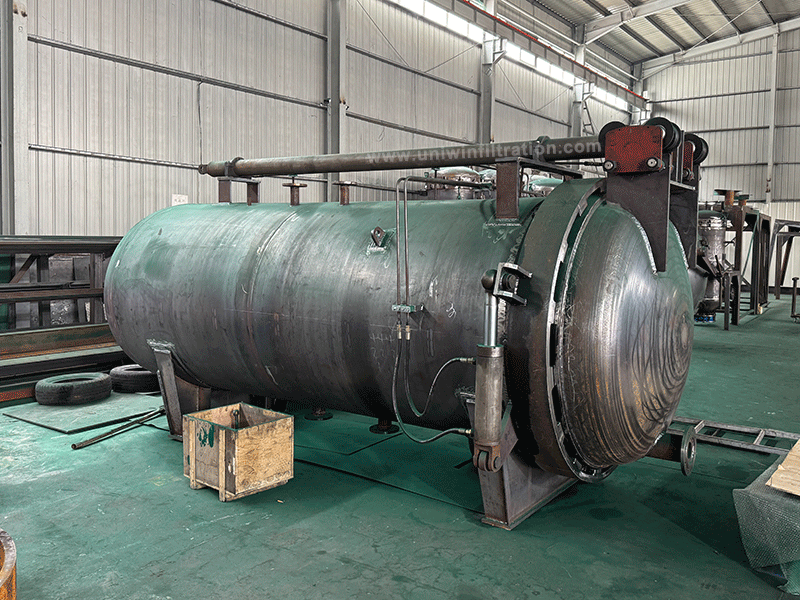
The horizontal leaf filter is an enclosed pressure filtration unit designed for liquid clarification and fine solid-liquid separation. It features a horizontal tank structure containing multiple filter leaves; the construction of these leaves mirrors that of vertical leaf filters, consisting of five layers—with the two outermost layers made of 316 stainless steel and the three innermost layers made of 314 stainless steel.
Under feed pressure, the liquid passes through the filtration medium on the surface of the filter leaves, while solid particles are retained to form a filter cake; the clarified filtrate is then collected via internal flow channels within the leaves and discharged.
The horizontal design facilitates a large filtration area and allows for easy inspection, cleaning, and maintenance of the filter leaves. It is suitable for processing edible oils, syrups, sodium silicate (water glass), resins, chemical liquids, and other industrial materials requiring fine filtration.
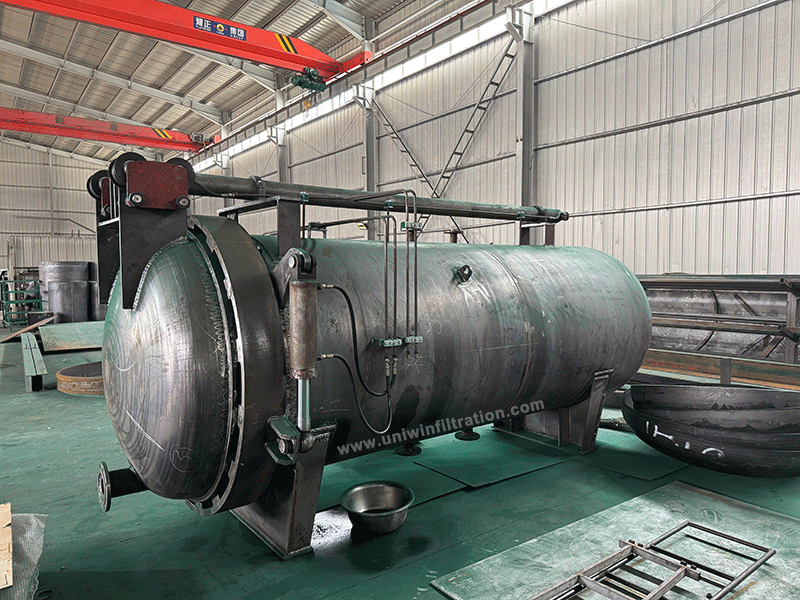
Working Principle of the Horizontal Leaf Filter
The liquid to be filtered is pumped into a sealed horizontal tank. Under pressure, the liquid passes through the mesh or pre-coat layer on the surface of the filter leaves. Solid particles are retained on the leaf surfaces, accumulating over time to form a filter cake; the filtered liquid enters the internal channels of the leaves and is discharged via the collection system.
For materials containing fine particles or those prone to clogging the mesh, filter aids such as diatomaceous earth or perlite can be pre-coated to enhance filtration precision and improve filter-cake structure.
Feeding is stopped when the filter cake reaches a certain thickness, the filtration pressure differential rises, or the flow rate drops. Subsequently, the vibration mechanism is activated to discharge the cake, and the unit is cleaned following discharge.
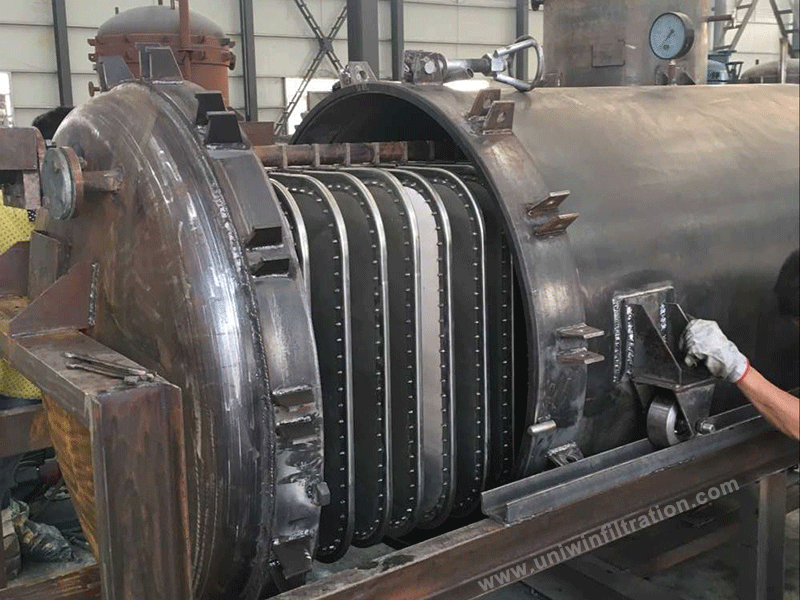
Horizontal Leaf Filter Product Parameter
| Model | Filter Area m2 | Cylinder Diameter (mm) | Working Pressure Mpa | Working Temperature ℃ | Grease | Resin | Beverage | |
|---|---|---|---|---|---|---|---|---|
| XY-W-5 | 5 | Ø900 Ø1200 Ø1400 Ø1500 Ø1600 Ø1700 Ø1800 Ø2000 | 0.4 | 150 | 0.2 | 0.7 | 0.8 | |
| XY-W-10 | 10 | 0.4 | 150 | 0.2 | 0.7 | 0.8 | ||
| XY-W-20 | 20 | 0.4 | 150 | 0.2 | 0.7 | 0.8 | ||
| XY-W-30 | 30 | 0.4 | 150 | 0.2 | 0.7 | 0.8 | ||
| XY-W-40 | 40 | 0.4 | 150 | 0.2 | 0.7 | 0.8 | ||
| XY-W-50 | 50 | 0.4 | 150 | 0.2 | 0.7 | 0.8 | ||
| XY-W-60 | 60 | 0.4 | 150 | 0.2 | 0.7 | 0.8 | ||
| XY-W-70 | 70 | 0.4 | 150 | 0.2 | 0.7 | 0.8 | ||
| XY-W-80 | 80 | 0.4 | 150 | 0.2 | 0.7 | 0.8 | ||
| XY-W-90 | 90 | 0.4 | 150 | 0.2 | 0.7 | 0.8 | ||
| XY-W-100 | 100 | 0.4 | 150 | 0.2 | 0.7 | 0.8 |
Product Features
Large filtration area
The horizontal tank design allows for the arrangement of multiple filter leaves along the length of the unit, enabling a large effective filtration area to meet the processing demands of medium- to large-scale production lines.
Enclosed pressure filtration
The entire filtration process takes place within a sealed tank, minimizing liquid leakage and limiting material exposure to the external environment; this makes it ideal for applications in the food, chemical, and other industries with strict production environment requirements.
Precision filtration
Filtration is achieved through the combined action of the filter mesh, pre-coat layer, and the gradually forming filter cake; this effectively captures fine suspended particles in the liquid and enhances filtrate clarity.
Easy maintenance of filter leaves
Horizontal tanks typically open at the end, allowing for the inspection, cleaning, and maintenance of internal filter leaves based on the equipment design—making them particularly suitable for operating conditions that require regular filter leaf maintenance.
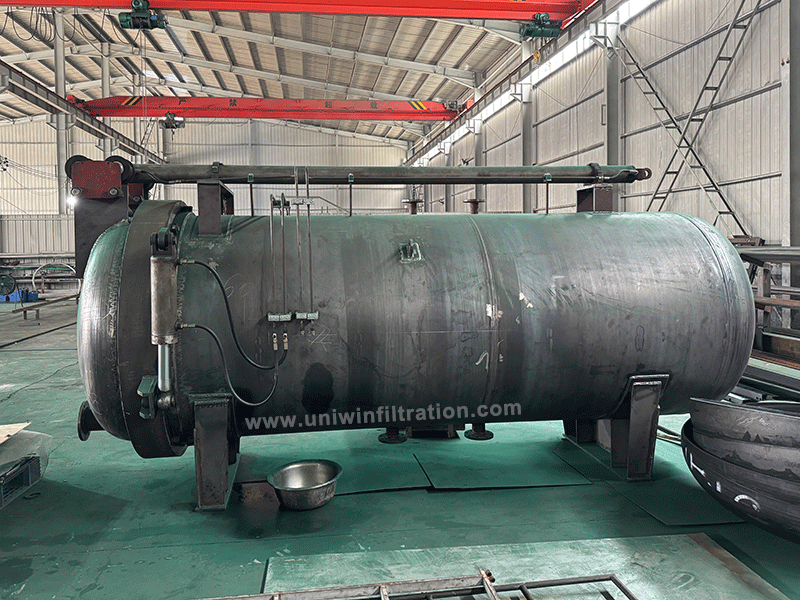
Horizontal Leaf Filter VS Vertical Leaf Filter
Difference in equipment orientation
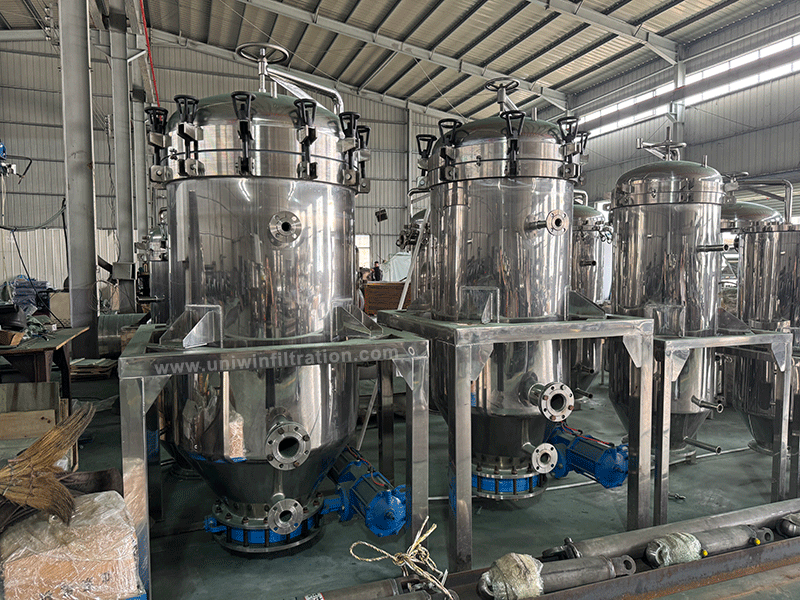
Vertical leaf filters feature a vertical tank design that extends upwards, resulting in a smaller floor footprint.
Horizontal leaf filters utilize a horizontal tank; due to their greater length, they require more lateral installation space.
Difference in maintenance method
Vertical units are typically opened from the top or upper section to inspect the internal filter leaves.
Horizontal units are usually opened via an end cover, allowing access to the internal filter leaves from the side or axially; this makes maintenance more convenient in operating conditions requiring frequent inspection, cleaning, or replacement of the filter leaves.
Different methods of solids discharge
Vertical leaf filters typically employ a vibration mechanism to dislodge the filter cake from the vertical leaf surfaces, allowing it to fall to the bottom for discharge.
Horizontal units, depending on their specific design, allow the filter leaves to be pulled directly out of the vessel for solids discharge.