
Factors Affecting the Normal Operation of Filter Presses
Filter presses are indispensable solid-liquid separation units in industrial production. In practice, various factors directly influence their separation efficiency, processing capacity, and service life. This article systematically examines the key factors affecting normal filter press operation—including material properties, equipment operation, filter media condition (filter cloths), pre-treatment processes, and mechanical maintenance—and offers recommendations for optimization.
Material Properties
The inherent physical and chemical characteristics of the material are the fundamental factors determining the performance of a filter press; they directly influence filtration rate, filter cake moisture content, and processing cycle time.
Particle size
The finer the particles, the greater the filtration resistance. Fine particles tend to clog the filter cloth pores. For materials consisting of very fine particles, pretreatment—typically via flocculation—is usually required to increase particle size in order to achieve an acceptable filtration outcome.
Material concentration
If the concentration is too low, filter cake formation becomes slow, the operating cycle is extended, and the equipment’s processing capacity decreases. Conversely, if the concentration is too high, feed resistance increases, which may lead to pipeline clogs and overloading of the feed pump.
Material viscosity
High-viscosity liquids encounter greater resistance when passing through filter media, making filtration difficult and resulting in poor dewatering performance. Low temperatures increase viscosity, which in turn reduces the filtration rate.
Material temperature
Where conditions permit, moderately increasing the material temperature helps lower its viscosity and improve the filtration rate. However, it should be noted that high temperatures may adversely affect the filter media and sealing components.
Material pH and chemical properties
The acidity, alkalinity, and corrosivity of the material affect the service life of filter plates and filter media. Corrosive materials accelerate the degradation of metal components and filter media. When selecting equipment, it is essential to ensure that the materials used for the filter plates and filter media are chemically compatible with the substance being processed.
Equipment and Operating Parameters
Appropriate operating parameters are key to ensuring the efficient and stable operation of a filter press.
Filtration pressure
Filtration pressure serves as the driving force for solid-liquid separation. Insufficient pressure leads to incomplete dewatering and a high moisture content in the filter cake, while excessive pressure may damage the filter plates or rupture the filter cloths. Therefore, the operating pressure must be determined based on the compressibility of the material; arbitrary increases in pressure should be avoided.
Feed flow rate and velocity
An excessively high flow rate results in an uneven distribution of the filter cake, often causing material leakage and turbid filtrate. Conversely, an excessively low flow rate leads to low filtration efficiency and extended cycle times. Properly controlling the feed flow rate to ensure the uniform formation of the filter cake is a crucial step in guaranteeing effective dewatering.
Filtration time
The duration of the filtration process should be optimized based on the characteristics of the material. Insufficient time leads to incomplete dewatering and a high moisture content in the filter cake, while excessive time reduces processing capacity and wastes energy.
Filter Cloth and Related Factors
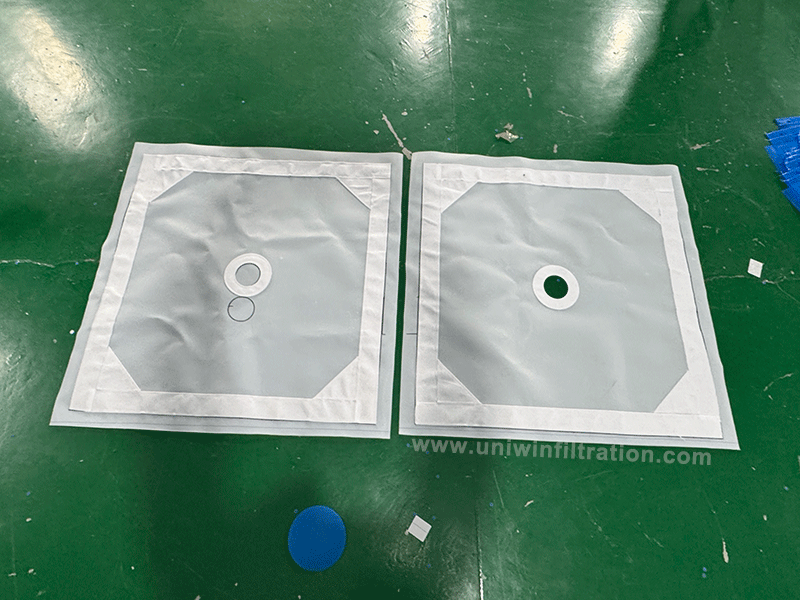
Filter cloth serves as the core filtration medium in a filter press, enabling solid-liquid separation; its condition directly influences both filtration precision and efficiency.
Selection of filter cloth material
The material of the filter cloth must be compatible with the chemical properties of the processed material. Common materials include polypropylene, polyester, nylon, and PTFE; the appropriate choice depends on specific operating conditions.
Filter cloth pore size and permeability
The pore size of the filter cloth determines the balance between particle retention capacity and filtration rate. Selection should take into account both the particle size distribution of the material and the required filtration precision.
Filter cloth clogging
During prolonged operation, fine particles inevitably become embedded in the pores of the filter cloth, leading to clogging. Regular cleaning and replacement are essential to ensure the stable operation of the equipment.
Filter cloth installation quality
When installing the filter cloth, ensure it lies flat and fits snugly; periodically check for any loosening or displacement.
Pretreatment Process
For materials that are difficult to filter directly, pretreatment is a critical step for improving filtration performance and enhancing the operational efficiency of filter presses. The appropriate selection and dosage of flocculants (such as PAC, PAM, etc.) can effectively promote the aggregation of fine particles into larger flocs, thereby significantly improving filtration performance.
Mechanical and Maintenance Factors
The mechanical condition and level of maintenance of a filter press directly influence its operational stability and service life.
Hydraulic system condition
The hydraulic system provides the force required to clamp the filter plates and the pressure for the filtration process; it serves as the power core of the filter press. Regularly checking the quality and level of the hydraulic fluid, inspecting the condition of seals, and keeping the system clean are essential for ensuring the reliable operation of the hydraulic system.
Filter plate condition
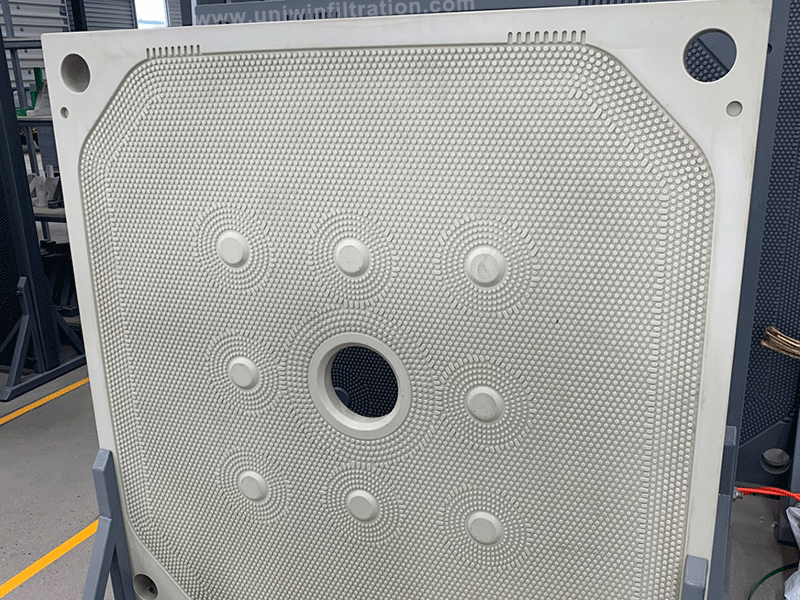
Under prolonged exposure to high pressure, filter plates may become deformed or develop cracks, which can lead to seal failure and slurry leakage. Conducting routine inspections of the filter plates and promptly replacing any that are deformed or damaged are critical measures to prevent minor issues from escalating into major malfunctions.
Automation system operation
Modern filter presses typically utilize PLC (Programmable Logic Controller) systems to coordinate various process stages, including feeding, clamping, pressing, washing, and discharging. Regularly calibrating sensors and verifying program logic ensures that the automation system functions correctly and reliably.
Lubrication and maintenance of moving parts
Moving components—such as guide rails, chains, and plate-shifting claws—can seize or jam if they lack proper lubrication, which hinders the smooth, automated process of shifting plates for discharge. Regular lubrication and maintenance are effective ways to reduce mechanical failures.