
How Often Should the Hydraulic Oil In A Filter Press Be Changed?
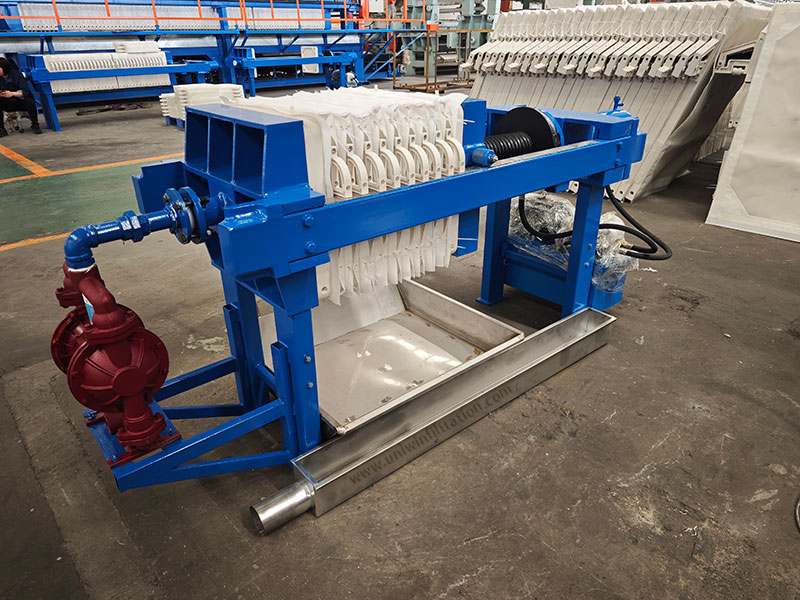
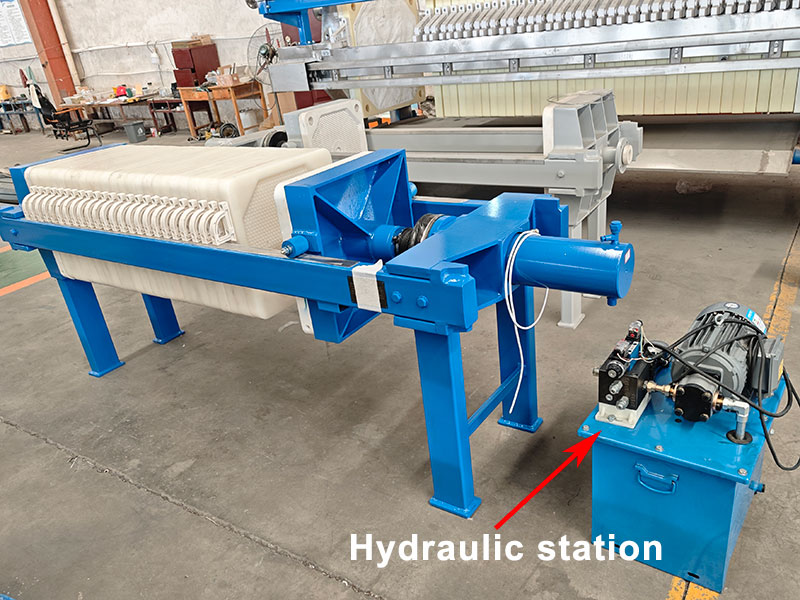
Determining the replacement interval for filter press hydraulic oil requires considering more than just the passage of time; factors such as equipment usage frequency, the operating environment, and the condition of the oil itself must also be taken into account. For filter presses equipped with a hydraulic pump station, the hydraulic oil not only affects the performance of the cylinder in clamping and maintaining pressure but also impacts the service life of components such as the hydraulic pump, solenoid valves, cylinder, and piping.
What is the Hydraulic Oil Replacement Interval?
During the initial operation phase of a new filter press’s hydraulic system, the hydraulic pump, cylinders, valve assemblies, and piping undergo a break-in period. Small amounts of metal particles, debris from the wearing-in of seals, or assembly residues may be present within the system.
Therefore, it is recommended to change the hydraulic oil for the first time after approximately 100 hours of operation and to inspect or clean the oil tank and filter elements. This helps minimize wear caused by impurities on the hydraulic pump, solenoid valves, and cylinder seals.
After the initial replacement, the schedule can generally be determined based on the equipment’s operating time: it is recommended to change the hydraulic oil approximately every 1,000 hours of operation.
If the equipment operates continuously on a daily basis, it is advisable to shorten the inspection interval; conversely, if usage is infrequent, inspections should still not be neglected for extended periods, as hydraulic oil can oxidize, absorb moisture, or deteriorate when left sitting for a long time.
How Should Hydraulic Oil Be Selected Based On The Season?
Winter: HM32 hydraulic oil
Spring and Autumn: HM46 hydraulic oil
Summer: HM68 hydraulic oil
In lower temperatures, choose hydraulic oil with relatively lower viscosity to facilitate hydraulic pump startup and system operation; in higher temperatures, choose hydraulic oil with higher viscosity to ensure stable system pressure and effective lubrication.
What Should the Hydraulic Oil Level Be?
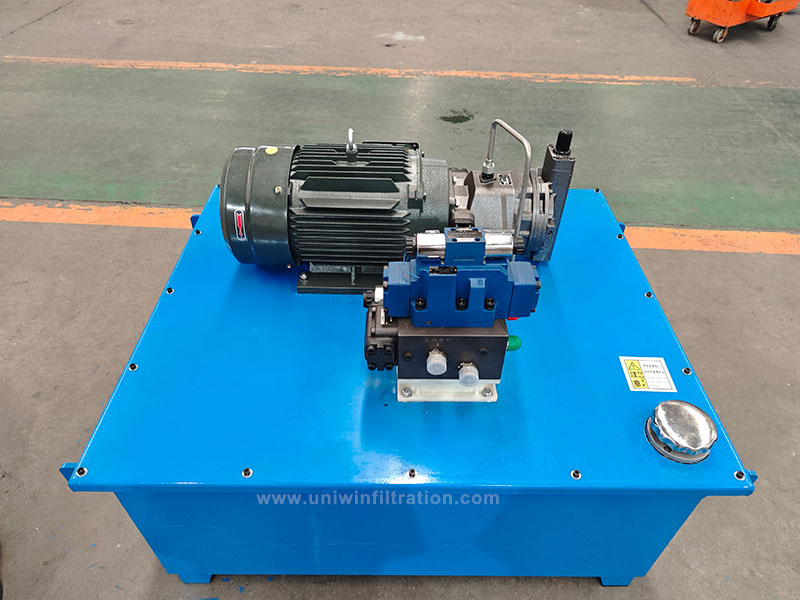
The filter press’s hydraulic pump station must not be started if the oil tank is low on fluid. The tank should be adequately filled with hydraulic oil; after the cylinder completes one full reciprocating cycle, the oil level should be checked and topped up as necessary.
Under normal operating conditions, the hydraulic oil level should be maintained within the appropriate range on the dipstick—specifically, at or above the 70–80 mark. If the level is too low, the hydraulic pump may draw in air, leading to unstable pressure, increased noise, and abnormal cylinder operation; in severe cases, this can damage the pump.
Precautions for Hydraulic Oil Replacement
First, drain the old oil from the reservoir as completely as possible and remove any debris from the bottom. Second, filter the new hydraulic oil during filling to prevent impurities from entering the system. Components such as cylinders, pipelines, and valve assemblies must be kept clean to prevent dust and metal filings from contaminating the hydraulic system.
Additionally, the operating pressure of the hydraulic pump station is typically preset at the factory; users should not arbitrarily adjust the relief valve or pressure valve.
Conclusion
The appropriate grade of hydraulic oil should be selected based on the season. During daily operation, the oil level in the reservoir must be maintained at a sufficient level, and starting the hydraulic pump with insufficient oil is strictly prohibited. Timely replacement of the hydraulic oil, along with cleaning of the reservoir and filter elements, effectively reduces wear on hydraulic pumps, cylinders, solenoid valves, and seals, thereby ensuring the long-term, stable operation of the filter press.