
Reasons Why Filter Press Plates Are Prone to Damage
The filter plate is a core component of the filter press; it directly affects filtration performance, filter cake formation, equipment sealing, and the machine’s overall operational stability. After using a filter press for some time, many users encounter issues such as plate deformation, cracking, corner damage, crushing of sealing surfaces, and bulging of diaphragm plates.
A single factor rarely causes damage to filter plates; rather, it results from the combined influence of feed pressure, forces exerted on the filter chambers, plate material, the condition of the filter cloth, and on-site operational practices.
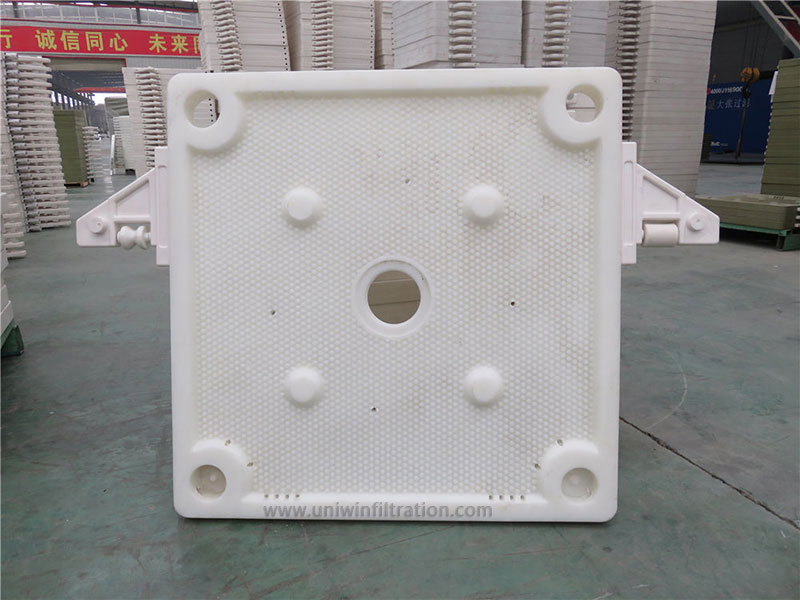
Excessive Feed Pressure
During the operation of a filter press, the feed pump delivers slurry into the various filter chambers. As the filter cake gradually forms, the internal pressure within the chambers rises continuously. If the feed pressure exceeds the design pressure limit of the filter plates, or if the pressure rises too rapidly, it can easily lead to plate deformation, bulging, or even cracking.
In practice, pressure should be increased gradually based on the material properties, filter cloth permeability, and the rate of filter cake formation. If a significant drop in filtrate output and a rapid rise in pressure are observed, one should promptly determine whether the issue stems from filter cloth clogging, full filter chambers, or uneven feeding.
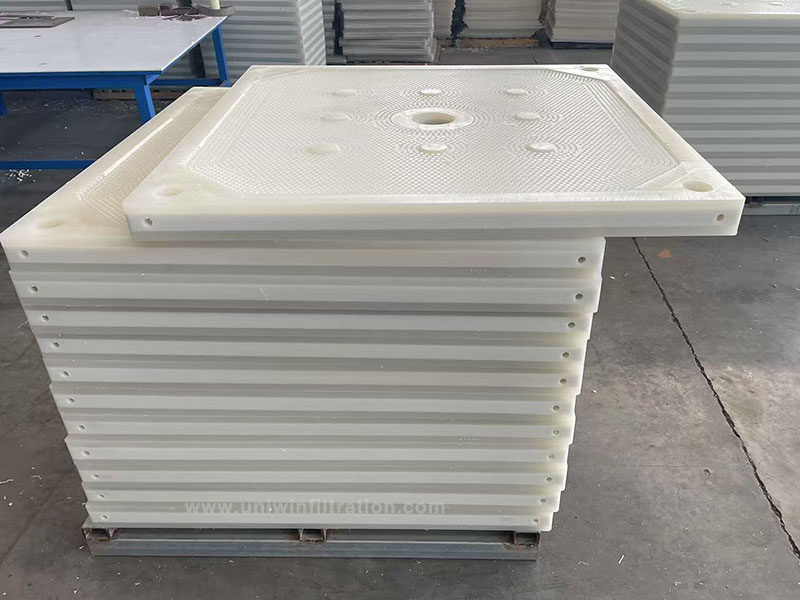
Uneven Load Distribution in Filter Chambers
“Uneven load distribution” refers to an imbalance of forces acting on the two sides of a filter plate or between different filter chambers. Under normal conditions, the filter cake thickness within each chamber should be relatively uniform, and the pressure exerted on the filter plates should be balanced. However, if the filter cake is significantly thicker in some chambers than in others—or if the cake thickness varies from one side of a chamber to the other—excessive localized stress is placed on the filter plates.
Prolonged operation under such uneven loading conditions makes the filter plates prone to issues such as bulging in the center, cracking at the edges or corners, and deformation of the sealing surfaces. Therefore, routine cleaning and inspection are essential.
Filter Plate Material Is Not Suitable
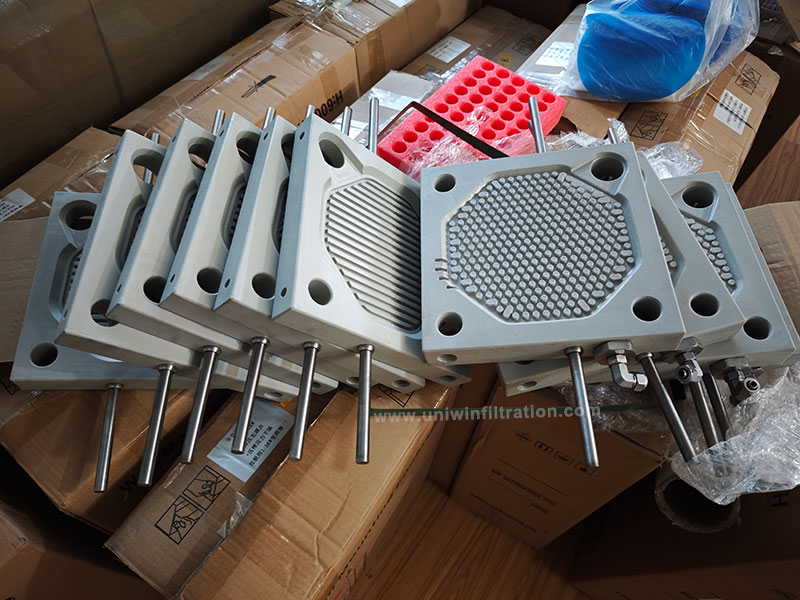
The common material of the filter plate of the filter press is reinforced polypropylene, which is often called a PP filter plate. PP filter plate has the characteristics of light weight, corrosion resistance, good strength, and a wide application range. It is currently the commonly used filter plate material for most filter presses.
However, different working conditions have different requirements for filter plates. If the material temperature is high, corrosive, the particle hardness is high, or the filtration pressure is high, ordinary filter plates may not be able to be used stably for a long time.
Therefore, when choosing a filter press, you should not just look at the filter area and price, but also need to select the appropriate filter plate structure and material based on the material properties.
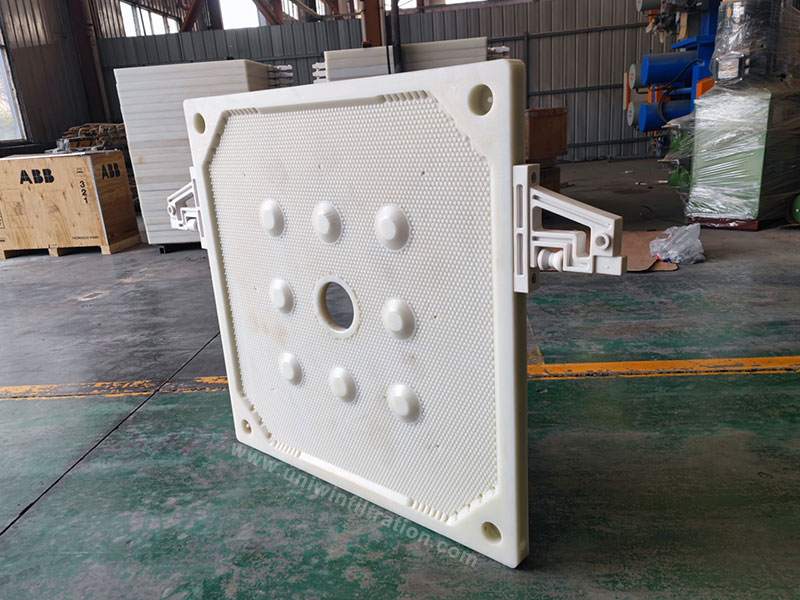
Improper Operation
At many job sites, filter plate damage is not caused by the equipment itself but by a failure to properly manage operational details.
Common operational errors include:
- Starting the feed process before the filter plates are fully clamped
- Failing to align the filter plates correctly
- Continuing to use filter cloths that are creased or damaged
- Closing the plates again before the filter cake has been completely discharged
- Continuing high-pressure feeding despite severe filter cloth clogging
- Forcing plate movement when the plate-shifting system is unstable
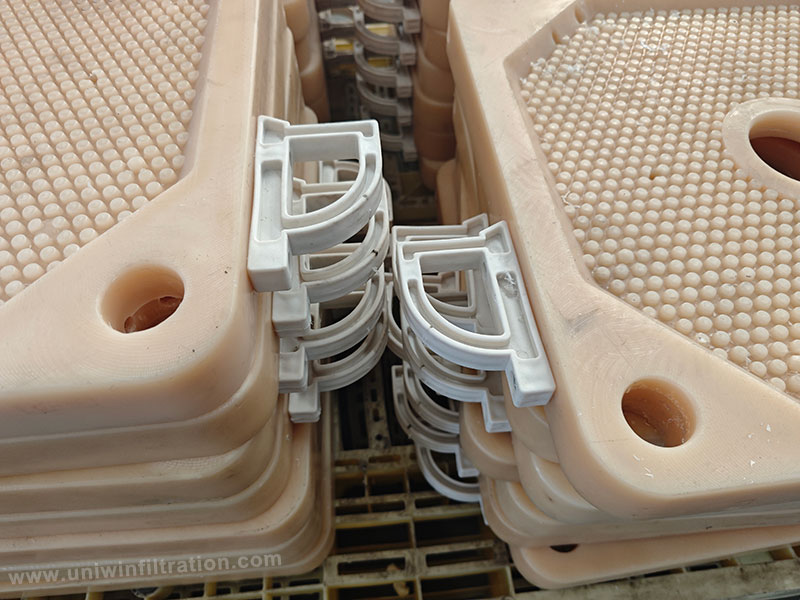
- Failing to perform timely maintenance on worn filter plate handles or guide rails
- Failing to clean the filter cloths and feed ports after shutdown
Therefore, proper operation is not merely a matter of habit; it is a critical factor influencing the service life of the filter plates.
How Can Filter Plate Damage Be Minimized?
- During the equipment selection stage, the appropriate material and structure for the filter plates must be chosen based on the properties of the materials being processed to avoid using unsuitable filter plates.
- During operation, the feed pressure must be properly controlled; the pressure gauge, safety valve, feed pump, and control system should be inspected regularly to ensure that pressure readings are accurate and reliable.
- Maintain the filter cloth in good condition. It should be cleaned or replaced periodically—depending on the nature of the material—if it becomes clogged, damaged, or creased, or is installed unevenly.
- After each discharge cycle, clean the sealing surfaces of the filter plates, the feed ports, and any residual filter cake to prevent hard particles from becoming trapped between the plates.
- Check that the filter plates are aligned correctly and the plate-shifting system operates smoothly; also inspect the guide rails, handles, and chains for wear.
- Operators must run the equipment according to proper procedures, avoiding errors such as feeding before the plates are fully clamped, over-pressure feeding, forced plate shifting, or continuing operation despite clogged filter cloths.
Conclusion
Selecting the appropriate filter plate material and filter press model is essential; however, equal importance must be placed on daily operation, filter cloth maintenance, pressure control, and the cleanup of discharged material.
If you are unsure which type of filter plate is best suited for your specific operating conditions, or if you are frequently encountering issues such as filter plate cracking, deformation, or leakage, please provide details—including the material name, temperature, pH value, solids content, feed pressure, and on-site photos. We can help analyze the root causes and provide a suitable solution.