
How to Extend the Service Life of Filter Press Cloth
Filter cloth is one of the key wear parts in the operation of a filter press. The condition of the filter cloth directly affects the filtration speed, filtrate clarity, filter cake moisture content, and equipment operational stability. Frequent clogging, damage, or deformation of the filter cloth not only increases replacement costs but may also cause problems such as leakage, material spillage, and difficulty in filter cake removal.
To extend the service life of filter press cloth, it’s not enough to just look at the cloth itself; comprehensive management is needed, considering factors such as material properties, filter cloth selection, and installation methods.
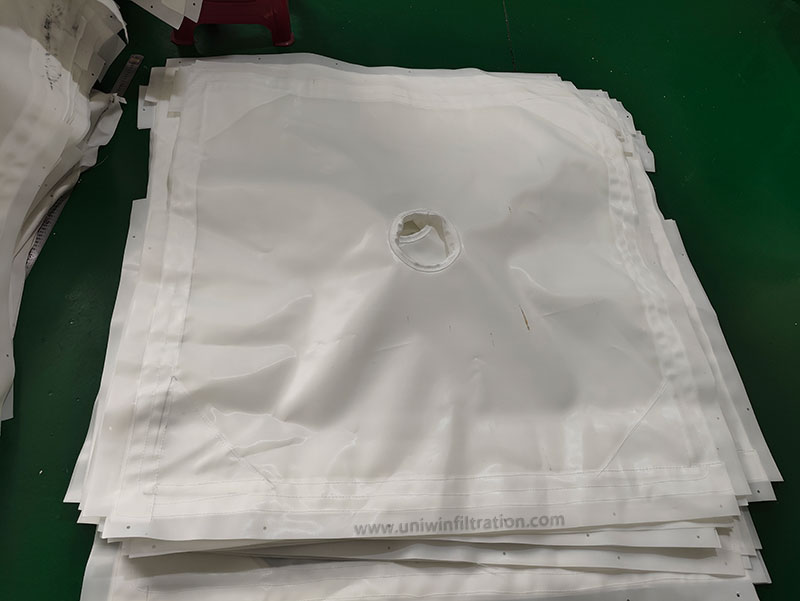
Choose the Right Filter Cloth Based on the Material
Different materials have different requirements for filter cloth. Particle size, acidity/alkalinity, temperature, viscosity, and solids content all affect the filter cloth’s lifespan.
If the filter cloth mesh count is too large, the filtration speed may slow down, and it may easily become clogged; if the mesh count is too small, fine particles may penetrate the filter cloth, leading to turbidity in the filtrate and even accelerating filter cloth wear.
Common filter cloth materials include polypropylene, polyester, and nylon. For corrosive, high-temperature, or fine-particle materials, a specialized filter cloth should be selected based on the actual filtration conditions, rather than simply choosing based on price.
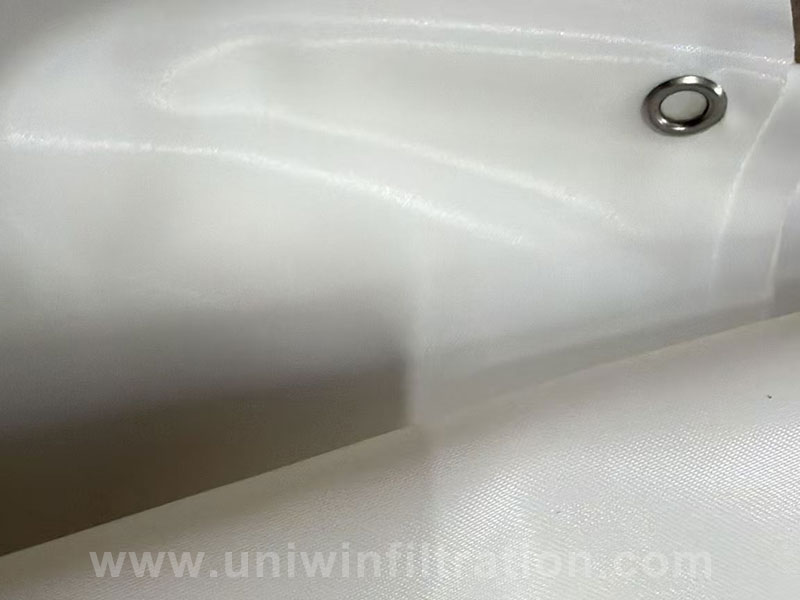
Proper Filter Cloth Installation
Uneven filter cloth installation is a common cause of premature filter cloth damage and leakage between filter plates.
If the filter cloth edges are wrinkled, folded, or have cloth clippings, the sealing surface will experience uneven stress after the filter press tightens, easily leading to localized wear, leakage, or filter cloth tearing.
During installation, pay attention to the following:
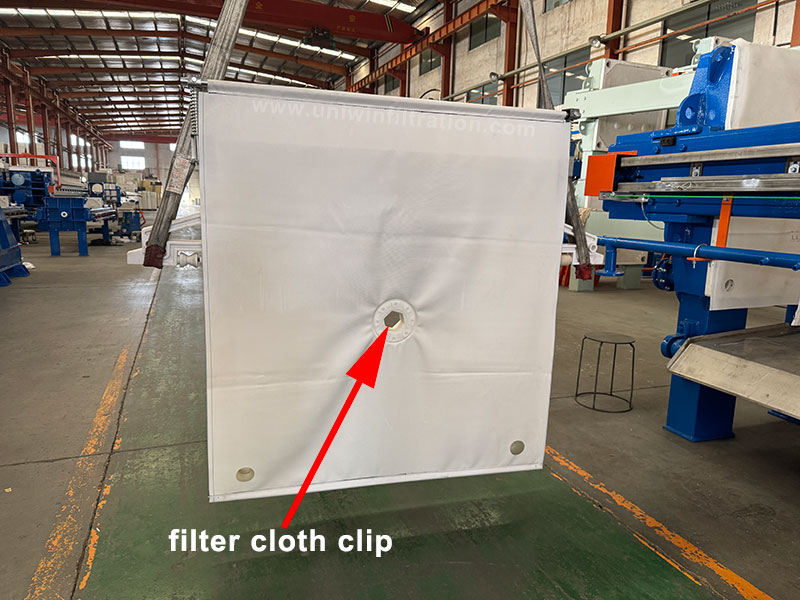
- The filter cloth should be flat and adhered to the filter plate surface.
- The feed hole and discharge hole should be aligned with the holes on the filter plate.
- The edges of the filter cloth should not be pressed into abnormal positions on the sealing surface.
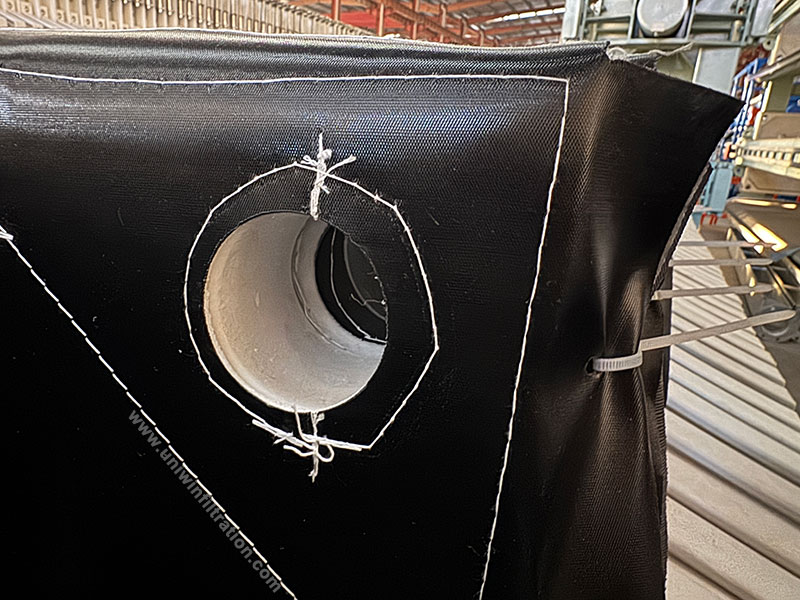
- The fixing methods, such as hanging cloth, cable ties, and clips, should be secure.
After replacing the filter cloth, it is recommended to first run it at low pressure to confirm that there is no obvious leakage, misalignment, or bulging before proceeding to normal filtration pressure.
Controlling Feed Pressure
The filter cloth experiences the greatest impact during the initial filtration stage. If high pressure is applied from the start, before a stable filter cake layer forms, the slurry will directly impact the filter cloth surface, easily causing deformation, clogging, or localized damage.
The correct approach is:
- Initially operate at low pressure and slow speed.
- After the filter cake gradually forms, gradually increase the feed pressure.
- Avoid frequent and sudden starts and stops of the feed pump.
- Do not operate beyond the allowable pressure of the equipment and filter cloth for extended periods.
Especially when processing fine particles, high viscosity, or difficult-to-filter materials, it is crucial to control the rate of pressure increase. A stable feed process is more beneficial to the filter cloth’s lifespan than simply increasing the pressure.
Preventing Long-Term Filter Cloth Clogging
Clogged filter cloths decrease filtration speed and easily increase feed pressure. Increased pressure places a greater load on the filter cloth, making it prone to deformation, breakage, and difficulty in cake discharge.
Solutions include regularly rinsing the filter cloth, adjusting filter cloth specifications, optimizing material pretreatment, and, if necessary, using flocculation, sedimentation, or filter aids to improve filtration performance.
Do Not Forcibly Strike the Filter Cloth When Unloading the Filter Cake
Many filter cloth damages are not caused during filtration, but rather by improper operation during cake unloading.
If the filter cake is very sticky and difficult to remove, operators who use tools to strike or scrape the filter cloth can easily damage the surface fibers or even tear the filter cloth.
Filter cloth unloading video
Clean the Filter Cloth Regularly
After a period of use, fine particles, grease, crystals, or colloidal substances will remain on the surface and in the pores of the filter cloth. If not cleaned in time, the filter cloth’s permeability will decrease, and the filtration cycle will become longer.
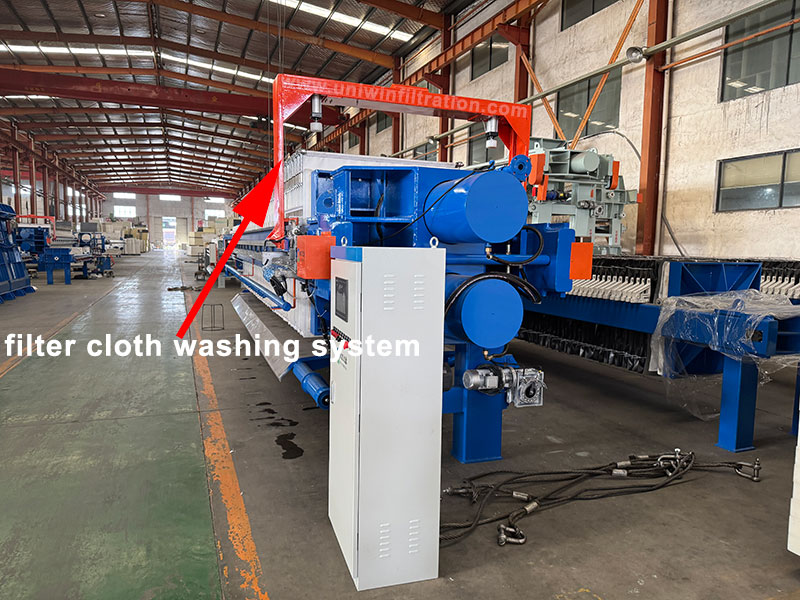
For automatic filter presses equipped with a filter cloth cleaning device, the filter cloth can be rinsed periodically using the cleaning system.
It is important to note that it is not recommended to use excessively high pressure to directly rinse the same area of the filter cloth for extended periods, as this may damage the filter cloth fibers. The cleaning method should be selected based on the filter cloth material and the type of clogging.
Conclusion
Extending the service life of filter cloth in a filter press is not primarily about purchasing more expensive and better filter cloth, but rather about matching the filter cloth to actual operating conditions and maintaining proper operation and maintenance. Correct filter cloth management can reduce operating costs, improve filtration efficiency, and ensure the long-term stable operation of the filter press.