
What Applications are Open-Flow and Hidden-Flow Filter Presses Suitable For?
The main difference between open-flow and hidden-flow filter presses lies in the discharge method of the filtrate.
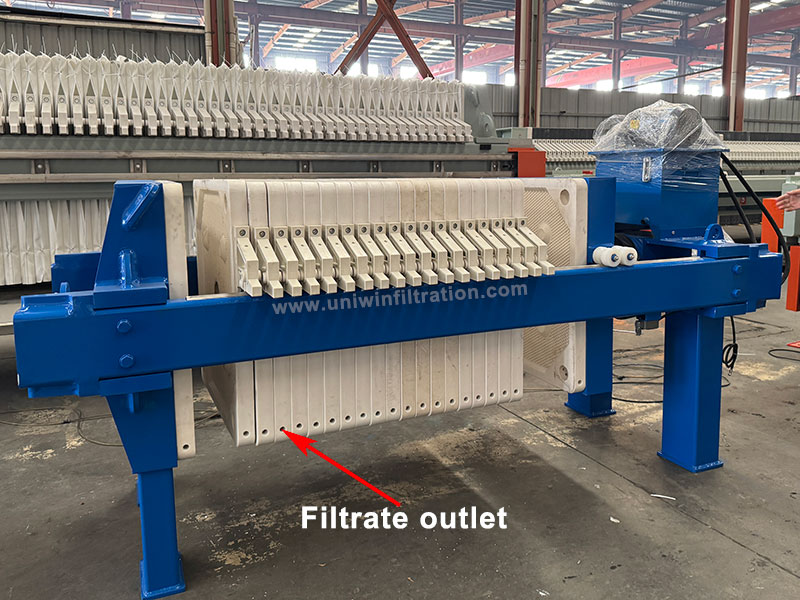
In an open-flow filter press, the filtrate is discharged directly through nozzles on each filter plate. Operators can observe the discharge volume and filtrate clarity on each plate. Damage to the filter cloth or turbidity in the filtrate is also easier to detect and locate promptly.
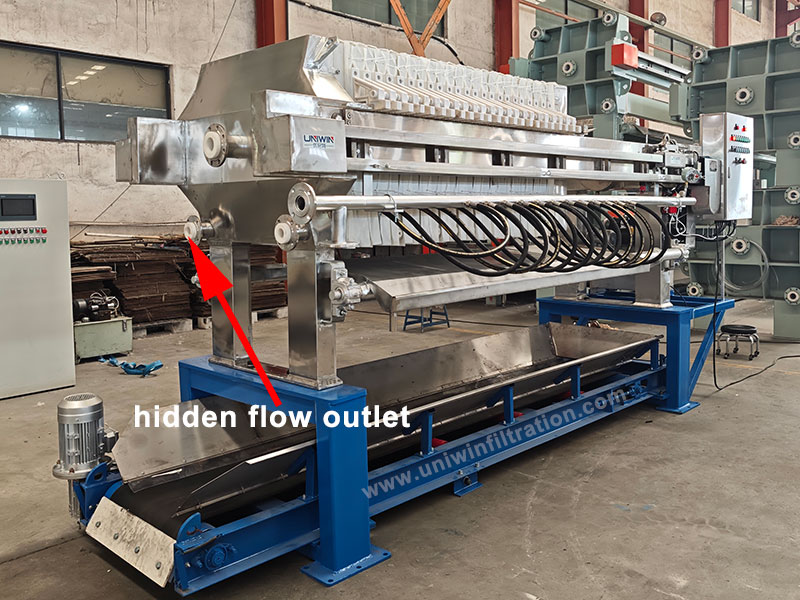
In a hidden-flow filter press, the filtrate is collected through concealed channels within the filter plates and then discharged through a unified pipeline. The entire discharge process is more airtight, reducing splashing of filtrate, odor diffusion, and air exposure. It also facilitates direct transfer of the filtrate to storage tanks or the next processing step.
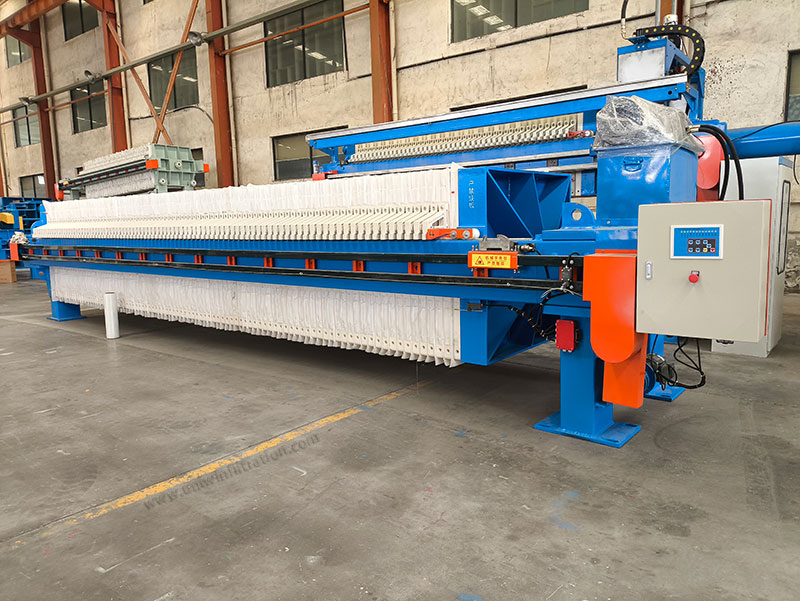
Suitable Operating Conditions for Open-Flow Filter Presses
Open-flow filter presses are more suitable for applications where the filtrate is non-toxic, odorless, allows air contact, and requires monitoring of the filtration process.
Typical applications include:
- Stone processing wastewater, sand and gravel wastewater
- Mine tailings, coal washing wastewater
- General industrial sludge, municipal sludge
- Conventional solid-liquid separation in ceramics, starch, etc.
- The filtrate is primarily recycled for production in projects with low requirements for airtightness and hygiene.
The biggest advantage of open-circuit filters is that operators can directly observe the output and clarity of the filtrate for each filter plate. If a filter cloth is damaged, the filtrate will usually become noticeably cloudy, allowing for quick location of the fault.
Suitable Operating Conditions for Hidden-flow Filter Presses
Hidden-flow filters are more suitable for applications where the filtrate needs to be collected in a closed system, cannot be exposed, requires recycling, or needs to be directly transferred to the next process.
Typical applications include:
- Filtration of chemicals such as acids and alkalis
- Wastewater with a strong odor or irritant smell
- Materials containing volatile solvents or potentially generating vapors
- Toxic and harmful liquids
- Applications in food, beverage, and pharmaceutical industries with high hygiene and environmental requirements
- Projects with high-value filtrate requiring centralized recycling
- Processes requiring filter cake washing, cross-flow blowing, or filtrate separation and collection
In hidden-flow filters, the filtrate is collected through the corner holes inside the filter plate and discharged centrally via pipes, reducing splashing, odor, and vapor diffusion, and facilitating direct transfer of the filtrate to storage tanks or downstream equipment. Hidden-flow filters are generally more suitable for applications where filtrate exposure must be controlled due to acidity/alkalinity, odor, or safety concerns.
Criteria for Determining Open/Hidden Flow
- For ordinary wastewater, mineral slurry, and stone sludge, with non-toxic and odorless filtrate: Open flow is preferred due to its simple structure and ease of observation.
- For acids, alkalis, chemicals, odorous, volatile, or toxic materials: Hidden flow is preferred.
- When rapid identification of which filter cloth is damaged is required: Open flow is preferred.
- When direct transfer of filtrate to a storage tank or the next process is required: Hidden flow is preferred.
- When filter cake washing, air drying, or separate recovery of mother liquor and washing liquid is required: Hidden flow is typically preferred.
Conclusion
Both open and hidden flow systems have their advantages. The actual selection should be based on the specific circumstances. If needed, please contact us, and we will recommend the most cost-effective solution based on your processing volume, material characteristics, and budget.