
Application of Filter Presses in Nickel Ore Filtration
During nickel ore beneficiation, hydrometallurgy, and tailings treatment, large volumes of slurry containing fine-particle solids are typically generated. To achieve solid-liquid separation, reduce the moisture content of the filter cake, and recover some process water, filter presses have become a commonly used solid-liquid separation device in nickel ore processing.
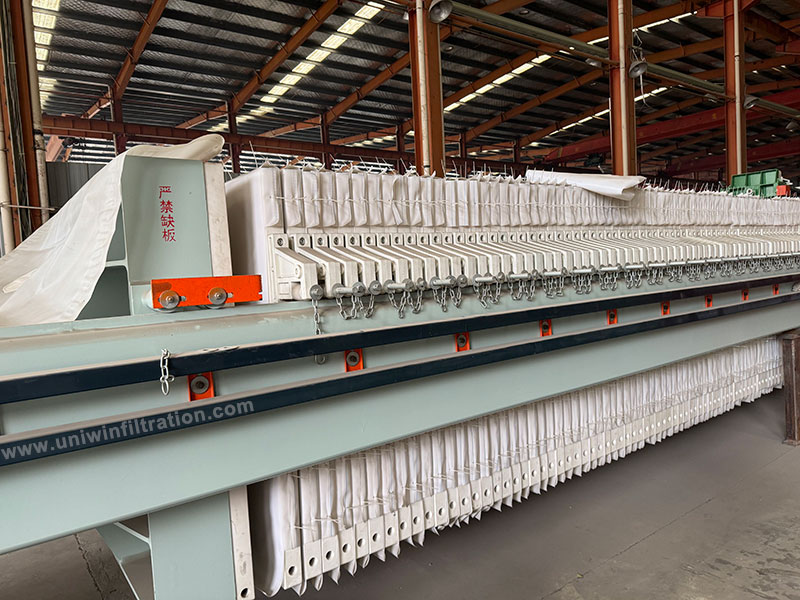
Why are Filter Presses Needed in Nickel Ore Processing?
After processes such as crushing, grinding, flotation, or leaching, nickel ore forms a slurry of a certain concentration. Depending on the production process, filter presses can be used for concentrate filtration, solid-liquid separation of intermediate slurry, and tailings dewatering.
The slurry enters the filter press and is forced into the filter chambers by the pressure of the feed pump. The liquid passes through the filter cloth and is discharged, while the mineral particles are retained inside the filter chambers and gradually form a filter cake.
As the filtration process continues, the filter cake thickness increases, eventually completing one filtration cycle. For large-scale mining projects, stable continuous production capacity and rapid unloading are particularly important.
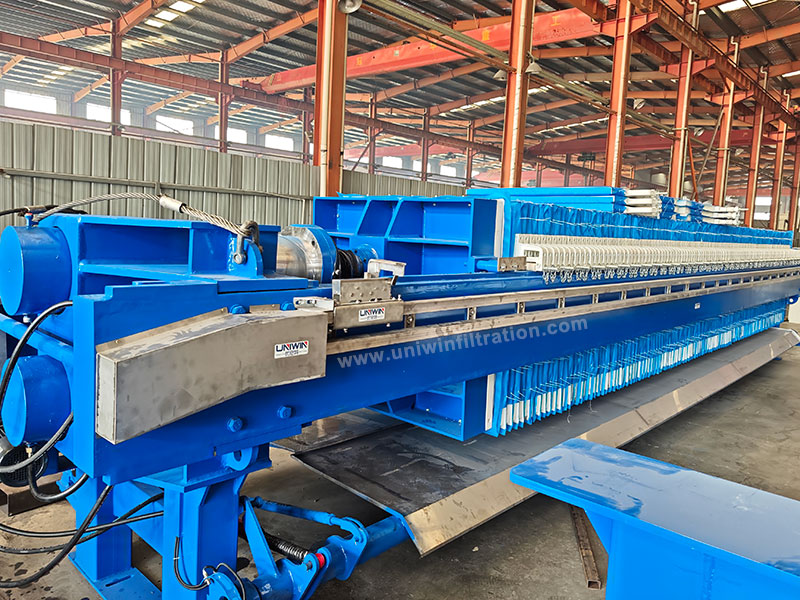
How to Choose a Nickel Ore Filter Press?
The operating conditions of nickel ore projects vary considerably, so the filter press model cannot be determined solely by the slurry processing capacity. When selecting equipment, the following parameters typically need to be considered:
Hourly or daily slurry processing capacity
The processing capacity determines the required filtration capacity of the filter press and is also a crucial basis for determining the filtration area. For large-scale nickel ore beneficiation plants or tailings treatment projects, filter presses with larger filtration areas are generally required to reduce the number of filtration cycles per operation.
Solid content in slurry
The solid content in the slurry directly affects the amount of filter cake produced in each filtration cycle. Under the same throughput conditions, the required filtration area may vary significantly depending on the solid content; therefore, the slurry concentration needs to be confirmed before selection.
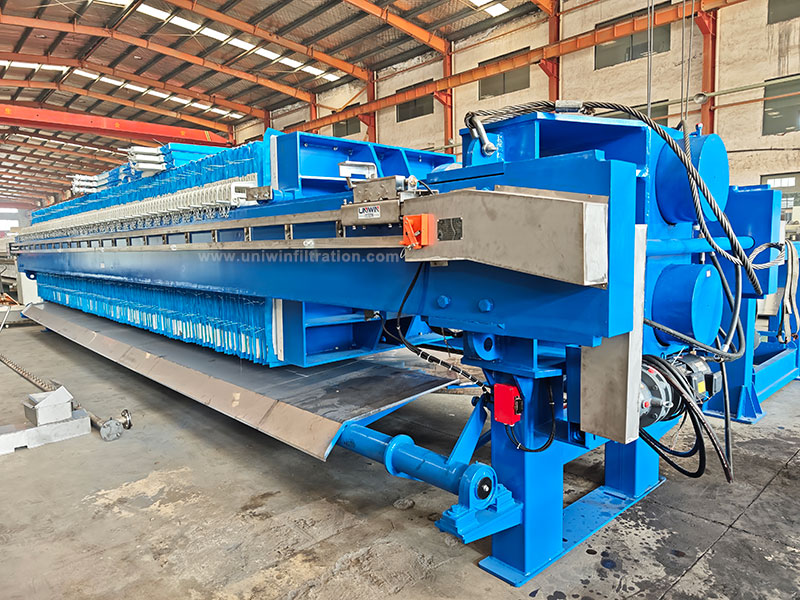
Particle size and filtration performance
The particle size, viscosity, and filtration performance of the material affect the filtration rate. Some fine-particle nickel ore slurries have slower filtration rates, requiring careful selection of the filtration area, feed pressure, filter cloth, and filtration time to ensure production capacity.
Filter cake moisture content requirements
If the project requires a high final filter cake moisture content, high-pressure filtration or a diaphragm filter press can be considered based on the actual material filtration performance. A diaphragm filter press can perform a secondary pressing of the filter cake after ordinary feed filtration, thereby further reducing the moisture content in the filter cake.
Daily operating time
For mining projects that operate continuously for long periods each day, in addition to the filtration area, the time spent on plate pulling, unloading, and filter cloth cleaning should also be carefully considered.
This is also a key reason why large-scale nickel mine projects adopt automatic plate pulling, quick-opening structures, and belt conveyors.
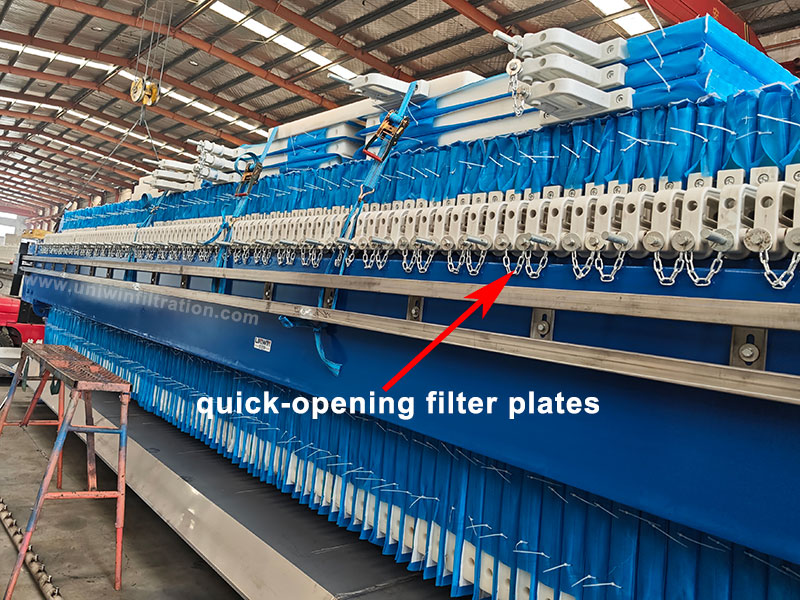
South Africa 500㎡ Nickel Ore Filter Press Project Case
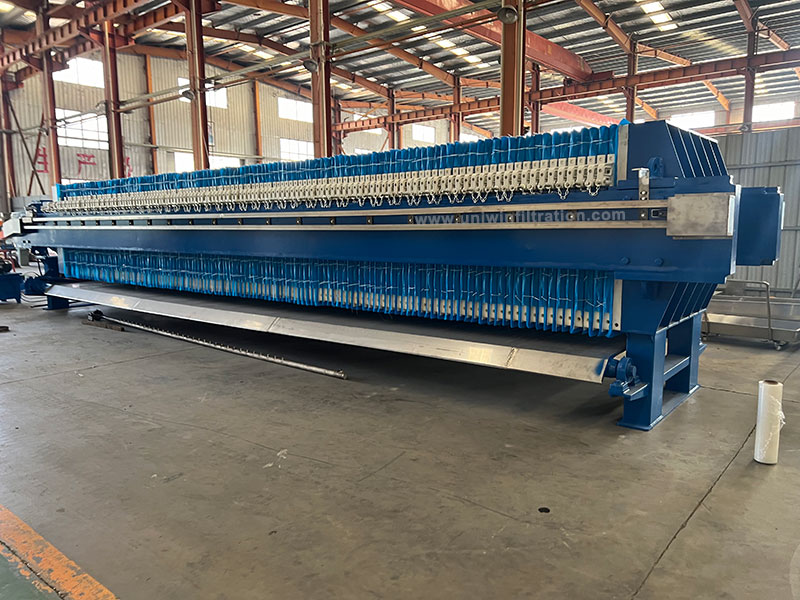
We provided a 500㎡ large-scale filter press system for nickel ore processing to a South African mining client.
Due to the client’s large project capacity, ordinary small filter presses could not meet the on-site filtration requirements. Therefore, a 500㎡ filter press was ultimately configured based on the slurry throughput, filtration cycle, and on-site production requirements.
Main project configuration
- Filtration Area: 500㎡
- Quick-opening structure: 3 filter plates open at once
- Drip tray
- Belt conveyor
- Automatic plate shifter and unloading system
One of the key design features of this equipment is its quick-opening structure. The design, which allows three filter plates to open simultaneously, accelerates the opening of the plates and the discharge of the filter cake, thus shortening the auxiliary time required for the entire filtration cycle.
Simultaneously, a drip tray and a belt conveyor are installed below the filter press. After filtration, the tilting plate opens, and the filter cake falls from between the plates directly onto the belt conveyor below, where it is continuously transported to the customer-designated filter cake collection area.
This configuration reduces the reliance on manual operation during the unloading process of large filter presses, making it more suitable for high-volume continuous production in mining sites.
Conclusion
The large amount of slurry generated during nickel ore production requires reliable solid-liquid separation equipment for processing. Filter presses can separate mineral particles from liquids through pressure filtration, forming a filter cake with a certain degree of dryness. Therefore, they are widely applicable to nickel ore concentrate filtration, slurry treatment, and tailings dewatering.