
How to Choose Stone Sludge Dewatering Equipment?
Stone processing generates a large amount of water-containing sludge, commonly from stone cutting, grinding, polishing, cleaning, and sedimentation tank sludge discharge. Long-term accumulation of stone sludge not only occupies space but also increases cleaning, transportation, and environmental treatment costs, while also affecting the normal operation of the circulating water system.
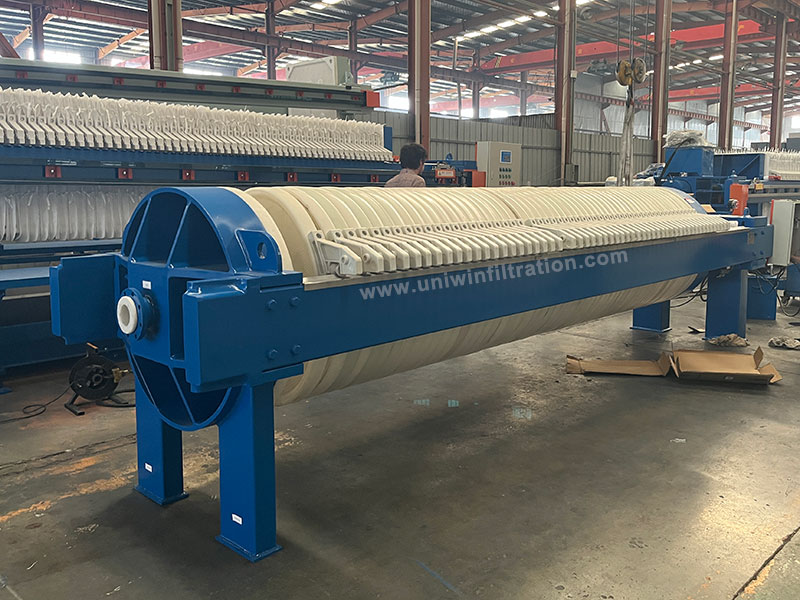
Among various sludge dewatering equipment, round high-pressure filter presses are generally more suitable for dewatering stone sludge. This is because stone sludge has fine particles, high water content, slow settling, and high filtration resistance, which places higher demands on the filtration pressure and structural strength of the equipment.
What are the Characteristics of Stone Sludge?
High water content
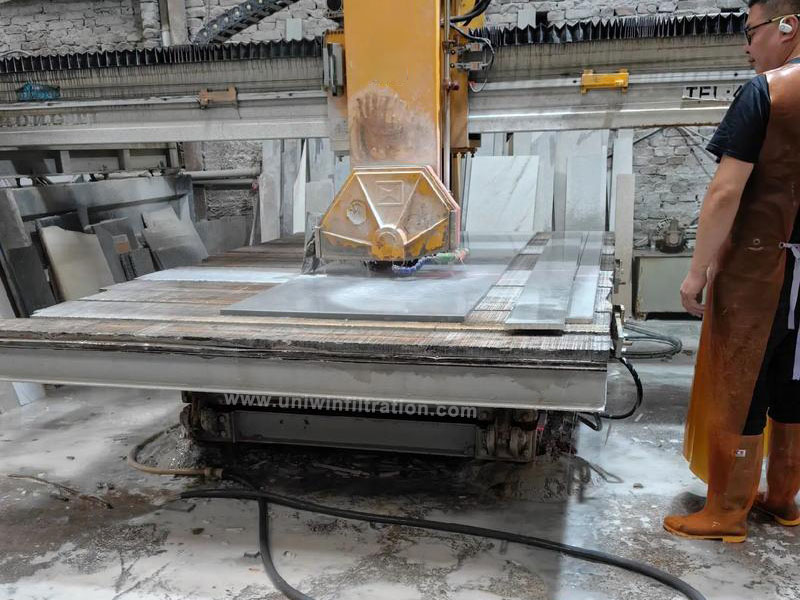
Stone cutting, edge grinding, and polishing require a large amount of water, resulting in sludge with a typically high water content. Relying solely on natural sedimentation is slow, and sedimentation tanks easily accumulate large amounts of sludge.
Fine particles, slow settling
Marble, granite, and artificial stone materials generate a large amount of fine stone powder during processing. These particles are relatively fine, resulting in slow natural settling and easily causing long-term turbidity in circulating water.
High filtration resistance
Fine particles in stone sludge increase filtration resistance. Insufficient filtration pressure slows dewatering, and the sludge cake does not easily reach the desired dryness.
Significant fluctuations in processing capacity
The amount of sludge produced by stone factories typically varies with order volume, number of equipment, and operating hours. Equipment selection should not be based solely on the minimum processing capacity; a certain margin must be allowed.
The impact on circulating water quality is significant
If sludge is not treated promptly, the circulating water will become turbid, which affects cutting and grinding results and potentially increases wear and tear on pumps, pipes, and processing equipment.
Therefore, when choosing stone sludge dewatering equipment, price should not be the sole consideration. Key factors to consider include filtration pressure, sludge cake moisture content, treatment efficiency, equipment stability, and ongoing operating costs.
Why Choose a Circular High-Pressure Filter Press?
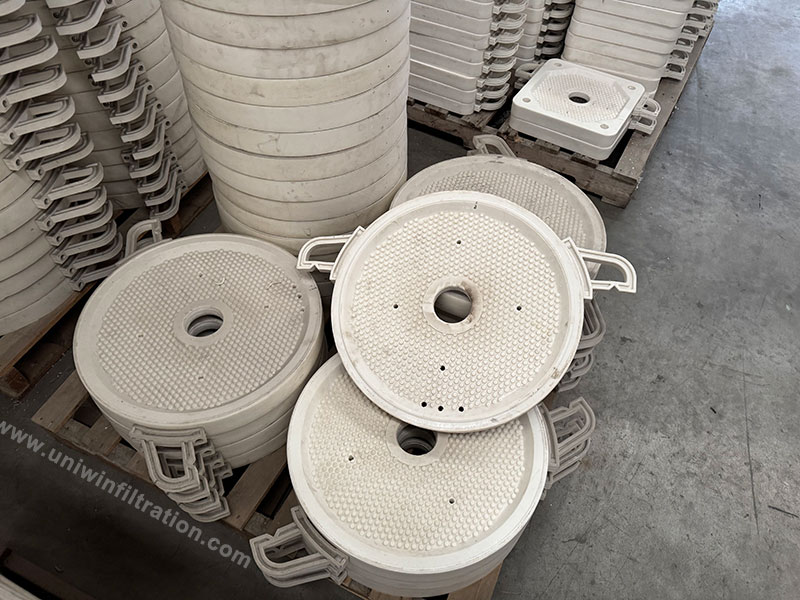
Round filter plates receive more even stress
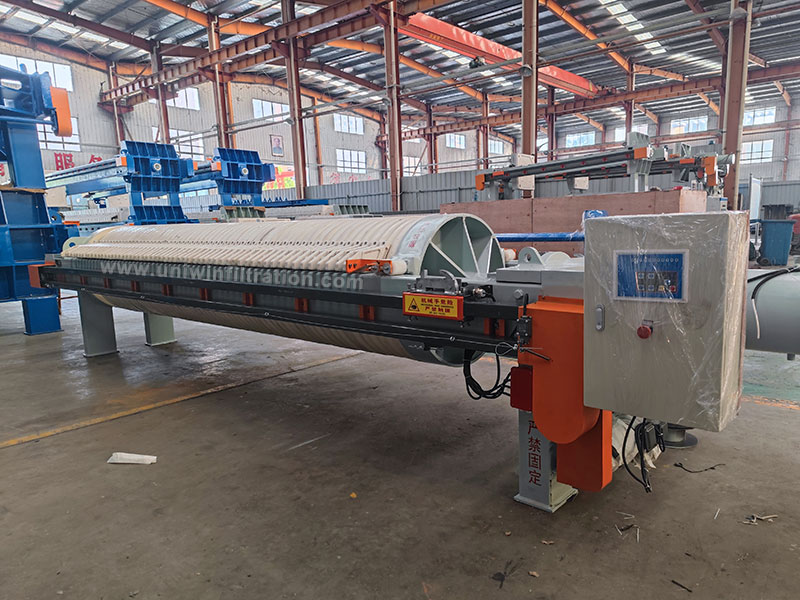
The circular high-pressure filter press uses a circular filter plate structure, resulting in more even stress distribution on the plates, making it suitable for high-pressure filtration. For materials like stone sludge—which are fine-particle, high-moisture, and have high filtration resistance—high-pressure filtration allows for more thorough extraction of water from the sludge.
Higher filtration pressure, drier cake
Stone factories typically want the filtered cake to be directly shoveled, stacked, or transported. If the cake has too high a moisture content, transportation costs increase, and on-site management becomes more difficult.
Circular high-pressure filter presses can withstand higher feed pressures, resulting in a more compact cake. Compared to conventional low-pressure filtration methods, circular high-pressure filter presses more easily produce cakes with lower moisture content.
More suitable for fine-particle stone powder sludge
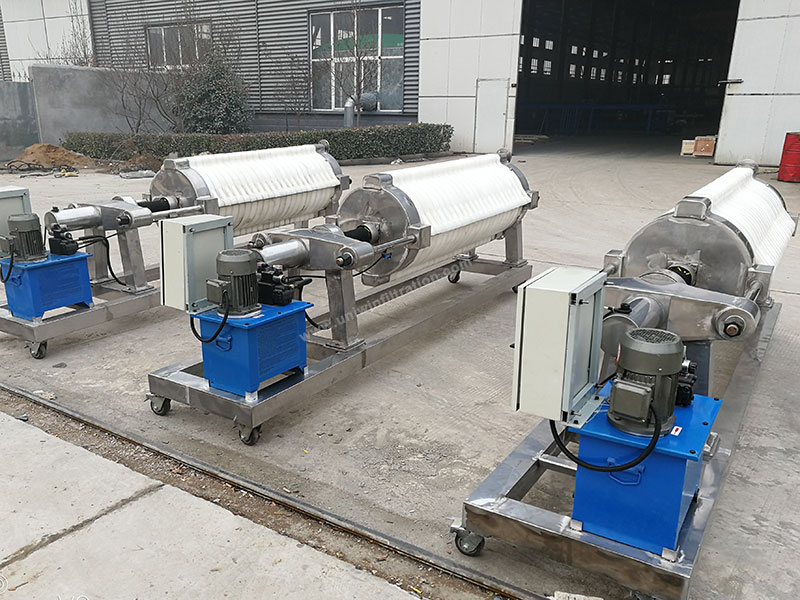
The stone powder particles in stone sludge are fine, easily clogging filter channels and lengthening the filtration cycle. Circular high-pressure filter presses are more suitable for processing this type of fine-particle sludge and are widely used in stone processing, ceramics, and mining tailings.
Compact equipment structure
Many stone processing plants have limited space, requiring equipment that can meet processing capacity without occupying too much area. Circular high-pressure filter presses have a relatively compact structure, making them suitable for installation near sedimentation tanks, sludge tanks, or circulating water treatment areas.
Beneficial for recycling water
After being filtered, the filtrate from stone sludge can be returned to the sedimentation tank or circulating water system for continued use, which helps reduce clean water consumption, improve workshop water quality, and lower long-term operating costs.
Conclusion
When selecting sludge dewatering equipment, price should not be the sole consideration; rather, the equipment’s suitability for fine-particle stone powder sludge should be prioritized.
If you are selecting equipment for a stone sludge treatment project, please provide the sludge type, daily processing capacity, operating hours, site photos, and sludge cake dryness requirements. We can then recommend a suitable circular high-pressure filter press model and a complete sludge dewatering solution based on your specific operating conditions.