
Which Filter Press Should Be Chosen for Sand Washing Sludge Treatment?
With increasingly stringent environmental regulations, the large volumes of sludge and wastewater generated during sand-washing production have become a critical issue for sand and gravel companies to address. Choosing the right filter press equipment can not only achieve sludge-water separation and reduce environmental risks, but also decrease transportation and storage costs, thereby improving the company’s economic efficiency.
This article will provide a detailed analysis from the perspectives of sludge characteristics, equipment types, and selection principles.
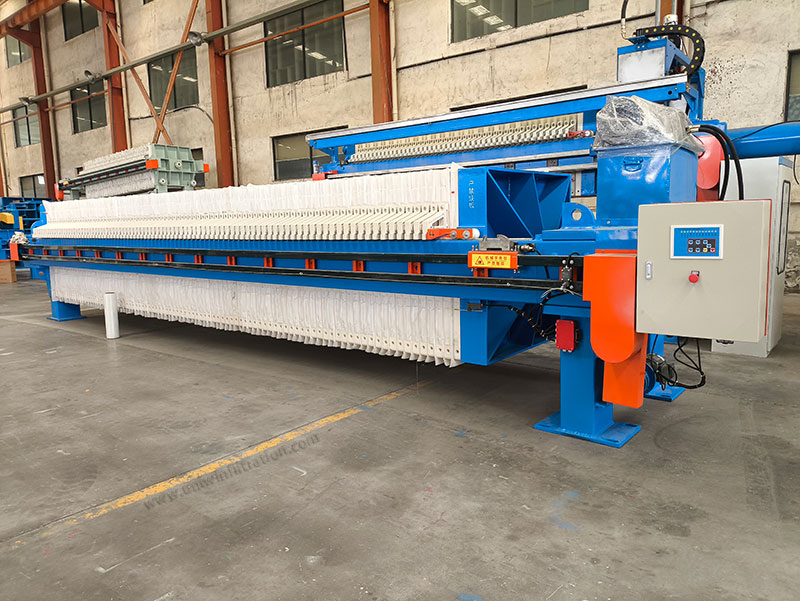
Key Characteristics of Sand Washing Sludge
The sludge generated during sand washing mainly consists of fine sand, stone powder, clay particles, and a large amount of water, exhibiting the following characteristics:
- High solid particle content;
- Various variations in sludge concentration;
- Contains a significant amount of clay in some areas.
- Highly abrasive particles;
- Typical large processing capacity.
Due to these characteristics, ordinary sludge treatment equipment often fails to achieve optimal dewatering results, necessitating specialized equipment selection for sand-washing sludge.
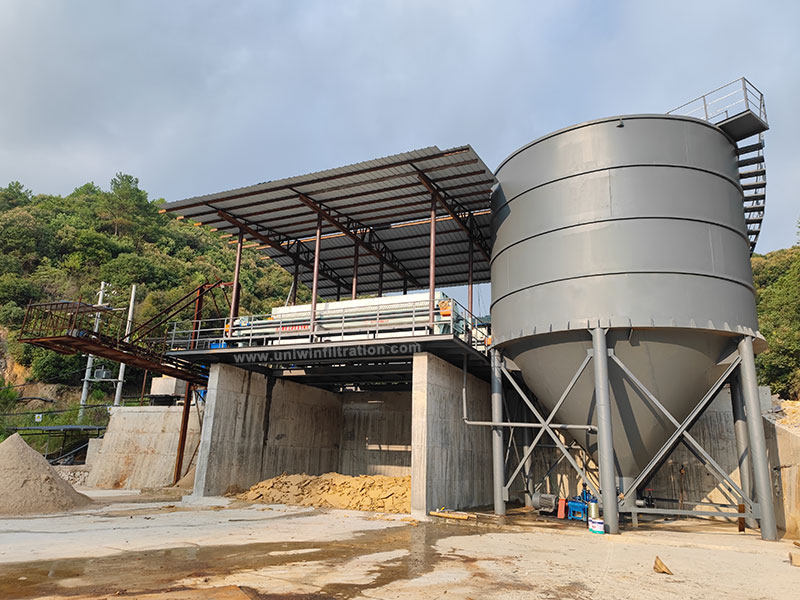
Comparison of Common Filter Press Types
Plate and Frame Filter Press
A plate and frame filter press is a traditional solid-liquid separation device. It consists of alternating plates and frames that squeeze water out of the sludge, achieving sludge cake dewatering.
Advantages:
- Simple equipment structure;
- Lower investment cost;
- Suitable for small to medium-sized sand washing plants;
- Low sludge moisture content.
Disadvantages:
- Low degree of automation;
- Longer processing cycle;
- Most manual operation is required.
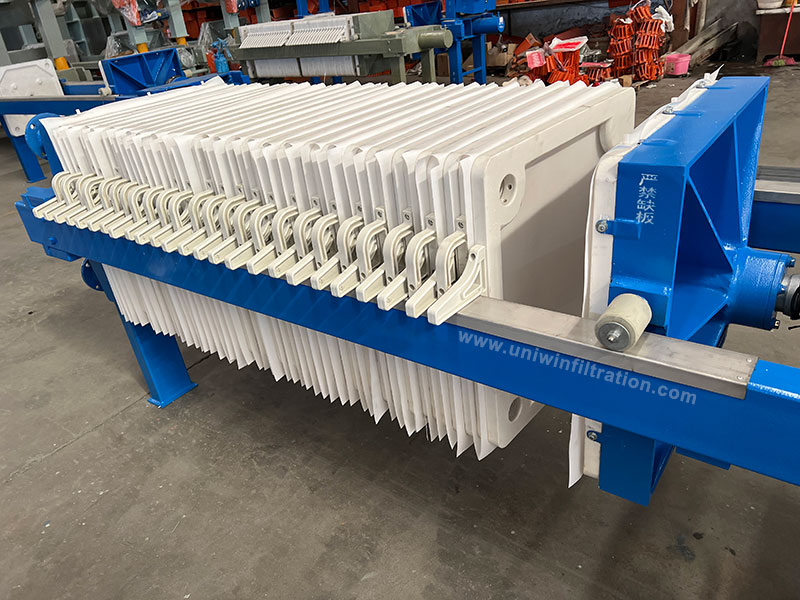
Chamber Filter Press
Chamber filter presses are one of the most widely used pieces of equipment in the field of sand washing and sludge treatment. Compared to plate and frame filter presses, they have a higher degree of automation.
Advantages:
- High filtration pressure;
- Low moisture content in the filter cake.
- High degree of automation;
- Continuous and stable operation.
Disadvantages:
- Higher initial investment than plate and frame filter presses;
- Higher maintenance requirements for the hydraulic system.
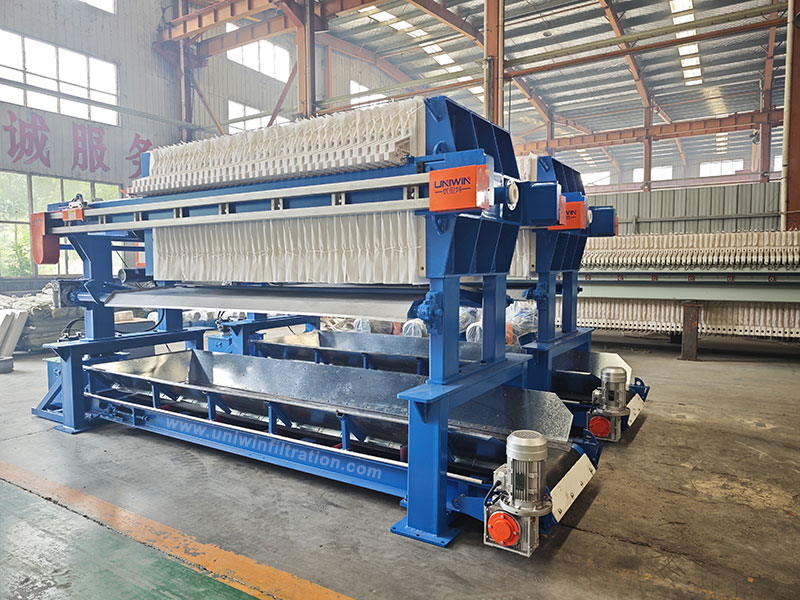
Diaphragm Filter Press
A diaphragm filter press is an upgrade from the chamber filter press, further reducing the moisture content of the filter cake through secondary extrusion via a diaphragm.
Advantages:
- High degree of automation;
- Better dewatering effect;
- Filter cake moisture content can be reduced to 30%-60%.
Disadvantages:
- Higher equipment purchase cost;
- Diaphragm plates require regular maintenance.
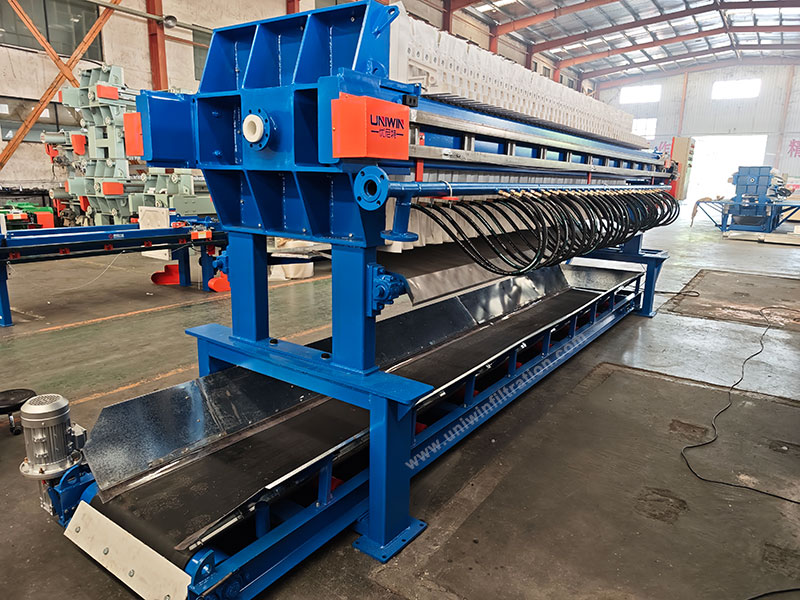
Belt Filter Press
Belt filter presses use a continuous operation mode for dewatering.
Advantages:
- Large processing capacity;
- Continuous operation;
- Easy operation.
Disadvantages:
Relatively high moisture content in the discharged sludge;
Recommended Options for Sand Washing Sludge Treatment
Currently, most sand washing plants prefer chamber filter presses or diaphragm filter presses.
The main reasons include:
Better dewatering effect
Sand washing sludge contains a high proportion of fine particles and clay, requiring higher filtration pressure for effective dewatering. Chamber filter presses can provide higher pressing pressure, resulting in drier sludge cakes.
Easier environmental compliance
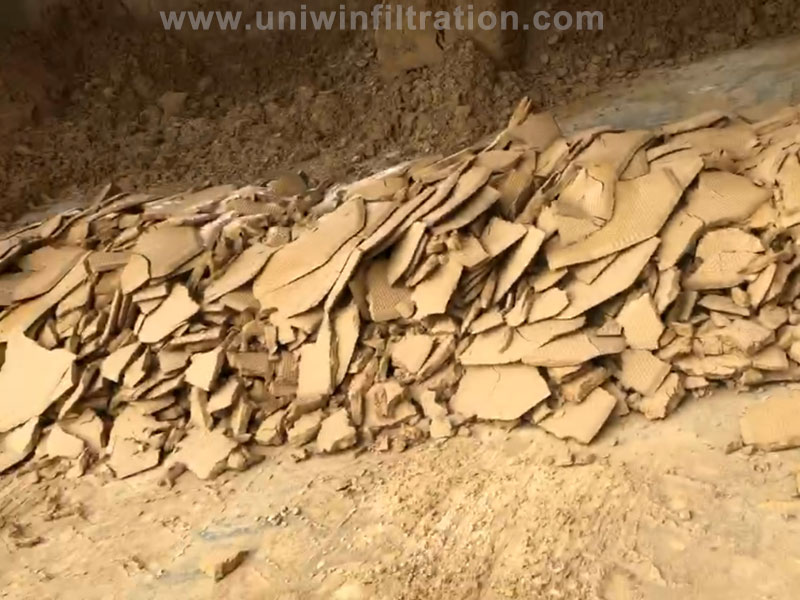
The volume of the sludge cake after filtration is significantly reduced, facilitating transportation and storage, and reducing the risk of secondary pollution.
High water recycling rate
The filtrate after filtration is highly clear and can be returned to the sand washing system for recycling, reducing water costs.
High degree of automation
Modern automatic plate filter presses can automatically feed, press, and unload, significantly reducing labor costs.
How to Choose the Right Filter Press Model?
When selecting a model, the following factors should be considered:
Daily processing capacity
The processing capacity determines the filtration area and size of the equipment.
Sludge concentration
Lower concentrations require a thickening tank or high-efficiency thickening equipment to improve filtration efficiency.
Cake moisture content requirements
If the sludge needs to be transported to a landfill or recycled, a diaphragm filter press is recommended to achieve even lower moisture content.
Automation requirements
For large-scale sand and gravel production lines, a PLC intelligent control system is recommended to reduce manual operation.
Conclusion
For most sand washing sludge treatment projects, chamber filter presses offer the best cost-performance ratio; however, diaphragm filter presses are recommended if a lower cake moisture content is required. When selecting equipment, a comprehensive evaluation should be conducted considering the processing capacity, sludge properties, environmental requirements, and investment budget.
If you are planning a sand washing sludge treatment system, it is recommended to provide parameters such as daily processing capacity, sludge concentration, and target moisture content to obtain a more accurate equipment selection plan.