
Application of Diaphragm Filter Presses in Seaweed Treatment
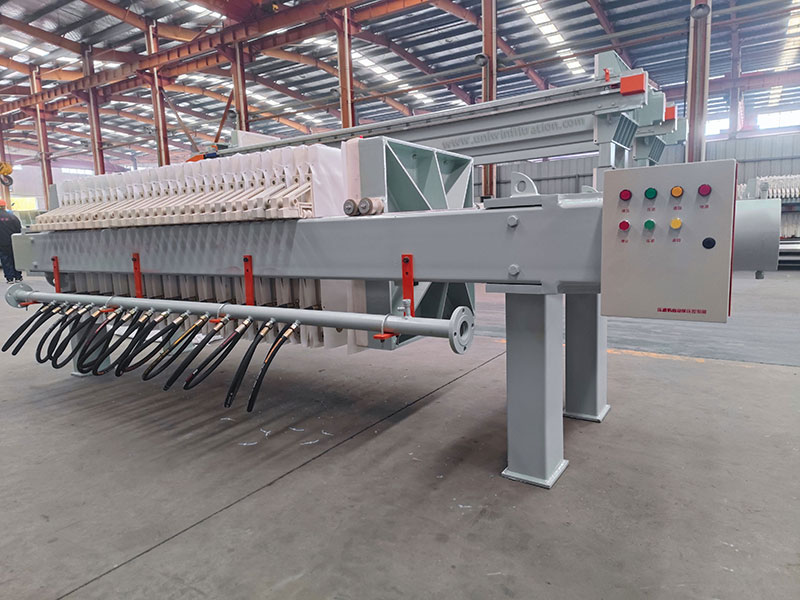
In the extraction process of active substances from seaweed, solid-liquid separation has always been a key bottleneck restricting production efficiency and increasing operating costs. Chopped seaweed material has complex characteristics such as high fiber content, wide particle size distribution, and large fluctuations in the acidity and alkalinity of the liquid phase. Traditional centrifugal separation or belt filter press equipment often struggles to achieve both high dehydration rates and high solid recovery rates. Diaphragm filter presses, with their composite dehydration mechanism of “feed filtration + secondary diaphragm pressing,” demonstrate unique technological advantages in this field.
Challenges in Seaweed Treatment
High filtration resistance from fibrous materials
Seaweed fibers easily form a dense, low-permeability filter cake layer on the filter cloth surface, leading to a sharp decrease in filtration rate.
Large particle size range and irregular shape
The maximum particle size of chopped seaweed can reach 3mm. The coexistence of fine fragments and colloidal substances easily causes clogging or material loss in conventional filter media.
The liquid phase is highly corrosive
The alkaline or acidic solutions used in the extraction process (pH as low as 4) place stringent requirements on the corrosion resistance of the equipment materials.
High moisture content in the filter cake is required
High-value extracts dissolved in the liquid phase need to be recovered as fully as possible, requiring low moisture content in the filter cake to reduce the residue of valuable filtrate.
South African Client Case Study
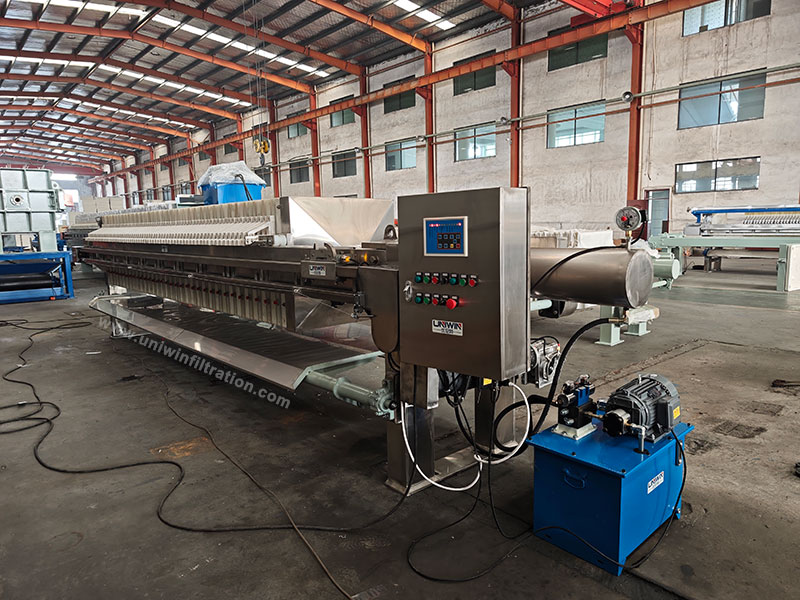
A South African seaweed processing company utilizes the abundant giant kelp and Eklonia algae from local waters as raw materials, extracting active products such as sodium alginate through chemical leaching for use in the food, pharmaceutical, and industrial additive markets. The client customized an 80-square-meter stainless steel diaphragm filter press system, equipped with a drip tray, belt conveyor, and PLC intelligent control system to achieve efficient dehydration, filtrate-cake separation, corrosion-resistant operation, and high-value filtrate recovery.
Equipment highlights
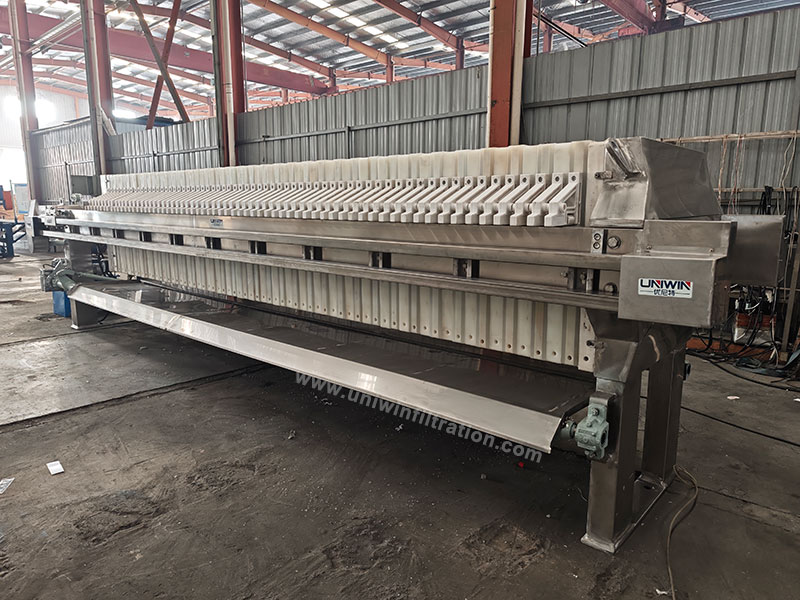
- Stainless steel diaphragm filter press: 80 square meters of filtration area, suitable for medium-scale continuous processing; the main structure is made of stainless steel, ensuring long-term corrosion resistance even in acidic liquid environments with a ph of 4.
- Polypropylene diaphragm filter plates with an outer rubber diaphragm: The polypropylene matrix ensures structural strength, while the rubber diaphragm offers excellent elasticity and chemical corrosion resistance, withstanding repeated high-pressure expansion without aging or cracking.
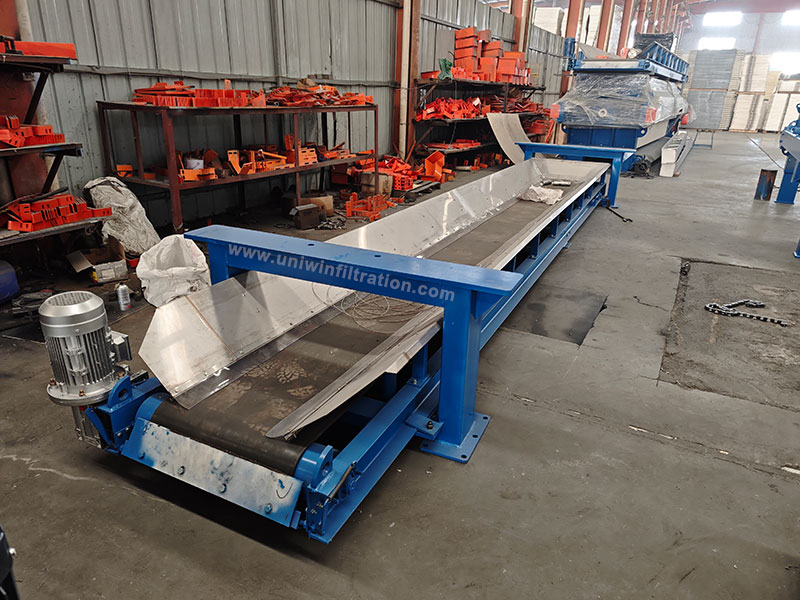
- Automatic tilting plate: Installed below the filter plate assembly of the filter press, the tilting plate is closed during the feeding filtration and diaphragm pressing stages, receiving and guiding the filtrate to the collection tank. During the unloading stage, the tilting plate automatically flips open, allowing the filter cake to fall smoothly into the belt conveyor below. This effectively isolates the filtrate and filter cake, preventing cross-contamination and ensuring the purity of the recovered filtrate.
- Belt conveyor: automatically receives the filter cake unloaded after the tilting plate opens and continuously transports it to subsequent drying or stacking processes.
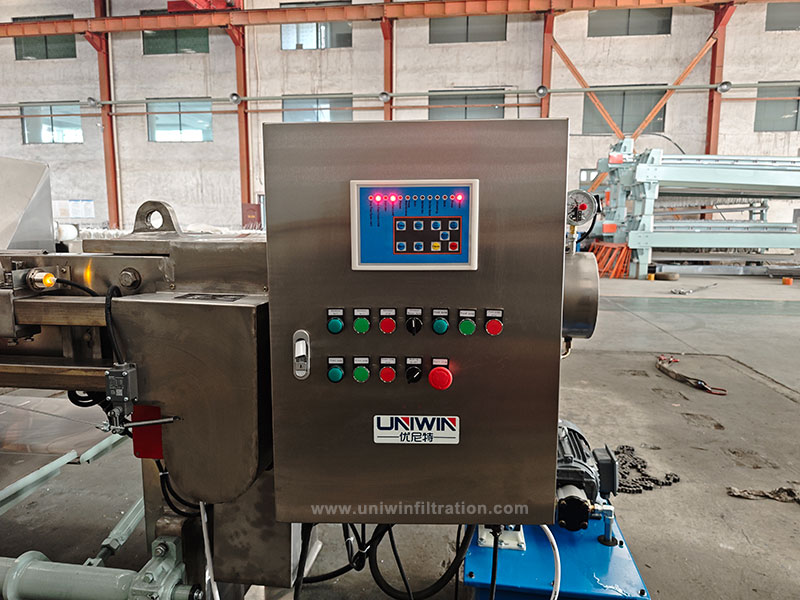
- PLC + touch screen integrated control: fully automatic control of the entire process from pressing → feeding → pressing → tilting plate switching → unloading → conveying, achieving unattended continuous operation.
Conclusion
The successful implementation of the South African seaweed deep processing project demonstrates that stainless steel diaphragm filter presses possess significant technical advantages in the solid-liquid separation stage of the chemical extraction process for chopped seaweed. Please feel free to contact us if you have any related needs.