
Application of Cast-Iron Filter Presses in Metal Carboxylate Filtration
Metal carboxylates are widely used in sectors such as coatings, plastics, rubber, lubricants, and chemical manufacturing. During production, solid-liquid separation is typically required to remove solid impurities, unreacted materials, or other particulates from the reaction mixture, improving product purity and stability for subsequent processing.
For these types of chemical materials, filtration equipment requires excellent temperature resistance, structural stability, and consistent filtration pressure. Because of the high strength and superior high-temperature resistance of their filter plates, cast-iron plate-and-frame filter presses are well suited for filtering certain metal carboxylates and similar chemical materials.
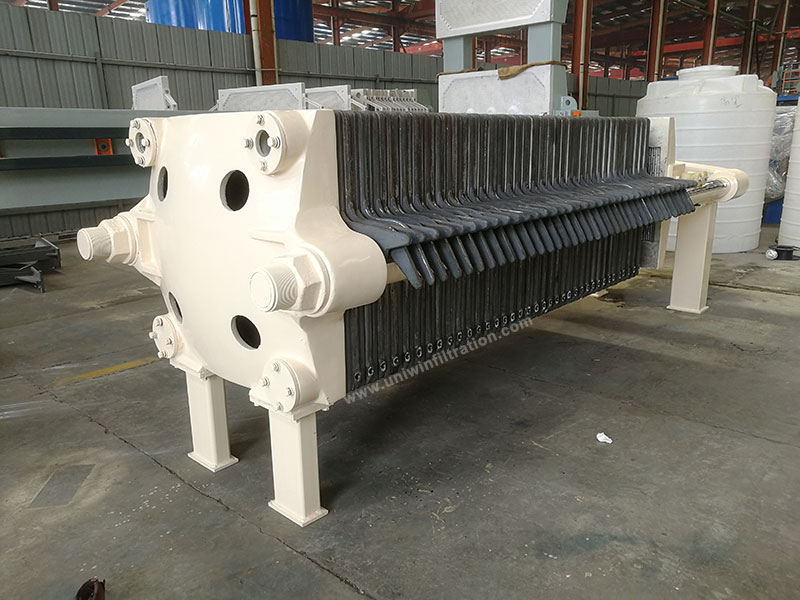
Key Challenges in Metal Carboxylate Filtration
While material properties in metal carboxylate production vary depending on specific formulations and manufacturing processes, the filtration stage typically requires attention to the following aspects:
High material temperature: Some production processes require filtration to be performed at elevated temperatures, placing high demands on the heat resistance of the filter plates.
Fine solid particles: Fine particles can increase filtration resistance, necessitating the appropriate selection of filter media and filtration pressure.
High product purity requirements: Impurities must be effectively retained to minimize the entry of solid particles into downstream processes.
High demands for continuous chemical production: Filtration equipment requires a stable mechanical structure to withstand long-term, repetitive operation.
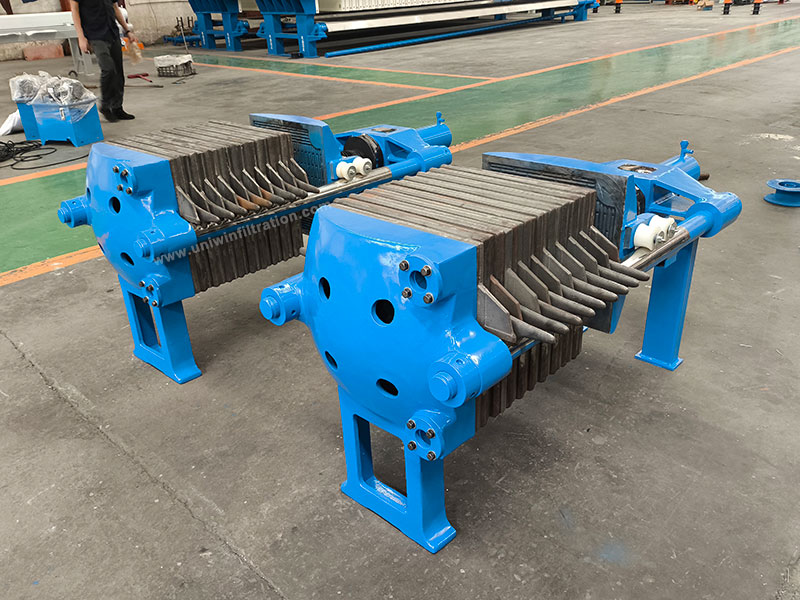
Pakistan Metal Carboxylate Filtration Project
The client for this project is from Pakistan and the project mainly involves solid-liquid separation in the production process of metal carboxylates. Based on the material properties, filtration volume, and process requirements provided by the client, we supplied the following:
Equipment Type: Cast-iron plate-and-frame filter press
Filtration Area: 4 m²
Quantity: 2 units
Material: Metal carboxylates
The two units can be operated independently according to the client’s production schedule or used for different production batches, thereby enhancing filtration flexibility and equipment utilization.
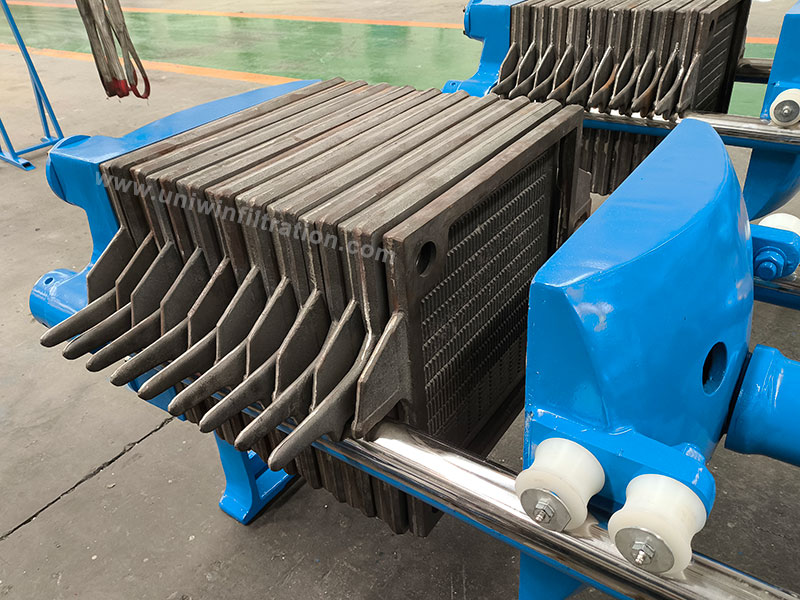
Why Choose Cast Iron Plate-and-Frame Filter Presses?
Excellent temperature resistance
Compared to conventional polypropylene filter plates, cast iron filter plates offer superior high-temperature resistance, making them better suited for filtering chemical materials at elevated temperatures.
Robust filter plate structure
Cast iron filter plates possess high mechanical strength and can operate under stable filtration pressures, making them ideal for production environments that demand high structural integrity from the equipment.
Suitable for fine solid-liquid separation
By selecting the appropriate filter cloth, fine solid particles and impurities generated during the production of metal carboxylates can be effectively captured, thereby enhancing the purity of the filtrate.
Plate-and-frame structure facilitates process adjustments
The plate-and-frame design is suitable for various fine chemical filtration processes, allowing for the adjustment of filter cloths and operating parameters based on material concentration, particle size, and specific filtration requirements.
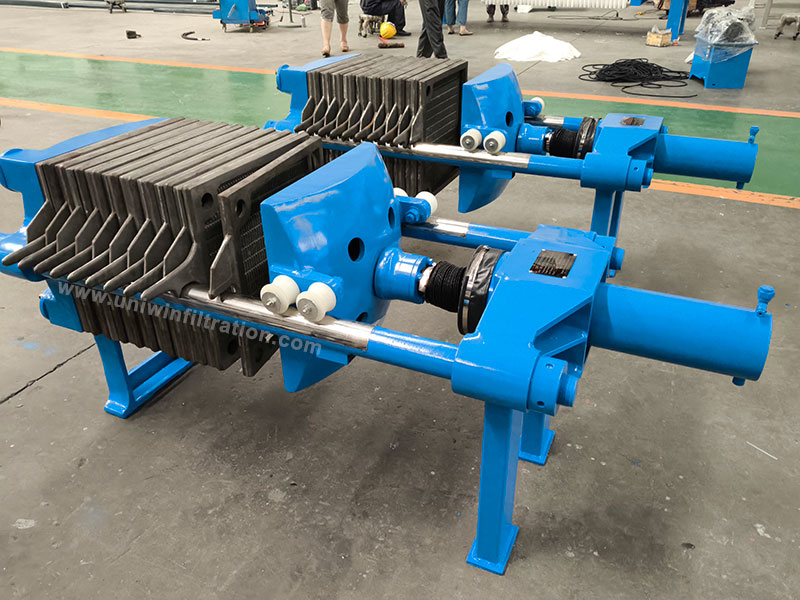
Conclusion
In the production of metal carboxylates, selecting the appropriate filter press is crucial for enhancing impurity retention and ensuring the stability of the production process.
The two 4 m² cast-iron plate-and-frame filter presses selected by the Pakistani client were specifically configured for their metal carboxylate filtration process. By utilizing robust, heat-resistant cast-iron filter plates and suitable filtration media, the system meets the solid-liquid separation requirements for these chemical materials and establishes more stable filtration conditions for subsequent production stages.