
What Is A Filter Press Belt Conveyor?
In modern sludge treatment, mining, chemical, food processing, and wastewater treatment industries, filter presses are crucial pieces of equipment for solid-liquid separation. To improve automation, reduce manual handling, and optimize production processes, more and more companies are installing belt conveyors beneath their filter presses.
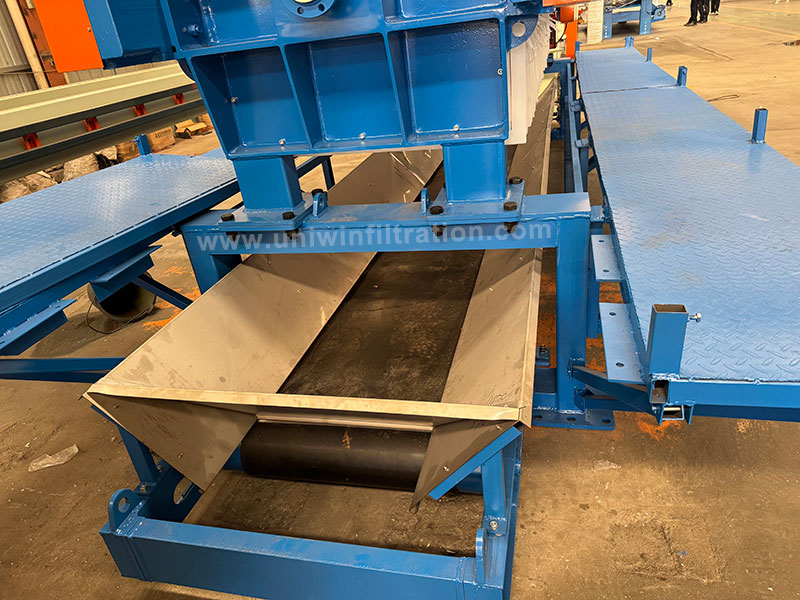
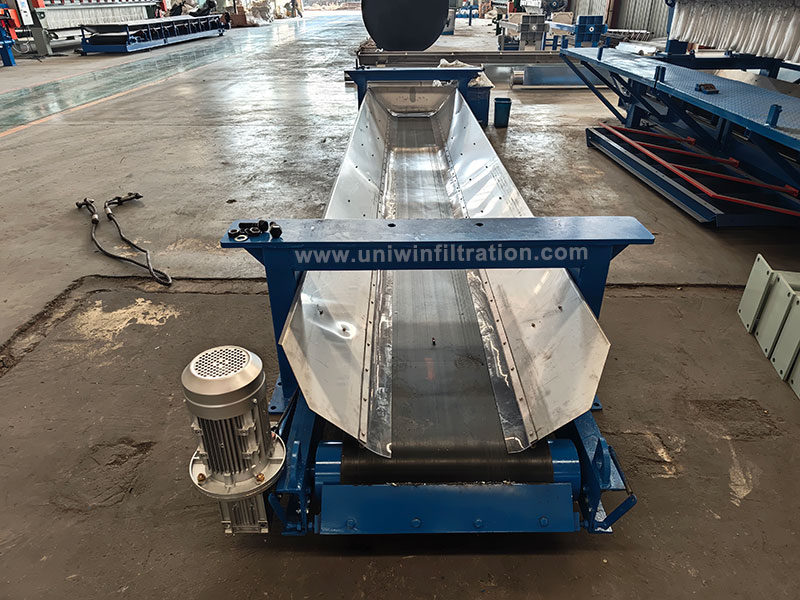
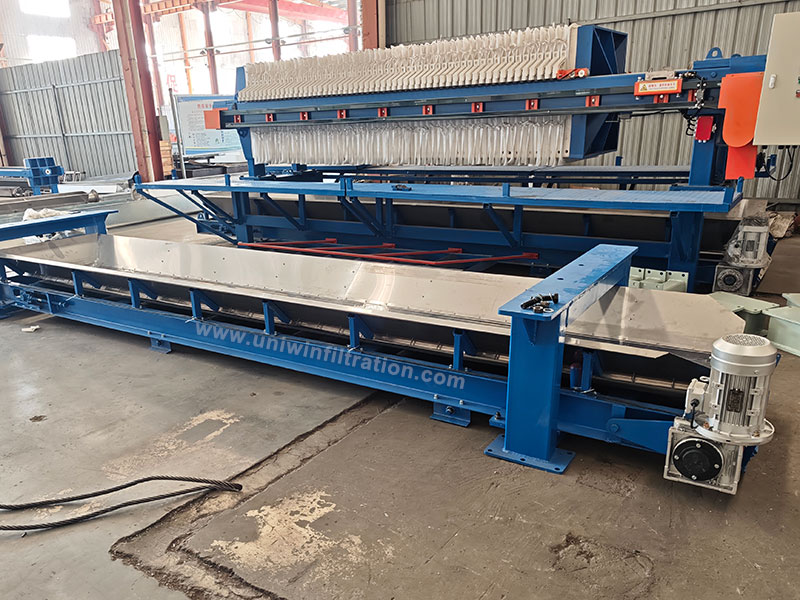
A filter press belt conveyor is a specialized device for collecting and transporting filter cake from a filter press. It automatically transports the solid material from the filter press to designated locations, such as silos, transport vehicles, packaging equipment, or the next production step after unloading.
Working Principle of Filter Press Belt Conveyor
The belt conveyor is installed below the filter press and is usually used in conjunction with a drip tray (to prevent filtrate dripping and secondary contamination of the filter cake). After the filter press completes the filtration cycle, the filter plates open sequentially, and the filter cake naturally falls onto the belt conveyor below by gravity.
Once the conveyor starts, the motor drives the drive drum to rotate via a reducer, causing the conveyor belt to run continuously and smoothly transport the filter cake to the designated location.
The entire process requires no manual collection, significantly improving production efficiency and maintaining a clean work environment.
Advantages of Belt Conveyor
High automation
The automatic plate-pulling system eliminates the need for manual intervention in unloading and handling; one person can manage multiple machines.
Improved production efficiency
Unloading and conveying are completed simultaneously, avoiding secondary handling, shortening the work cycle, and adapting to high-volume continuous production.
Maintained a clean working environment
Filter cake is directly conveyed to the designated location, reducing ground contamination.
Flexible and customizable structure
Can be designed in various lengths, widths, angles, and conveying capacities according to site space; belt width, length, and material can all be customized according to material characteristics (viscosity, corrosiveness, temperature).
Conclusion
Filter press belt conveyors are essential supporting equipment in modern solid-liquid separation systems. They enable automatic collection, continuous conveying, and intelligent operation of filter cake, effectively reducing labor costs, improving production efficiency, and enhancing the working environment.
If you are looking for a solution suitable for your specific needs, we recommend selecting a filter press belt conveyor system that supports customized design, based on material characteristics, processing capacity, site layout, and automation requirements, to achieve a higher return on investment and long-term operational value.